

Black and Decker Jigsaw Blades
 Loading...
End of content
Error - No more pages to load
Black and Decker Jigsaw Blades at Tooled-Up.com
Black and Decker has established itself as a household name in power tool accessories, and their jigsaw blades exemplify the brand's commitment to delivering reliable, versatile cutting solutions for both professional tradespeople and DIY enthusiasts. With over a century of innovation in power tools and accessories, Black and Decker understands the demands placed on cutting equipment across various materials and applications.
The Black and Decker jigsaw blade range available from Tooled-Up.com encompasses solutions for cutting wood, metal, plastic, and composite materials. These blades are engineered to deliver clean, precise cuts whilst maintaining durability across extended use. Whether you're working on intricate curved cuts in laminate flooring, straight cuts through softwood, or tackling tougher materials like aluminium sheet, Black and Decker offers blade specifications tailored to each application.
Designed with compatibility in mind, Black and Decker jigsaw blades feature industry-standard shank fittings that work seamlessly with most modern jigsaws, including both T-shank and U-shank configurations. This universal approach ensures that whether you're using a Black and Decker jigsaw or another manufacturer's tool, you can benefit from their blade technology and competitive pricing structure.
Why Choose Black and Decker Jigsaw Blades?
Black and Decker's reputation for producing accessible, dependable tool accessories makes their jigsaw blades an excellent choice for users who value consistent performance without unnecessary complexity. The brand focuses on delivering practical solutions that work reliably across typical cutting scenarios encountered on job sites and in home workshops throughout the UK.
Value represents a core strength of the Black and Decker proposition. Their jigsaw blades offer competitive pricing without compromising on essential performance characteristics like sharpness retention and breakage resistance. For tradespeople managing project budgets or DIY enthusiasts building their toolkit, this balance between cost and capability proves particularly attractive.
The widespread availability of Black and Decker products means replacement blades are easy to source when needed. This accessibility, combined with straightforward blade selection guides and clear material specifications, removes much of the guesswork from choosing the right blade for your cutting task. Black and Decker's commitment to user-friendly design extends beyond their power tools to every accessory in their range.
Who Uses Black and Decker Jigsaw Blades?
- Carpenters and joiners working with various timber species and manufactured boards
- Kitchen and bathroom fitters cutting worktops, laminate, and other installation materials
- General builders requiring versatile cutting solutions across mixed-material projects
- Flooring specialists making precision cuts in laminate and engineered wood flooring
- Shopfitters and cabinet makers executing detailed curved and straight cuts
- Property maintenance professionals needing reliable blades for diverse repair work
- DIY enthusiasts tackling home improvement projects from furniture making to renovation work
- Hobbyists and craft workers requiring precision cutting for creative projects
Key Features of Black and Decker Jigsaw Blades
Black and Decker jigsaw blades incorporate several design features that enhance their cutting performance and longevity. The teeth are precision-ground to maintain sharpness through numerous cuts, with tooth configurations optimised for specific materials - from aggressive cutting teeth for rapid wood removal to fine-toothed blades for metal and plastic applications.
Material selection plays a crucial role in blade performance. Black and Decker utilises high-carbon steel (HCS) for wood-cutting applications, offering flexibility that resists breakage during curved cuts. For metal cutting, bi-metal (BIM) construction combines a flexible backing with hard cutting edges, delivering the durability required for tougher materials whilst maintaining resistance to blade snapping.
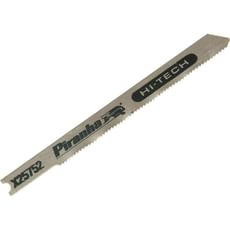
The shank designs employed by Black and Decker ensure secure blade retention during operation, minimising blade slippage and the associated safety risks. Clear labelling on blade packaging specifies material compatibility, tooth count, and blade length, allowing users to quickly identify the appropriate blade for their cutting requirements. Many Black and Decker blades also feature clearly marked material designations directly on the blade body for easy identification in storage cases.
Popular Black and Decker Jigsaw Blades
Tooled-Up stocks a comprehensive selection of Black and Decker jigsaw blades covering the most commonly encountered cutting applications. Wood-cutting blades remain the most popular choice, available in various tooth configurations from coarse-cut blades for rapid cutting through construction timber to fine-cut variants for clean edges in veneered materials and laminate.
Multi-purpose blade sets offer excellent value for users requiring flexibility across different materials. These typically include a selection of wood, metal, and plastic-cutting blades in a convenient storage case, providing a complete solution for general cutting tasks. Such sets prove particularly popular with mobile tradespeople and DIY users who need to be prepared for varied cutting scenarios.
Specialist blades for specific applications include scrolling blades for tight radius curves, extra-long blades for thick materials, and flush-cutting blades that allow cutting right up to perpendicular surfaces. Metal-cutting blades in various tooth pitches accommodate different material thicknesses, from thin aluminium sheet to thicker ferrous metals.
Safety and Compliance
Black and Decker jigsaw blades meet relevant UK and European safety standards for cutting tool accessories. When using jigsaw blades, always ensure the blade is appropriate for both the material being cut and the jigsaw being used. Verify that the blade is securely installed before commencing work, and allow the jigsaw to reach full operating speed before engaging the material.
Personal protective equipment should include safety glasses to protect against flying debris, and hearing protection when undertaking extended cutting operations. When cutting materials that generate fine dust particles, such as MDF or certain composites, appropriate dust extraction or respiratory protection should be employed in accordance with COSHH regulations and HSE guidance.
Regular blade inspection helps maintain safe operation. Replace blades that show signs of damage, excessive wear, or blunting, as compromised blades require increased feed pressure that can lead to loss of control. Always disconnect the jigsaw from its power source before changing blades, and store unused blades in protective packaging to prevent damage and injury.
Frequently Asked Questions
Are Black and Decker jigsaw blades compatible with other jigsaw brands?
Yes, Black and Decker jigsaw blades feature industry-standard shank fittings (T-shank or U-shank) that are compatible with most modern jigsaws regardless of manufacturer. Always verify your jigsaw's shank type before purchasing blades to ensure proper fitment.
What tooth count should I choose for cutting different materials?
For wood, 6-10 teeth per inch (TPI) provides fast, rough cuts, whilst 10-20 TPI delivers finer cuts with smoother edges. Metal cutting requires 14-24 TPI depending on material thickness - thinner materials need higher tooth counts. Plastic typically cuts best with 10-14 TPI to prevent melting.
How long do Black and Decker jigsaw blades typically last?
Blade longevity depends on material hardness, cutting technique, and blade quality. In softwood, a quality blade might complete 20-30 metres of cutting. Harder materials like metal significantly reduce blade life. Replace blades when cutting efficiency noticeably decreases or when visible damage occurs.
Can I use wood-cutting blades on metal or vice versa?
Using blades on inappropriate materials compromises both cutting performance and safety. Wood blades have larger teeth that will quickly dull or break on metal, whilst metal-cutting blades cut wood extremely slowly and may cause burning. Always select blades specifically designed for your target material.
What's the difference between T-shank and U-shank Black and Decker jigsaw blades?
T-shank blades feature a tang-style fitting that provides tool-free blade changes and superior blade retention in modern jigsaws. U-shank blades have a universal fitting requiring a grub screw for retention, common in older jigsaws. T-shank has become the industry standard for contemporary tools due to its convenience and security.