

DeWalt Sabre & Reciprocating Saw Blades
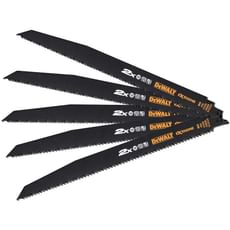
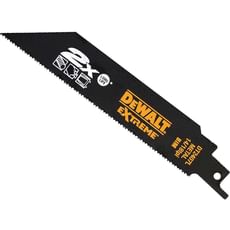
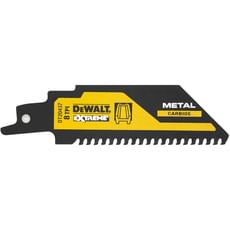
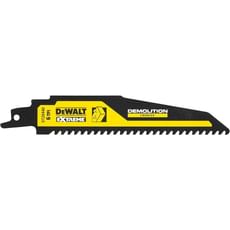
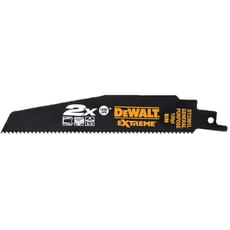
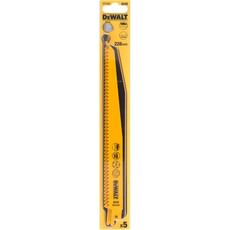
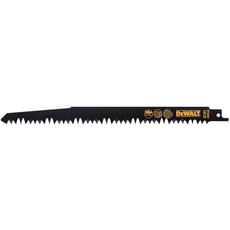
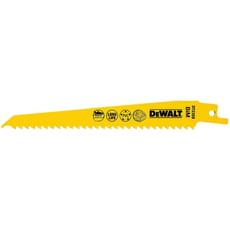
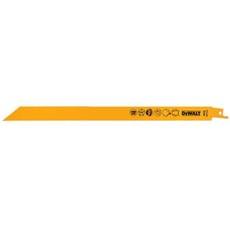
 Loading...
End of content
Error - No more pages to load
DeWalt Sabre & Reciprocating Saw Blades at Tooled-Up.com
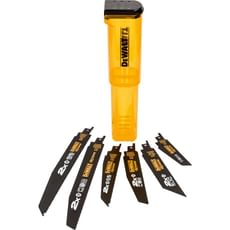
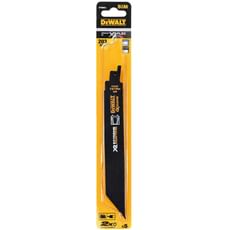
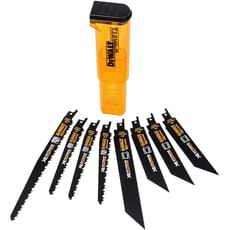
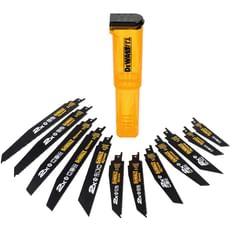
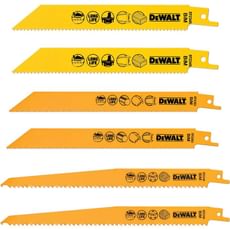
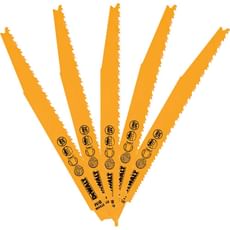
DeWalt has established itself as a leading manufacturer of premium reciprocating saw blades and sabre saw blades, engineered specifically for demanding demolition, construction, and metalworking applications. The DeWalt blade range available from Tooled-Up.com combines innovative tooth geometries, advanced materials, and precision manufacturing to deliver exceptional cutting performance across wood, metal, plastics, and composite materials. Whether you're tackling heavy-duty site work or precision cutting tasks, DeWalt's comprehensive blade selection ensures you have the right tool for every application.
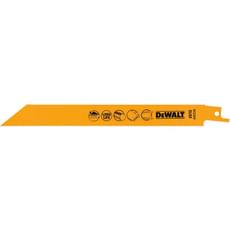
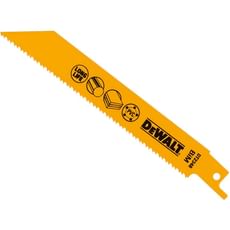
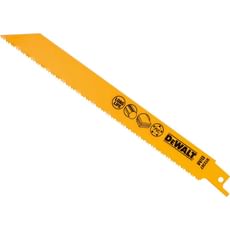
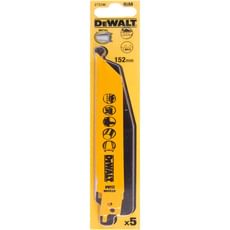
DeWalt reciprocating saw blades are designed with longevity and cutting speed in mind, featuring hardened tooth tips and reinforced blade bodies that resist bending and breaking under pressure. From bi-metal construction that combines flexibility with cutting edge durability, to carbide-tipped variants for the most abrasive materials, DeWalt blades are engineered to withstand the rigours of professional use. The range spans various lengths from compact 150mm blades for tight access work through to extended 300mm+ options for deep cutting applications.
Tooled-Up stocks DeWalt sabre and reciprocating saw blades with teeth-per-inch (TPI) configurations suited to every material and finish requirement. Lower TPI blades excel at rapid wood cutting and demolition work, whilst higher TPI options deliver cleaner cuts in metal tubing, sheet materials, and laminates. Universal shank designs ensure compatibility with all major reciprocating saw brands, making DeWalt blades a versatile choice for multi-tool workshops and contractors working across different equipment platforms.
Why Choose DeWalt Sabre & Reciprocating Saw Blades?
DeWalt's reputation for producing professional-grade cutting solutions is built on decades of manufacturing expertise and continuous innovation. Their reciprocating saw blades consistently outperform cheaper alternatives in both cut count and cutting speed, delivering lower cost-per-cut despite premium pricing. The patented tooth designs featured across the DeWalt blade range reduce vibration and cutting resistance, resulting in straighter cuts, less user fatigue, and extended blade life even in challenging materials.
The bi-metal construction used throughout much of the DeWalt blade range represents a significant engineering advantage, bonding high-speed steel cutting edges to flexible spring steel bodies. This combination prevents the catastrophic blade failure common with cheaper carbon steel alternatives whilst maintaining the flexibility required for flush cutting and curved work. DeWalt's manufacturing processes ensure consistent heat treatment and precision grinding, resulting in reliable performance across every blade in the packet.
Professional tradespeople choose DeWalt blades because they maintain cutting efficiency throughout their working life rather than degrading rapidly after initial use. The anti-stick coatings applied to many DeWalt blades reduce friction and heat build-up when cutting resinous woods, plastics, and coated materials, preventing premature dulling and material welding to the blade surface. This attention to real-world cutting conditions demonstrates DeWalt's understanding of professional requirements.
Who Uses DeWalt Sabre & Reciprocating Saw Blades?
- Demolition Contractors: Relying on DeWalt blades for rapid cutting through mixed materials during strip-out work
- Plumbers and Heating Engineers: Using metal-cutting variants for copper, steel, and cast iron pipework
- Electricians: Requiring precise cuts in cable trays, conduit, and building fabric for installation work
- Carpenters and Joiners: Depending on wood-cutting blades for timber frame construction, renovation, and demolition
- Maintenance Engineers: Stocking various blade types for diverse repair and modification tasks
- Scaffolders: Cutting through steel tubing and fixings during erection and dismantling operations
- Vehicle Body Repair Technicians: Using metal-cutting blades for panel removal and modification
- Window Fitters: Employing fine-tooth blades for cutting plastic profiles and composite materials
Key Features of DeWalt Sabre & Reciprocating Saw Blades
Bi-Metal Construction: High-speed steel cutting edges electron-beam welded to spring steel bodies provide exceptional flexibility combined with superior edge retention, preventing blade breakage during demanding applications.
Optimised Tooth Geometry: Variable tooth pitch designs across many DeWalt blades reduce vibration whilst accelerating cutting speed through improved chip clearance, particularly beneficial in thick section materials and stacked cutting applications.
Anti-Stick Coatings: PTFE and proprietary surface treatments reduce friction and prevent material adhesion, keeping blades cooler during extended cutting sessions and significantly extending usable blade life.
Universal Shank Design: Standard half-inch shank fitting ensures compatibility with DeWalt reciprocating saws and virtually all competitor brands, providing flexibility for mixed-fleet workshops.
Reinforced Blade Bodies: Thicker gauge materials in critical stress areas prevent blade bending and deflection during aggressive cutting, maintaining straight accurate cuts even under side-loading conditions.
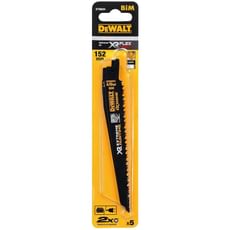
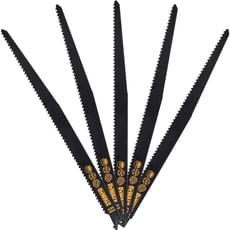
Carbide-Tipped Options: Specialist blades featuring brazed carbide teeth tackle extremely abrasive materials including fibreglass, cement board, and nail-embedded timber where conventional blades rapidly fail.
Popular DeWalt Sabre & Reciprocating Saw Blades
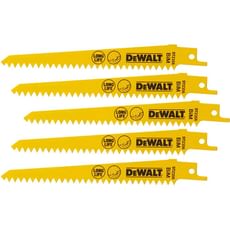
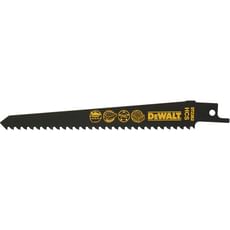
Wood Cutting Blades: Fast-cutting demolition blades with aggressive tooth patterns and low TPI counts excel at rapid cutting through structural timber, floorboards, and joinery. Available in various lengths to suit different saw depths and access requirements.
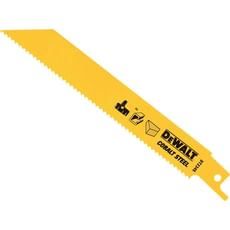
Metal Cutting Blades: Bi-metal blades with 18-24 TPI configurations deliver clean cuts through ferrous and non-ferrous metals including steel sections, copper pipework, aluminium profiles, and sheet materials up to 10mm thickness.
Multi-Material Blades: Versatile options suitable for cutting wood, plastics, and thin metals make ideal general-purpose choices for maintenance work and situations where material types vary throughout the cutting task.
Heavy-Duty Demolition Blades: Reinforced blades designed specifically for aggressive cutting through nail-embedded timber, mixed building materials, and demanding strip-out applications where blade breakage is a common concern.
Safety and Compliance
Always ensure reciprocating saw blades are securely fitted before operation and verify that the blade length and type suits the material being cut. DeWalt recommends wearing appropriate PPE including safety glasses, hearing protection, and cut-resistant gloves when operating reciprocating saws. Ensure workpieces are properly secured and check for hidden services, nails, or other hazards before cutting.
DeWalt blades are manufactured to comply with relevant UK and European safety standards. Always allow blades to stop completely before setting down the saw, and never attempt to slow or stop a moving blade manually. Inspect blades before use for damage, cracks, or missing teeth, and replace any compromised blades immediately to prevent breakage during operation.
When cutting materials that may contain hazardous substances such as asbestos, lead paint, or treated timber, follow HSE guidelines and COSHH regulations regarding appropriate controls, respiratory protection, and waste disposal. Ensure adequate ventilation when cutting materials that generate hazardous dust or fumes.
Frequently Asked Questions
What TPI should I choose for cutting metal with DeWalt reciprocating saw blades?
For general metal cutting including pipework and structural steel, select DeWalt bi-metal blades with 18-24 TPI. Lower TPI (14-18) suits thicker sections above 5mm, whilst higher TPI (24+) delivers cleaner cuts in thin sheet metal and tubing under 3mm wall thickness.
Can I use DeWalt reciprocating saw blades in other brands of reciprocating saws?
Yes, DeWalt reciprocating saw blades feature universal half-inch shank fittings compatible with virtually all reciprocating saw brands including Makita, Milwaukee, Bosch, and others. The standardised shank design ensures reliable clamping across different tool-less and keyed chuck systems.
How do I know when to replace a DeWalt reciprocating saw blade?
Replace blades when cutting speed noticeably decreases, when excessive pressure is required to maintain cutting progress, or when visible tooth damage occurs. Blunt blades generate excessive heat, increase vibration, and create dangerous kickback situations. For safety-critical work, replace blades proactively rather than waiting for complete failure.
What's the difference between DeWalt bi-metal and carbide-tipped reciprocating saw blades?
Bi-metal blades combine flexibility with good edge retention for general wood and metal cutting. Carbide-tipped blades feature extremely hard cutting edges suited to abrasive materials like fibreglass, cement board, and nail-embedded timber, lasting significantly longer in these demanding applications but at higher initial cost.
Are longer reciprocating saw blades always better for deep cutting?
Whilst longer DeWalt blades enable deeper cuts, they're more prone to deflection and vibration in demanding materials. Select the shortest blade that provides adequate cutting depth for your application - typically 50mm longer than the material thickness. Excessively long blades compromise cutting accuracy and increase breakage risk.