

DeWalt Chainsaw Bars
 Loading...
End of content
Error - No more pages to load
DeWalt Chainsaw Bars at Tooled-Up.com
DeWalt has earned its reputation as one of the most trusted names in professional power tools and accessories, and their chainsaw bars are no exception to this standard of excellence. Designed specifically to complement DeWalt's range of cordless and corded chainsaws, these replacement bars deliver the durability and precision cutting performance that professionals demand on the job site. Whether you're maintaining equipment for commercial tree surgery, landscaping work, or general property maintenance, DeWalt chainsaw bars provide the reliability needed for consistent, professional results.
Each DeWalt chainsaw bar is manufactured to exacting specifications, ensuring proper compatibility with DeWalt chainsaw models whilst maintaining optimal chain tension and cutting efficiency. The brand's commitment to quality means these bars undergo rigorous testing to withstand the demanding conditions faced by arborists, groundskeepers, and forestry professionals. Tooled-Up.com stocks genuine DeWalt chainsaw bars designed to deliver extended service life and maintain cutting accuracy throughout their operational lifespan.
Investing in authentic DeWalt replacement bars ensures your chainsaw continues to perform at its peak, reducing downtime and maintaining the safety standards essential for professional cutting applications. These bars are engineered to work seamlessly with DeWalt chain systems, providing the proper gauge, pitch, and length specifications required for safe and efficient operation.
Why Choose DeWalt Chainsaw Bars?
DeWalt's reputation for building tools that survive the toughest job sites extends to their chainsaw bar range. These bars are constructed from high-grade steel alloys that resist warping, bending, and premature wear even under intensive use. The precision manufacturing process ensures consistent rail width and groove depth, which translates to smoother chain operation, reduced friction, and longer chain life.
One of the standout qualities of DeWalt chainsaw bars is their heat-treated construction, which provides exceptional resistance to the extreme temperatures generated during prolonged cutting sessions. This heat treatment process also enhances the bar's resistance to impact damage from contact with hard materials or accidental strikes. The sprocket nose designs featured on many DeWalt bars incorporate replaceable components, allowing you to extend the bar's service life by simply replacing worn sprockets rather than the entire bar assembly.
DeWalt's commitment to user safety is evident in their bar designs, which incorporate features such as reduced kickback potential and improved chip clearance. These safety-focused engineering decisions make DeWalt chainsaw bars particularly suitable for professional environments where operators may be working long shifts or in challenging positions. The brand's extensive research and development ensures each bar meets or exceeds relevant safety standards whilst delivering the cutting performance professionals require.
Who Uses DeWalt Chainsaw Bars?
DeWalt chainsaw bars are the choice of numerous professional trades and industries across the UK:
- Professional Arborists: Tree surgeons rely on DeWalt bars for precision cutting during pruning, sectional felling, and crown reduction work
- Forestry Workers: Commercial timber operations trust DeWalt's durability for high-volume cutting applications
- Landscape Contractors: Groundskeepers and landscaping professionals use DeWalt bars for regular maintenance and site clearance
- Estate Managers: Property and estate maintenance teams depend on DeWalt equipment for woodland management
- Local Authorities: Council maintenance crews use DeWalt bars for parks, highways, and public space management
- Utility Companies: Line clearance teams working around power infrastructure require the reliability DeWalt provides
- Agricultural Workers: Farmers and agricultural contractors use DeWalt bars for hedgerow management and general farm maintenance
- Serious DIY Enthusiasts: Homeowners with larger properties who demand professional-grade equipment for their own maintenance work
Key Features of DeWalt Chainsaw Bars
DeWalt chainsaw bars incorporate several distinctive features that set them apart in the professional cutting equipment market. The precision-machined guide rails ensure consistent chain tracking, which reduces vibration and improves cutting accuracy whilst minimising operator fatigue during extended use. This attention to manufacturing precision also promotes even wear patterns, extending both chain and bar life.
Many DeWalt bars feature hard-chromed surfaces on critical wear areas, providing exceptional resistance to abrasion from the cutting chain and debris encountered during cutting operations. This surface treatment significantly extends the operational life of the bar, particularly when working with abrasive materials or in dusty environments. The oil distribution systems incorporated into DeWalt bars ensure consistent lubrication reaches all critical contact points, reducing friction and heat build-up.
The nose sprocket designs used on DeWalt bars typically feature sealed bearings that resist contamination from sawdust, dirt, and moisture. This sealed construction maintains smooth sprocket rotation even in adverse conditions, reducing chain wear and preventing premature bar failure. DeWalt's bar mounting systems are engineered for precise alignment with their chainsaw powerheads, ensuring optimal chain tension adjustment and reducing the risk of chain derailment during operation.
Popular DeWalt Chainsaw Bars
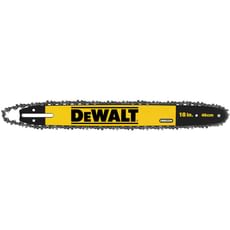
Whilst specific product availability may vary, Tooled-Up typically stocks DeWalt chainsaw bars in various lengths to suit different cutting applications and DeWalt chainsaw models. Common bar lengths include 300mm (12"), 350mm (14"), and 400mm (16") options, each designed for specific cutting scenarios and power requirements.
The shorter 300mm bars are ideal for pruning work, limbing operations, and use in confined spaces where manoeuvrability is essential. Medium-length bars around 350mm provide an excellent balance between cutting capacity and control, making them versatile choices for general arborist work and property maintenance. The longer 400mm bars suit more demanding felling and bucking applications where greater cutting depth is required.
DeWalt offers both laminated and solid bar constructions depending on the application requirements. Laminated bars consist of multiple steel layers and are generally lighter, making them suitable for smaller saws and applications where operator fatigue is a concern. Solid bars provide maximum rigidity and durability for professional applications demanding the highest levels of performance and longevity.
Safety and Compliance
All DeWalt chainsaw bars available from Tooled-Up comply with relevant UK and European safety standards, including BS EN ISO 11681 for chainsaw safety requirements. These standards govern critical aspects such as kickback potential, strength requirements, and marking specifications. DeWalt bars feature clear identification markings showing gauge, pitch, and length specifications, enabling users to select the correct replacement components.
When using DeWalt chainsaw bars, operators should always follow HSE guidance for chainsaw operation, including wearing appropriate personal protective equipment such as chainsaw trousers, safety boots, gloves, helmet with face protection, and hearing protection. Regular inspection of the guide bar is essential—check for wear indicators, burrs on the rail edges, and proper oil flow before each use. The bar groove should be cleaned regularly to prevent compacted sawdust from affecting chain tension and operation.
It's crucial to use only chains with the correct gauge and pitch specifications for your DeWalt bar, as mismatched components can lead to dangerous operating conditions. Always ensure the chain tension is properly adjusted before starting work, and check tension regularly during extended cutting sessions as chains can stretch during initial use. DeWalt bars should be rotated regularly during chain sharpening to promote even wear on both sides of the guide rails.
Frequently Asked Questions
How do I know which DeWalt chainsaw bar fits my saw?
Check your chainsaw's model number and consult the manufacturer's specifications for compatible bar lengths, gauge (groove width), and pitch (spacing between drive links). DeWalt bars are clearly marked with these specifications. You can also measure your existing bar from the front of the saw to the tip, excluding the portion that fits into the housing.
How often should I replace my DeWalt chainsaw bar?
Bar replacement depends on usage intensity and maintenance practices. Professional users may need replacement annually or even more frequently, whilst occasional users might get several years of service. Replace the bar when the guide rails show excessive wear, the groove is too wide to maintain proper chain tension, or if the bar is bent or damaged. Regular rotation and proper maintenance significantly extend bar life.
Can I use non-DeWalt chains with DeWalt chainsaw bars?
Whilst technically possible if the gauge and pitch match exactly, it's recommended to use DeWalt chains with DeWalt bars for optimal performance and to maintain warranty coverage. DeWalt designs their bars and chains as integrated systems, ensuring proper fit, lubrication, and cutting efficiency. Using matched components also ensures compliance with safety standards.
Why is my DeWalt chainsaw bar wearing unevenly?
Uneven wear typically results from failing to rotate the bar regularly, improper chain sharpening (where one side cuts more aggressively), or using excessive chain tension. To promote even wear, flip the bar over each time you sharpen or replace the chain. Ensure your chain is sharpened correctly with even tooth lengths on both sides, and maintain proper tension—just tight enough that you can pull the chain around the bar manually with moderate effort.
What maintenance do DeWalt chainsaw bars require?
Clean the bar groove after each use to remove compacted sawdust and debris. Check the oil holes are clear to ensure proper lubrication. Periodically remove burrs from the rail edges using a flat file, always filing from the inside outward. Inspect the sprocket nose for smooth rotation and replace if worn. Store bars horizontally or hanging to prevent warping, and apply light oil to prevent rust during storage periods.