

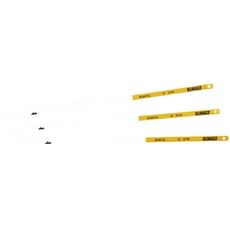
DeWalt Hacksaw Blades
 Loading...
DeWalt Hacksaw Blades at Tooled-Up.com
DeWalt has established itself as one of the most trusted names in professional hand tools, and their hacksaw blades are no exception to this reputation for durability and performance. Engineered to deliver precise, efficient cuts across a wide range of materials, DeWalt hacksaw blades combine innovative tooth geometry with high-quality steel construction to meet the demanding requirements of professional tradespeople and serious DIY enthusiasts alike.
The DeWalt hacksaw blade range available from Tooled-Up.com showcases the brand's commitment to delivering reliable cutting solutions that maintain their sharpness longer and cut faster than conventional blades. Whether you're cutting through metal, plastic, or composite materials on site or in the workshop, DeWalt's engineering ensures consistent performance that professionals have come to depend on. Each blade is manufactured to exacting standards, providing the perfect balance between flexibility and rigidity to reduce blade breakage whilst maintaining a straight, accurate cutting line.
Built to withstand the rigours of daily professional use, DeWalt hacksaw blades feature hardened teeth that resist wear and dulling even when cutting through tough materials. The precision-ground teeth are designed to clear debris efficiently, reducing binding and improving cutting speed across a variety of applications from plumbing pipework to steel fabrication.
Why Choose DeWalt Hacksaw Blades?
DeWalt's reputation for producing professional-grade tools extends fully into their hacksaw blade range. These blades are manufactured using high-carbon steel that has been heat-treated to optimise hardness and flexibility, creating a blade that cuts aggressively whilst resisting the fatigue that causes premature breakage. The advanced tooth geometry employed across the DeWalt hacksaw blade range ensures faster cutting with less effort, reducing user fatigue during extended cutting tasks.
What truly distinguishes DeWalt hacksaw blades is their consistency and longevity. Professionals know that a blade that maintains its cutting edge throughout its working life represents genuine value, and DeWalt's quality control processes ensure that every blade meets rigorous performance standards. The blades' resistance to tooth stripping and blade warping means fewer blade changes and less downtime on site, which translates directly to improved productivity and lower operating costs.
DeWalt backs their hacksaw blade range with the same professional warranty and customer support that has made them a favourite among tradespeople. This commitment to standing behind their products demonstrates the confidence DeWalt has in the quality and durability of their cutting tools.
Who Uses DeWalt Hacksaw Blades?
DeWalt hacksaw blades are the preferred choice for a diverse range of professionals and applications:
- Plumbers and heating engineers cutting copper pipes, plastic waste pipes, and steel tubing
- Metal fabricators requiring precise cuts in steel, aluminium, and brass
- Maintenance engineers performing repairs and modifications across industrial facilities
- Electricians cutting conduit, cable tray, and metallic enclosures
- Automotive technicians working on exhaust systems and chassis components
- Construction workers cutting various materials on building sites
- DIY enthusiasts who demand professional-quality results from their tools
- General fabrication workshops requiring reliable, versatile cutting solutions
Key Features of DeWalt Hacksaw Blades
DeWalt hacksaw blades incorporate several distinctive features that enhance their performance and longevity. The high-carbon steel construction provides the ideal combination of hardness for edge retention and flexibility to prevent snapping under load. Each blade undergoes precision grinding to create consistently sharp teeth that deliver clean, burr-free cuts with minimal filing required afterwards.
The tooth configuration is optimised for different materials and cutting requirements, with appropriate tooth spacing (measured in teeth per inch or TPI) to match the application. Finer tooth configurations excel at cutting thin-walled materials and harder metals, whilst coarser teeth clear material more quickly when cutting thicker sections or softer materials. The bi-metal construction used in premium DeWalt hacksaw blades combines a flexible spring steel body with high-speed steel cutting edges, creating an exceptionally durable blade that resists both breakage and dulling.
DeWalt's attention to manufacturing tolerances ensures that their hacksaw blades fit securely in standard hacksaw frames, maintaining proper tension for accurate, straight cuts. The blades are clearly marked with the DeWalt brand and specifications, making it easy to identify the correct replacement blade for your specific cutting requirements.
Popular DeWalt Hacksaw Blades
The DeWalt hacksaw blade selection at Tooled-Up encompasses various tooth configurations and blade lengths to suit different applications. Standard 300mm (12-inch) blades are the most common choice for general-purpose hacksaws, fitting the majority of professional and DIY frames. These are available in multiple TPI options, from coarse blades (14-18 TPI) ideal for cutting thick sections of softer materials like aluminium and plastic, through to fine blades (24-32 TPI) suited to precision work in harder metals and thin-walled tubing.
DeWalt's bi-metal hacksaw blades represent the premium option within their range, offering significantly extended blade life compared to standard carbon steel blades. These are particularly popular with professionals who require maximum durability and cutting performance in demanding applications. Mini hacksaw blades are also available for DeWalt compact saws, providing the same quality and performance in a smaller format for accessing confined spaces.
Safety and Compliance
When using DeWalt hacksaw blades, adherence to proper safety practices is essential. Always ensure the blade is correctly installed with teeth facing forward (away from the handle) and properly tensioned in the frame to prevent blade breakage or wandering during cutting. Worn or damaged blades should be replaced immediately as they require excessive force and are more likely to break or bind, potentially causing injury.
Appropriate personal protective equipment should be worn when cutting, including safety glasses to protect against metal fragments and swarf, and gloves to protect hands from sharp edges on both the blade and workpiece. Ensure materials are properly secured before cutting to prevent movement that could cause the blade to bind or snap. When cutting metal, be aware that both the blade and workpiece can become hot from friction, particularly during extended cutting operations.
DeWalt hacksaw blades meet relevant UK and European safety standards for hand tool accessories. Proper disposal of worn blades is important—wrap used blades in heavy paper or cardboard and clearly mark them as sharp waste before disposal to protect waste handlers.
Frequently Asked Questions
What TPI should I choose for my DeWalt hacksaw blade?
The teeth per inch (TPI) depends on your material thickness and hardness. For general steel and iron, 18-24 TPI is ideal. Use 24-32 TPI for thin-walled tubing, conduit, and harder metals. For thicker sections of softer materials like aluminium, copper, or plastic, 14-18 TPI cuts faster. A good rule is to have at least three teeth in contact with the material at all times to prevent snagging.
How long should a DeWalt hacksaw blade last?
Blade life depends on the material being cut, cutting technique, and blade type. DeWalt bi-metal blades typically last significantly longer than standard carbon steel blades—often 5-10 times longer in demanding applications. With proper technique and appropriate blade selection, a quality DeWalt blade should complete numerous cuts before requiring replacement. Replace blades when cutting becomes noticeably slower or requires excessive pressure.
Can I use DeWalt hacksaw blades in any hacksaw frame?
DeWalt hacksaw blades are manufactured to standard dimensions (typically 300mm/12-inch for full-size saws) and will fit any quality hacksaw frame designed for standard blades. The pin holes at each end are standardised, ensuring compatibility across different manufacturers' frames. Always ensure the blade is properly tensioned according to the frame manufacturer's instructions for optimal performance.
What's the difference between DeWalt carbon steel and bi-metal hacksaw blades?
Carbon steel blades are economical and suitable for general-purpose cutting of softer materials. Bi-metal blades combine a flexible spring steel body with high-speed steel teeth, offering superior durability, heat resistance, and cutting performance. Bi-metal blades are ideal for professional use, cutting harder materials, or applications where extended blade life justifies the higher initial cost. They're particularly recommended for daily professional use or cutting stainless steel and other challenging materials.
How do I get the best performance from my DeWalt hacksaw blades?
Ensure proper blade tension—the blade should "ping" when plucked. Use long, smooth strokes utilising the full blade length, with moderate pressure on the forward stroke and light pressure on the return. Let the blade do the work rather than forcing it. Keep the cutting angle consistent and use cutting lubricant when working with metals to reduce heat and friction. Store blades in a dry location to prevent rust, and always select the appropriate TPI for your material to maximise cutting efficiency and blade life.