

DeWalt Holesaws
 Loading...
End of content
Error - No more pages to load
DeWalt Holesaws at Tooled-Up.com
DeWalt has established itself as a premium manufacturer of cutting accessories, and their holesaw range exemplifies the brand's commitment to durability and performance. From plumbers cutting through soil stacks to electricians installing back boxes, DeWalt holesaws deliver clean, precise cuts across a wide variety of materials. The range encompasses everything from individual holesaws for specific applications to comprehensive kits designed for multi-trade use on demanding job sites.
Built to withstand the rigours of professional daily use, DeWalt holesaws feature robust construction that maintains cutting performance even after repeated use. The brand's engineering expertise ensures that each holesaw in their range offers optimal tooth geometry for its intended application, whether that's cutting through timber, plasterboard, metal, or composite materials. This attention to detail has made DeWalt a trusted name among UK tradespeople who demand reliability from their cutting accessories.
The comprehensive selection available from Tooled-Up includes holesaws in sizes ranging from compact 14mm cutters through to large 152mm models, covering virtually every drilling requirement encountered on residential, commercial, and industrial sites. DeWalt's modular arbor system allows for quick changeovers between different diameter holesaws, maximising productivity when working through varied specifications.
Why Choose DeWalt Holesaws?
DeWalt's reputation in the holesaw market stems from their focus on longevity and cutting efficiency. The brand employs high-speed steel and bi-metal construction across their range, with hardened teeth that resist dulling even when cutting abrasive materials. This translates directly to lower cost-per-cut ratios, making DeWalt holesaws an economically sound choice for busy professionals who cannot afford downtime caused by failed cutting accessories.
The engineering behind DeWalt holesaws prioritises both speed and precision. Their tooth patterns are specifically designed to clear waste material efficiently whilst maintaining aggressive cutting action, reducing the physical effort required and minimising heat build-up that can compromise both the holesaw and the workpiece. DeWalt's quick-change arbor systems further enhance productivity, allowing tradespeople to switch between sizes without fumbling with multiple tools or components.
Quality control is fundamental to the DeWalt brand philosophy. Each holesaw undergoes rigorous testing to ensure it meets the demanding standards expected by professional users. This commitment to consistency means that when you specify DeWalt holesaws for your cutting requirements, you can be confident of predictable, reliable performance across your entire toolkit.
Who Uses DeWalt Holesaws?
DeWalt holesaws are the preferred choice for numerous trades and applications:
- Electricians - cutting access holes for back boxes, cable entry points, and lighting installations
- Plumbers - creating penetrations for pipework through joists, walls, and composite panels
- HVAC Engineers - drilling ventilation holes and ductwork access points
- Joiners and Carpenters - installing door hardware, creating cable routing channels, and general timber work
- Shopfitters - precision cutting for display installations and commercial fit-outs
- Maintenance Engineers - repair and modification work across diverse materials
- Kitchen and Bathroom Fitters - cutting tap holes, waste outlets, and appliance connections
- DIY Enthusiasts - home improvement projects requiring professional-grade cutting performance
Key Features of DeWalt Holesaws
Bi-Metal Construction: DeWalt combines high-speed steel cutting edges with flexible backing material, creating holesaws that resist tooth stripping whilst remaining resistant to body cracking under load.
Optimised Tooth Geometry: Variable tooth pitch designs reduce vibration and improve cutting speed across different material densities, from softwood through to stainless steel.
Extended Pilot Bits: DeWalt arbors feature hardened pilot bits that remain centred throughout the cutting process, ensuring accurate hole placement even in challenging positions.
Quick-Change Systems: Tool-free arbor designs allow rapid holesaw changes, eliminating wasted time and improving workflow efficiency on time-critical installations.
Deep-Cut Capability: Extended body depths on many DeWalt holesaws enable cutting through substantial material thicknesses in a single pass, including doubled joists and thick composite boards.
Clear Material Identification: Size markings remain legible even after extended use, preventing selection errors when working from tool bags or van storage.
Popular DeWalt Holesaws
Standard Bi-Metal Holesaws: The core of DeWalt's offering, these general-purpose holesaws handle everyday cutting requirements across wood, plastic, and thin metal sheets. Available in comprehensive size ranges, they're ideal for electricians, plumbers, and general maintenance work.
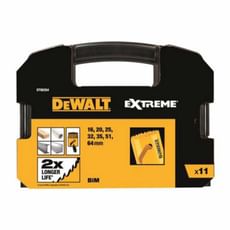
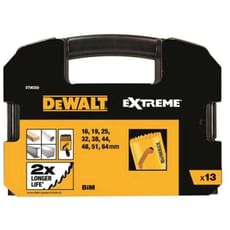
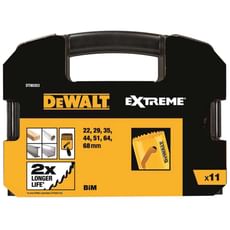
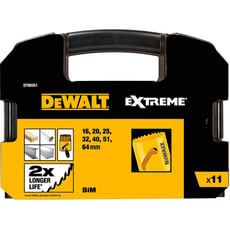
Multi-Purpose Holesaw Kits: Pre-assembled sets containing the most commonly specified sizes alongside universal arbors and pilot bits. These kits represent excellent value for tradespeople establishing their toolkit or contractors equipping new apprentices.
Deep-Cut Holesaws: Designed for cutting through substantial material thicknesses, these extended-depth models are essential for structural work, timber frame construction, and installations requiring penetration through multiple layers.
Specialist Material Holesaws: Application-specific designs optimised for challenging materials including stainless steel, cast iron, and abrasive composites, featuring reinforced tooth patterns and enhanced heat resistance.
Safety and Compliance
When using DeWalt holesaws, adherence to Health and Safety Executive (HSE) guidelines for powered hand tools is essential. Always ensure workpieces are securely clamped before commencing cuts, and verify that the drill's speed setting is appropriate for both the holesaw diameter and material being cut. Excessive speeds can cause premature tooth failure and dangerous material ejection.
Personal protective equipment should include safety glasses or face shields to guard against swarf and material chips, whilst gloves should be avoided when operating rotating equipment to prevent entanglement hazards. When cutting materials that generate dust or fine particles, appropriate respiratory protection conforming to EN 149 standards should be worn.
Regular inspection of DeWalt holesaws for damaged or missing teeth is crucial for maintaining safe operation. Worn holesaws require increased feed pressure, which can lead to drill motor overload, loss of control, or sudden breakthrough causing injury. Replace holesaws showing signs of significant wear or damage before commencing new work.
Frequently Asked Questions
What's the difference between DeWalt's bi-metal and standard holesaws?
DeWalt's bi-metal holesaws combine high-speed steel cutting edges with a flexible spring steel body, offering significantly longer service life compared to standard carbon steel holesaws. Bi-metal construction resists tooth breakage and body cracking, making them suitable for cutting harder materials and demanding professional applications. For tradespeople using holesaws regularly, bi-metal options deliver substantially better value despite their higher initial cost.
Can DeWalt holesaws cut through metal as well as wood?
Yes, DeWalt's bi-metal holesaws are designed for multi-material applications including mild steel, aluminium, copper, brass, and even thin stainless steel sheets. The key is matching drill speed to material hardness – metals require slower speeds and steady feed pressure compared to timber. Always consult the manufacturer's speed recommendations and use appropriate cutting lubricant when working with ferrous metals to maximise holesaw life.
Are DeWalt holesaws compatible with other manufacturers' arbors?
DeWalt holesaws generally follow industry-standard thread patterns, providing compatibility with many universal arbor systems. However, for optimal performance and safety, Tooled-Up recommends using DeWalt arbors with DeWalt holesaws. Matched systems ensure proper engagement depth, correct pilot bit length, and reliable retention under load. Mixing components from different manufacturers may compromise safety and cutting performance.
How do I remove the cut core from inside a DeWalt holesaw?
Most DeWalt holesaws feature ejection slots that allow cores to be levered out using a flat-blade screwdriver once the holesaw is removed from the arbor. For stubborn cores, partially reassemble the holesaw onto the arbor and use the pilot bit to push the core backwards from the opposite side. Never attempt to remove cores whilst the holesaw is still fitted to a powered drill.
What size holesaws do I need for standard UK electrical back boxes?
For single plasterboard installations, a 60mm holesaw suits standard 35mm deep back boxes, whilst 65mm provides clearance for deeper boxes or doubled plasterboard. Dry-lining boxes typically require 63mm diameter holes. DeWalt's electrician-specific holesaw kits often include these commonly specified sizes alongside the 25mm and 32mm cutters used for conduit and cable entry points, making them ideal for electrical contractors and sparkies working on domestic and light commercial installations.