

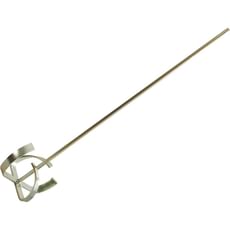
DeWalt Mixing Paddles
 Loading...
End of content
Error - No more pages to load
DeWalt Mixing Paddles at Tooled-Up.com
DeWalt has established itself as a trusted name in the construction and trades industry, and their mixing paddles exemplify the brand's commitment to professional-grade performance and durability. Designed to handle the demanding requirements of mixing plaster, mortar, adhesives, paint, and other viscous materials, DeWalt mixing paddles deliver consistent results across a wide range of applications. Whether you're a professional plasterer working on large-scale commercial projects or a decorator mixing emulsion for residential work, DeWalt's mixing solutions are engineered to withstand the rigours of daily site use.
The DeWalt mixing paddle range available from Tooled-Up.com showcases the manufacturer's understanding of professional needs, with robust construction that resists bending and fatigue even when mixing heavy compounds. Each paddle is manufactured to exacting standards, ensuring reliable performance that tradespeople can depend on. DeWalt's reputation for producing tools and accessories that deliver long-term value makes their mixing paddles a sound investment for anyone who requires consistent, efficient mixing capabilities on the job.
Compatibility is a key consideration when selecting mixing paddles, and DeWalt designs their products to work seamlessly with professional mixing drills and stirrers. The hex shank fittings provide secure attachment and minimize slippage during operation, whilst the carefully engineered paddle geometries optimize mixing efficiency and reduce operator fatigue during extended use.
Why Choose DeWalt Mixing Paddles?
DeWalt's reputation in the professional tools sector extends naturally to their mixing paddle range, where the same principles of durability and performance excellence apply. These paddles are constructed from high-quality materials that resist corrosion and maintain their structural integrity even after thousands of mixing cycles. The robust steel construction ensures that DeWalt mixing paddles won't bend or break when working with dense, heavy materials like tile adhesive or thick plaster compounds.
Professional tradespeople choose DeWalt mixing paddles because they understand the cost implications of accessory failure on site. A bent or broken paddle doesn't just mean replacing the component—it means project delays, wasted materials, and potential customer dissatisfaction. DeWalt's engineering approach prioritizes reliability, ensuring that their mixing paddles perform consistently throughout their service life. The brand's extensive research into material properties and paddle geometry means these accessories deliver optimal mixing patterns that thoroughly combine materials whilst minimizing air entrapment.
The attention to detail in DeWalt's manufacturing processes results in mixing paddles with precisely formed blades and carefully balanced designs that reduce vibration and strain on both the operator and the mixing drill. This professional focus makes DeWalt mixing paddles a preferred choice for tradespeople who demand tools and accessories that match their skill level and work ethic.
Who Uses DeWalt Mixing Paddles?
DeWalt mixing paddles serve a diverse range of professional trades and skilled DIY enthusiasts, including:
- Plasterers and Rendering Specialists: Mixing plaster, finishing compounds, and render materials to consistent textures for wall and ceiling applications
- Tilers: Preparing tile adhesives and grouts with the correct consistency for professional installations
- Decorators and Painters: Mixing emulsions, textured coatings, and specialist paint products for even coverage
- Builders and General Contractors: Preparing mortar, concrete, and various site-mixed compounds for construction projects
- Floor Layers: Mixing self-levelling compounds and floor adhesives for substrate preparation
- Property Maintenance Professionals: Handling various mixing tasks across different trades during renovation and repair work
- Serious DIY Enthusiasts: Home improvers who appreciate professional-quality tools for their renovation projects
Key Features of DeWalt Mixing Paddles
DeWalt mixing paddles incorporate several distinctive features that enhance their performance and usability:
- Heavy-Duty Steel Construction: Manufactured from robust steel materials that resist bending, twisting, and fatigue during intensive mixing operations
- Hex Shank Compatibility: Precision-machined hex shanks that provide secure fitment in drill chucks, minimizing slippage and maximizing power transfer
- Optimised Paddle Geometry: Carefully designed blade configurations that create efficient mixing patterns, reducing mixing time and operator effort
- Corrosion-Resistant Finishes: Protective coatings that extend service life and facilitate easy cleaning after use
- Various Sizes and Configurations: Different paddle diameters and lengths to suit various bucket sizes, mixing volumes, and material viscosities
- Balanced Design: Weight distribution that minimizes vibration and reduces strain on mixing drills and operators during extended use
- Professional-Grade Quality: Manufacturing standards that ensure consistency and reliability across the entire product range
Popular DeWalt Mixing Paddles
The DeWalt mixing paddle selection at Tooled-Up includes options suitable for various materials and applications. Standard spiral mixing paddles excel at general-purpose mixing tasks, providing efficient blending action for plaster, mortar, and paint products. These versatile paddles feature a helical design that draws material upward through the mixing bucket, creating thorough combination with minimal air entrapment.
For specialist applications, DeWalt offers paddles with different geometries optimized for specific materials. Paddles designed for thin, liquid materials feature more aggressive mixing action, whilst those intended for heavy, viscous compounds incorporate reinforced construction and blade configurations that can move dense materials effectively. The range typically includes various lengths to accommodate different bucket depths and mixing volumes, from small batches for patch repairs to large quantities for extensive projects.
Professional tradespeople often maintain multiple DeWalt mixing paddles in different sizes, allowing them to select the optimal tool for each specific mixing requirement. This approach ensures efficient material preparation whilst extending the service life of each individual paddle by using the appropriate size for each task.
Safety and Compliance
When using DeWalt mixing paddles, operators should observe proper safety protocols to prevent injury and ensure optimal results. Always ensure the mixing paddle is securely fitted in the drill chuck before operation, and verify that the paddle is appropriate for the material being mixed and the power output of the mixing drill being used. Wear appropriate personal protective equipment including safety glasses, dust masks when mixing dry materials, and protective gloves.
Maintain a stable, balanced stance when operating mixing equipment, and never exceed the recommended mixing speed for the material being prepared. High speeds can introduce excessive air into some compounds, compromising their performance characteristics. Always disconnect power tools from the mains supply before fitting or removing mixing paddles, and inspect paddles regularly for signs of damage, wear, or deformation that could affect mixing performance or safety.
DeWalt mixing paddles should be cleaned promptly after use to prevent material from hardening on the blades, which can affect balance and mixing efficiency. Store paddles in a dry location to minimize corrosion, and dispose of any paddles that show significant bending, cracking, or wear that could compromise their structural integrity during operation.
Frequently Asked Questions
What size mixing paddle do I need for my application?
Paddle size selection depends on bucket diameter, mixing volume, and material viscosity. As a general guide, the paddle diameter should be approximately two-thirds of the bucket diameter to allow proper material circulation. For small batches or dense materials, smaller paddles (80-100mm diameter) work well, whilst larger volumes and thin materials benefit from larger paddles (120-160mm diameter). Consider the power output of your mixing drill—larger paddles require more torque to operate effectively in heavy materials.
Can I use DeWalt mixing paddles with any brand of drill?
Yes, DeWalt mixing paddles feature standard hex shank fittings that are compatible with most professional mixing drills and heavy-duty power drills with suitable chuck capacities. However, ensure your drill has sufficient power output (typically 1200W or higher for professional mixing tasks) and appropriate speed control to handle the mixing paddle size and material viscosity you're working with. Underpowered drills may stall or overheat when used with larger paddles or dense materials.
How do I maintain my DeWalt mixing paddles?
Clean mixing paddles immediately after use, before materials harden on the blades. For water-based compounds, rinse thoroughly with clean water. For stubborn residue, soak the paddle briefly and scrub with a wire brush. Dry paddles completely before storage to prevent corrosion. Inspect paddles regularly for bending, cracking, or excessive wear. A bent paddle creates imbalanced rotation that strains your drill and produces inferior mixing results. Store paddles in a dry location, and consider hanging them to prevent blade damage.
What's the difference between spiral and flat blade mixing paddles?
Spiral mixing paddles feature helical blades that create an upward mixing action, drawing material from the bottom of the bucket and thoroughly combining it throughout the volume. This design suits general-purpose mixing of plaster, mortar, paint, and similar materials. Flat blade paddles create more lateral mixing action and are sometimes preferred for specific materials or mixing techniques. DeWalt designs their paddle geometries based on extensive research into material flow characteristics, ensuring each configuration delivers optimal results for its intended applications.
Can DeWalt mixing paddles be used with cordless drills?
Whilst DeWalt mixing paddles can physically fit cordless drills with appropriate chuck sizes, most cordless tools lack the sustained power output required for professional mixing applications, particularly with dense materials or large volumes. Battery-powered tools typically deliver insufficient torque and will drain quickly under the continuous load of mixing operations. For professional results, use DeWalt mixing paddles with mains-powered 240V mixing drills or dedicated mixing stirrers that provide the consistent power necessary for efficient material preparation.