

DeWalt Sanding Discs
 Loading...
End of content
Error - No more pages to load
DeWalt Sanding Discs at Tooled-Up.com
DeWalt has built a formidable reputation in the power tool accessories market, and their sanding discs represent a prime example of the brand's commitment to durability and performance. Engineered to withstand the demanding conditions of professional workshop and site environments, DeWalt sanding discs are designed to deliver consistent results across a wide range of materials and applications. Whether you're preparing surfaces for finishing, removing paint and rust, or achieving fine polished surfaces, DeWalt's comprehensive range of abrasive discs provides reliable solutions for both trade professionals and serious DIY enthusiasts.
The sanding disc selection available from Tooled-Up.com encompasses various grit ratings, backing materials, and attachment systems to suit different random orbital sanders, detail sanders, and disc sanders. DeWalt's focus on manufacturing consumables that match the quality and longevity of their power tools means these discs are built to maximize productivity whilst minimising downtime from premature wear or failure. From heavy stock removal through to ultra-fine finishing work, DeWalt sanding discs are formulated to maintain their cutting performance throughout their operational life.
Why Choose DeWalt Sanding Discs?
DeWalt's engineering approach to abrasive products centres on creating accessories that can withstand the rigours of daily professional use. Their sanding discs feature advanced resin bonding systems that secure the abrasive grains firmly to the backing material, reducing premature grain loss that can compromise performance and surface finish quality. This attention to bonding technology means DeWalt discs typically outlast budget alternatives, delivering better value per disc despite potentially higher initial costs.
The backing materials used in DeWalt sanding discs are carefully selected for flexibility and tear resistance. This becomes particularly important when working on contoured surfaces or applying variable pressure during the sanding process. DeWalt's quality control processes ensure consistent thickness and grain distribution across their disc ranges, which translates to uniform material removal and reduced risk of surface imperfections. For professionals whose reputation depends on finish quality, this consistency proves invaluable.
Another distinguishing factor is DeWalt's commitment to offering comprehensive grit progressions within their ranges. This allows tradespeople to maintain brand consistency throughout multi-stage finishing processes, from aggressive initial sanding through to final preparation work. The predictable performance characteristics across the DeWalt range make it easier to estimate job completion times and material requirements accurately.
Who Uses DeWalt Sanding Discs?
DeWalt sanding discs are trusted by a diverse range of professionals and skilled users, including:
- Joiners and carpenters requiring reliable wood finishing solutions for both site and workshop applications
- Cabinet makers and furniture restorers who demand consistent performance for fine finishing work
- Decorators and painters preparing surfaces for coating or removing old paint and varnish layers
- Vehicle body repair specialists working on automotive refinishing and preparation tasks
- Metal fabricators needing durable discs for deburring, surface preparation, and finishing steel and aluminium
- Maintenance teams in facilities management requiring versatile abrasives for varied remedial work
- Shopfitters conducting on-site finishing and modification work
- Serious DIY enthusiasts undertaking home renovation and furniture projects where professional results matter
Key Features of DeWalt Sanding Discs
DeWalt incorporates several distinctive features into their sanding disc designs that enhance performance and user experience. Their hook-and-loop (Velcro-style) backing systems are engineered for secure attachment and easy disc changes, with backing pads that maintain their grip characteristics even after repeated disc swaps. This becomes particularly important during jobs requiring frequent grit changes or when working in dusty environments where backing pad contamination can compromise grip.
Many DeWalt sanding discs feature anti-clogging treatments that help prevent the abrasive surface from becoming loaded with material during use. This stearate coating is particularly beneficial when sanding resinous softwoods, painted surfaces, or materials that generate fine dust particles. By maintaining an open abrasive structure for longer, these treated discs sustain their cutting efficiency and reduce the heat build-up that can damage workpieces or cause disc deterioration.
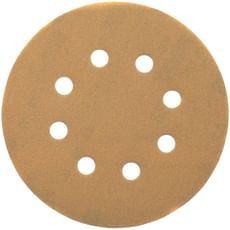
DeWalt's dust extraction hole patterns are precisely positioned to align with standard sander designs, maximising dust collection efficiency when connected to extraction systems. Effective dust removal not only improves visibility and reduces airborne particles but also prevents dust from clogging the abrasive surface, thereby extending disc life and maintaining cutting performance. The perforation quality ensures clean holes that don't compromise the disc's structural integrity during aggressive sanding operations.
Popular DeWalt Sanding Discs
Tooled-Up stocks DeWalt's extensive range of sanding disc formats to accommodate different sanding equipment and application requirements. Their random orbital sander discs are available in the most common diameters including 125mm and 150mm variants, with comprehensive grit progressions from coarse 40-60 grit options for heavy stock removal through to fine 240-400 grit discs for final finishing work.
DeWalt's multi-material sanding discs represent particularly popular choices for professionals working across diverse projects. These versatile discs perform reliably on wood, metal, plastics, and composite materials, reducing the need to stock multiple specialised disc types. For woodworking specialists, DeWalt offers dedicated wood sanding disc ranges optimised for both hardwood and softwood applications, with grain structures and bonding systems tailored to these specific materials.
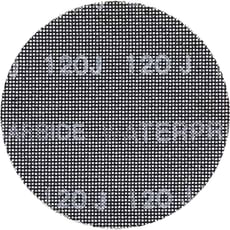
The mesh sanding disc range from DeWalt provides superior dust extraction performance compared to traditional perforated discs. The full mesh construction allows dust to escape through the entire surface area rather than just through specific holes, dramatically reducing clogging and extending operational life. These mesh discs prove particularly effective when working with materials that generate fine dust or when operating in hot conditions where disc loading becomes problematic.
Safety and Compliance
When using DeWalt sanding discs, adherence to Health and Safety Executive (HSE) guidelines regarding dust control remains paramount. Even when using discs with extraction holes, always connect sanders to appropriate dust extraction systems to minimise airborne particulate exposure. Many wood dusts are classified as hazardous substances under COSHH regulations, and adequate extraction combined with appropriate respiratory protection helps maintain compliance with workplace exposure limits.
Always verify that the maximum operating speed marked on sanding discs exceeds the speed of your sander. Operating discs above their rated speed can cause disc failure with potential safety implications. DeWalt designs their discs with appropriate safety margins, but users must still conduct these compatibility checks before use. Replace worn or damaged discs promptly – continuing to use compromised discs reduces effectiveness and may create safety hazards.
Ensure work pieces are securely clamped or supported before sanding operations commence. Never attempt to hold small items by hand whilst sanding, as loss of control can result in injury. Wear appropriate eye protection to guard against particles dislodged during sanding, and consider hearing protection during extended sanding sessions as sanders can generate significant noise levels over time.
Frequently Asked Questions
What grit DeWalt sanding disc should I use for removing old varnish?
For removing old varnish from wood, start with a coarse 60-80 grit DeWalt disc to strip the existing finish efficiently. Once the varnish is removed, progress through 120 grit and 180 grit to smooth the surface before applying new finishes. If the underlying wood is in good condition and varnish removal is straightforward, you might begin with 80-100 grit instead to preserve more of the wood surface.
Are DeWalt sanding discs compatible with other brands of sanders?
Yes, DeWalt sanding discs are manufactured to industry-standard dimensions and use conventional hook-and-loop attachment systems, making them compatible with most brands of random orbital and detail sanders. The key compatibility factors are disc diameter (typically 125mm or 150mm) and hole pattern for dust extraction. Check your sander's specifications to ensure you select the correct disc size and hole configuration.
How long do DeWalt sanding discs typically last?
Disc longevity depends significantly on application, material hardness, sanding pressure, and grit size. Coarser grits removing heavy material wear faster than fine grits used for light finishing. Under typical professional use on softwood, a quality DeWalt disc might last 15-30 minutes of continuous sanding. Harder materials like hardwoods or metals reduce lifespan, whilst proper dust extraction and appropriate pressure can extend operational life considerably.
Can I use DeWalt wood sanding discs on metal surfaces?
Whilst technically possible for light applications, wood-specific sanding discs aren't optimised for metal work. The abrasive grain type and bonding system in wood discs may not perform efficiently on metal and could wear prematurely. For metal applications, DeWalt offers dedicated metal sanding discs with appropriate abrasive minerals and bonding agents. Multi-material discs provide a compromise solution when working across both wood and metal in varied applications.
Do DeWalt mesh sanding discs work better than perforated discs?
Mesh sanding discs from DeWalt typically provide superior dust extraction because the entire surface allows dust passage rather than just specific holes. This results in less clogging, extended disc life, and cleaner working conditions. However, mesh discs usually cost more than conventional perforated versions. For dusty materials like MDF or when conducting extensive sanding work, mesh discs often prove more economical despite higher initial costs due to their extended operational life.