

Draper Battery Fluid Testers
 Loading...
End of content
Error - No more pages to load
Draper Battery Fluid Testers at Tooled-Up.com
Draper Tools has built a formidable reputation across the automotive and workshop sectors, and their battery fluid testers exemplify the brand's commitment to precision, reliability, and value. These essential diagnostic instruments allow mechanics, auto electricians, and vehicle maintenance professionals to accurately assess battery electrolyte specific gravity and charge condition, ensuring optimal battery performance and longevity. Tooled-Up.com stocks Draper's carefully engineered battery fluid testers, designed to provide quick, accurate readings that help prevent unexpected battery failures and extend service life.
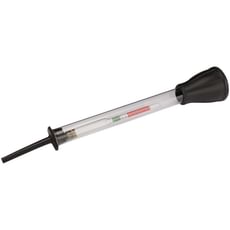
Draper battery fluid testers utilise traditional float-based hydrometer technology, a proven method for measuring the specific gravity of battery electrolyte that has remained the gold standard for lead-acid battery diagnostics. These testers feature robust construction with high-quality glass or acrylic tubes, precision-calibrated floats, and ergonomic rubber bulbs for easy fluid extraction. The clear, easy-to-read scales provide instant visual feedback on battery condition, allowing users to identify weak cells and determine whether a battery requires charging, topping up, or replacement.
Whether you're running a busy garage, maintaining a fleet of commercial vehicles, or simply keeping your own automotive batteries in peak condition, Draper's battery testing equipment delivers professional-grade accuracy at accessible price points. The brand's focus on practical workshop tools means these testers are built to withstand the demands of daily professional use whilst remaining straightforward and intuitive to operate.
Why Choose Draper Battery Fluid Testers?
Draper has served the UK trades and engineering sectors for over a century, earning trust through consistent quality and exceptional value. Their battery fluid testers reflect this heritage, combining traditional proven technology with modern manufacturing standards. Each tester undergoes rigorous quality control to ensure accurate calibration and reliable performance, giving users confidence in their diagnostic results.
The Draper advantage extends beyond the products themselves to encompass comprehensive after-sales support and readily available replacement parts. The brand understands that workshop tools must deliver consistent accuracy over years of use, which is why their battery testers feature chemical-resistant materials that withstand exposure to sulphuric acid and other battery electrolytes. The precision-weighted floats maintain calibration accuracy even after hundreds of tests, whilst the clear graduated scales remain legible despite workshop conditions.
Value represents another compelling reason to choose Draper for battery testing equipment. The brand offers professional-specification tools without the premium pricing associated with some competitors, making proper battery diagnostics accessible to independent mechanics, small workshops, and serious DIY enthusiasts. This commitment to affordability never comes at the expense of quality, ensuring every Draper battery fluid tester delivers reliable service throughout its working life.
Who Uses Draper Battery Fluid Testers?
- Motor mechanics and automotive technicians diagnosing battery issues in cars, vans, and light commercial vehicles
- Auto electricians specialising in vehicle electrical systems and battery management
- Fleet maintenance engineers responsible for keeping commercial vehicle fleets operational
- Agricultural engineers maintaining batteries in tractors, harvesters, and farm machinery
- Marine engineers testing batteries in boats and watercraft
- Plant maintenance technicians servicing forklift trucks and warehouse equipment batteries
- MOT testing centres conducting pre-test battery condition checks
- Classic car enthusiasts maintaining vintage vehicles with traditional lead-acid batteries
- Caravan and motorhome owners monitoring leisure battery condition
- DIY mechanics performing home vehicle maintenance and battery testing
Key Features of Draper Battery Fluid Testers
Draper battery fluid testers incorporate several distinctive features that enhance accuracy, usability, and durability. The precision-calibrated float mechanism provides specific gravity readings typically ranging from 1.100 to 1.300, covering the full spectrum from discharged to fully charged battery states. This wide measurement range ensures the tester remains useful across various battery types and charge conditions.
The transparent barrel construction, whether glass or impact-resistant acrylic, allows users to observe fluid colour and clarity whilst taking readings—important secondary indicators of battery health. Clearly marked colour-coded scales eliminate guesswork, with green, amber, and red zones indicating good charge, low charge, and discharge states respectively. The large, easy-to-read graduations remain visible even in poorly lit workshop environments.
Ergonomic rubber suction bulbs provide comfortable, controlled fluid extraction, whilst the flexible discharge tube allows precise return of electrolyte to the battery cell. Chemical-resistant materials throughout ensure longevity despite regular exposure to corrosive battery acid. Many Draper battery testers also include integrated thermometers, recognising that temperature significantly affects specific gravity readings and allowing users to compensate for thermal variations.
The compact, portable design means these testers fit easily into toolboxes and service vans, whilst remaining robust enough to survive the knocks and bumps of mobile mechanics' daily routines. Draper's attention to practical details extends to features like drip-free nozzles and secure storage caps that prevent acid spillage during transport.
Popular Draper Battery Fluid Testers
The Draper range available from Tooled-Up typically includes traditional hydrometer-style battery testers suited to various professional and domestic applications. The standard Draper battery hydrometer represents the core offering, featuring a glass barrel with precision float, rubber bulb, and flexible nozzle—the essential configuration for accurate lead-acid battery testing. This classic design suits general automotive workshops, mobile mechanics, and home enthusiasts requiring reliable battery diagnostics.
Heavy-duty versions with reinforced construction cater to high-volume commercial workshops and fleet maintenance operations where tools face intensive daily use. These professional-grade testers often incorporate enhanced chemical resistance and more robust componentry to withstand demanding workshop environments. Some Draper battery testers feature enlarged scales or magnified viewing windows, improving readability for users working in challenging lighting conditions or those requiring extra-clear numerical displays.
For users maintaining multiple battery types, Draper offers testers with expanded measurement ranges or dual-scale displays covering both automotive and deep-cycle battery specifications. These versatile instruments suit marine applications, caravan servicing, and renewable energy installations where battery types vary significantly from standard automotive units.
Safety and Compliance
Battery fluid testing involves handling sulphuric acid electrolyte, which presents significant chemical hazards requiring proper safety precautions. Users should always wear appropriate personal protective equipment including acid-resistant gloves, safety glasses or goggles, and protective clothing when testing batteries. Draper battery fluid testers should be used in well-ventilated areas, as batteries can emit explosive hydrogen gas during charging.
Never smoke or create sparks near batteries during testing. Always ensure the rubber bulb is fully depressed before inserting the nozzle into a battery cell to prevent sudden acid ejection. After testing, thoroughly rinse the tester with clean water to neutralise and remove acid residue, preventing corrosion of the instrument and reducing acid exposure risks during storage and subsequent use.
Dispose of any accidentally spilled electrolyte according to COSHH regulations and local authority guidelines—never pour battery acid down drains or onto the ground. Store Draper battery testers in secure, upright positions away from tools and materials that could be damaged by residual acid. Regular inspection of rubber components for perishing and glass or acrylic barrels for cracks ensures continued safe operation and prevents acid leaks.
Frequently Asked Questions
How accurate are Draper battery fluid testers compared to digital alternatives?
Draper hydrometer-style battery testers provide excellent accuracy when properly calibrated and used correctly, typically matching or exceeding the precision of many digital testers. The float mechanism directly measures specific gravity—the fundamental indicator of battery charge state—without electronic components that can drift out of calibration. Whilst digital testers offer convenience, traditional hydrometers remain the professional standard for definitive battery electrolyte analysis, particularly in workshop environments where electromagnetic interference or electronic failure could affect digital readings.
Can Draper battery fluid testers be used on maintenance-free batteries?
No, Draper battery fluid testers require access to individual battery cells to extract electrolyte samples for testing. Maintenance-free or sealed batteries do not provide access to the electrolyte, making hydrometer testing impossible. These battery types require alternative testing methods such as load testing or voltage measurement. Draper battery fluid testers are specifically designed for conventional flooded lead-acid batteries with removable cell caps, commonly found in older vehicles, marine applications, and industrial equipment.
How do I maintain my Draper battery fluid tester to ensure longevity?
After each use, thoroughly rinse the tester with clean water to remove all traces of battery acid, which would otherwise corrode components and affect calibration. Periodically flush the instrument with a weak bicarbonate of soda solution to neutralise any residual acid, followed by thorough rinsing with clean water. Store the tester vertically in a cool, dry location away from direct sunlight, which can degrade rubber components. Inspect the rubber bulb regularly for perishing and replace if cracks appear. Check that the float moves freely within the barrel and that scale markings remain clearly visible.
What specific gravity readings indicate a healthy battery?
A fully charged lead-acid battery cell typically shows specific gravity readings between 1.265 and 1.280 at 20°C. Readings around 1.200 indicate approximately 50% charge, whilst readings below 1.150 suggest the battery is substantially discharged and requires immediate charging. Consistent readings across all cells indicate good battery health, whilst variations exceeding 0.050 between cells suggest cell failure or battery deterioration requiring replacement. Temperature affects readings significantly—specific gravity decreases by approximately 0.004 for every 5°C above 20°C and increases by the same amount below this temperature.
Are Draper battery fluid testers suitable for testing motorcycle batteries?
Yes, Draper battery fluid testers work perfectly well on motorcycle batteries provided they are conventional flooded lead-acid types with removable cell caps. The tester's flexible nozzle design accommodates the smaller cell openings typically found in motorcycle batteries. However, many modern motorcycles use sealed AGM (Absorbed Glass Mat) or gel batteries that cannot be tested with hydrometers. Always verify your motorcycle battery type before attempting electrolyte testing—consult the battery label or vehicle manual if uncertain.