

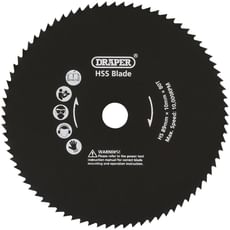
Draper Circular Saw Blades



 Loading...
End of content
Error - No more pages to load
Draper Circular Saw Blades at Tooled-Up.com
Draper Tools has been a trusted name in the British tool industry for over a century, and their range of circular saw blades continues this tradition of quality and reliability. Designed to meet the demanding needs of professional tradespeople and serious DIY enthusiasts, Draper circular saw blades are engineered to deliver precision cuts across a wide variety of materials. From fine woodworking to heavy-duty construction site work, these blades combine proven manufacturing techniques with modern carbide technology to ensure consistent performance and extended blade life.
The Draper circular saw blade collection available from Tooled-Up.com encompasses a comprehensive selection of sizes and tooth configurations, suitable for use with most popular circular saw brands and models operating on 240v UK mains power. Whether you're ripping timber, cross-cutting hardwood, or slicing through laminated boards, there's a Draper blade specification designed for your specific application. Each blade is manufactured to exacting standards, ensuring proper arbor fit, minimal runout, and safe operation at standard circular saw speeds.
Tooled-Up stocks Draper circular saw blades in the most common diameters including 160mm, 184mm, 190mm, and 235mm options, with bore sizes to match standard saw arbors. This extensive selection ensures compatibility with everything from compact plunge saws to full-sized contractor circular saws, making it easy to find the right replacement or upgrade blade for your specific power tool.
Why Choose Draper Circular Saw Blades?
Draper's reputation for manufacturing reliable, no-nonsense tools at competitive prices extends throughout their circular saw blade range. These blades represent excellent value without compromising on essential performance characteristics. The tungsten carbide tipped (TCT) teeth found on Draper blades maintain their cutting edge significantly longer than standard high-speed steel alternatives, reducing downtime for blade changes and delivering lower cost-per-cut over the blade's lifetime.
Quality control is central to Draper's manufacturing philosophy. Each circular saw blade undergoes rigorous testing to ensure it meets dimensional tolerances and safety standards before reaching the market. The hardened steel plate bodies resist warping under heat and stress, whilst precision-ground carbide tips ensure clean, accurate cuts that require minimal finishing work. This attention to detail means professionals can rely on consistent results, project after project.
Another compelling reason to choose Draper is their extensive UK distribution network and readily available replacement parts. Should you need to replace a worn blade or upgrade to a different tooth configuration for a specific job, Draper products are consistently stocked and competitively priced, making them a practical choice for busy tradespeople who can't afford tool downtime.
Who Uses Draper Circular Saw Blades?
- Carpenters and Joiners: For dimensioning timber, cutting sheet materials, and general woodworking applications
- Kitchen and Bathroom Fitters: Cutting worktops, laminated boards, and MDF units with clean, chip-free edges
- Shopfitters and Contractors: General construction site work requiring reliable, cost-effective cutting performance
- Fencing Contractors: Processing large volumes of treated timber and demanding heavy-duty cutting
- Decking Specialists: Cross-cutting composite and timber decking boards with precision
- DIY Enthusiasts: Home improvers tackling renovation projects requiring professional-quality results
- Maintenance Teams: Facilities managers and property maintenance professionals requiring versatile cutting solutions
- Theatrical and Set Builders: Scenery construction requiring accurate, repeatable cuts in various materials
Key Features of Draper Circular Saw Blades
Draper circular saw blades incorporate tungsten carbide tipped teeth that are brazed onto a hardened and tempered steel body. This construction method provides an optimal balance between flexibility and rigidity, reducing vibration during cutting whilst maintaining the structural integrity needed for safe operation at high RPM. The carbide tips are precision-ground to specific geometries depending on the blade's intended application, whether that's ripping along the grain or cross-cutting.
Expansion slots are machined into larger diameter blades to allow for thermal expansion during extended cutting operations. This design feature prevents the blade plate from warping due to heat build-up, which could otherwise cause binding, inaccurate cuts, or dangerous kickback. The slots also help dissipate heat more efficiently, further extending blade life and maintaining cutting accuracy.
The tooth configurations available in the Draper range are carefully matched to specific materials and cutting styles. Blades with fewer teeth (typically 16-24 teeth) are optimised for rapid ripping cuts in construction timber, where speed is prioritised over surface finish. Medium tooth count blades (30-48 teeth) provide versatile all-purpose performance suitable for most general carpentry work. Fine-tooth blades (60+ teeth) deliver exceptionally smooth cuts in laminated materials, veneered boards, and situations where minimal tear-out is essential.
Each Draper circular saw blade is clearly marked with essential safety information including maximum safe operating speed, arbor diameter, blade diameter, and recommended applications. This clearly printed information helps ensure operators select and use the correct blade for their specific circular saw and cutting task.
Popular Draper Circular Saw Blades
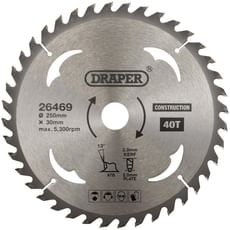
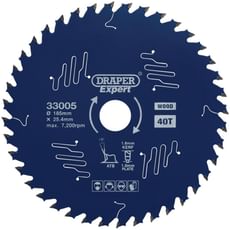
The Draper TCT Circular Saw Blade for Wood range represents the core of their offering, with 24-tooth and 40-tooth variants being particularly popular among general contractors and carpenters. These blades provide reliable performance across softwoods and hardwoods, making them ideal workshop and site essentials.
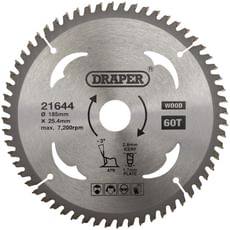
For professionals working primarily with manufactured boards, the Draper Fine Cut TCT Blades with 48 or 60 teeth deliver the clean, splinter-free edges required when cutting melamine-faced chipboard, plywood, and laminated materials. The increased tooth count and refined tooth geometry minimises chipping on both entry and exit edges.
The Draper 235mm diameter blades suit larger circular saws commonly found on building sites, offering sufficient cutting depth for dimensional timber and structural work. Meanwhile, the compact 160mm and 184mm blades are perfectly matched to the increasingly popular compact circular saws and plunge saws favoured by kitchen fitters and precision woodworkers.
Safety and Compliance
All Draper circular saw blades conform to relevant European safety standards, including EN 847 which specifically addresses safety requirements for woodworking tool blades. This compliance ensures that blades meet strict criteria for material quality, manufacturing tolerances, and maximum safe operating speeds.
Operators should always ensure that any circular saw blade is securely fitted to the saw arbor with the correct flanges and locking mechanism. The blade's maximum RPM rating must never be exceeded, and it should only be used on materials for which it's designed. Wearing appropriate personal protective equipment including safety glasses, hearing protection, and dust masks is essential when operating circular saws, as required by HSE workplace safety guidelines.
Regular inspection of circular saw blades is crucial for maintaining safety. Blades showing signs of damage such as missing or cracked carbide tips, warped plates, or cracks radiating from the arbor hole should be immediately removed from service. Even minor damage can lead to catastrophic blade failure at operating speeds. Keeping blades clean and free from resin build-up also contributes to safer, more accurate cutting.
Frequently Asked Questions
What's the difference between 24-tooth and 40-tooth Draper circular saw blades?
The 24-tooth blade is designed for faster, rougher ripping cuts along the grain of timber, where cutting speed is more important than surface finish. The 40-tooth blade provides a better balance between cutting speed and finish quality, making it more suitable for cross-cutting and general-purpose work where a reasonably smooth edge is required. For very fine finish work on laminated materials, consider a 60-tooth blade.
How long do Draper TCT circular saw blades typically last?
Blade life depends heavily on usage patterns, materials being cut, and maintenance practices. Under normal conditions cutting timber and manufactured boards, a quality TCT blade like those from Draper can last for thousands of cuts. Signs that sharpening or replacement is needed include increased motor strain, burning marks on cut edges, rough surface finish, or the saw binding during cuts. Keeping blades clean and using them only on appropriate materials maximises lifespan.
Can I use Draper circular saw blades on any brand of circular saw?
Draper circular saw blades will fit any circular saw provided the blade diameter and arbor (centre bore) diameter match your saw's specifications. Always check your saw's manual for the correct blade diameter, bore size, and maximum RPM rating. The blade's maximum speed rating must meet or exceed your saw's no-load speed. Most standard circular saws use either 20mm or 30mm arbor diameters, with reduction rings available for compatibility.
Are Draper circular saw blades suitable for cutting treated timber?
Yes, Draper TCT circular saw blades can cut pressure-treated timber commonly used for outdoor construction, fencing, and decking. However, be aware that the chemical preservatives in treated timber can be more abrasive than untreated wood, potentially reducing blade life slightly. Always wear appropriate respiratory protection when cutting treated timber, as the dust contains chemicals that shouldn't be inhaled, in accordance with COSHH regulations.
Do I need different blades for hardwood and softwood?
Whilst general-purpose Draper TCT blades will cut both hardwoods and softwoods, tooth count makes a difference to results. For ripping softwood construction timber, a 24-tooth blade works efficiently. For hardwoods or where finish quality matters, a 40-tooth or higher blade produces smoother results with less tear-out. Many professionals keep multiple blades on hand and select based on the specific job requirements rather than wood type alone.