

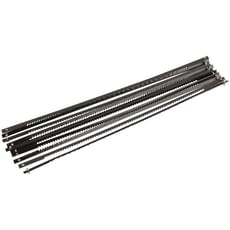
Draper Coping Saw Blades
 Loading...
Draper Coping Saw Blades at Tooled-Up.com
Draper Tools has established itself as one of Britain's most trusted names in hand tools and accessories, and their coping saw blades exemplify the quality and reliability that professionals and DIY enthusiasts have come to expect. Designed for intricate cutting work in wood, plastic, and other soft materials, Draper coping saw blades deliver precision and durability across a wide range of applications from fine woodworking to detailed model making.
The Draper coping saw blade range available from Tooled-Up.com caters to various cutting requirements, offering different tooth configurations and blade lengths to suit specific tasks. Whether you're cutting tight curves in hardwood, creating delicate fretwork, or tackling detailed joinery projects, Draper provides replacement blades that maintain their sharpness and deliver clean, accurate cuts time after time.
Manufactured to exacting standards, Draper coping saw blades are produced using hardened and tempered steel to ensure longevity and consistent performance. Each blade is precision-ground to maintain uniform tooth spacing and optimal cutting geometry, making them suitable for both professional workshop environments and demanding home projects where accuracy matters.
Why Choose Draper Coping Saw Blades?
Draper's reputation for producing reliable, well-engineered hand tool accessories spans over a century, and their coping saw blades embody this heritage of quality manufacturing. The blades are constructed from high-carbon steel that undergoes specialist heat treatment processes to achieve the ideal balance between flexibility and rigidity – essential characteristics for navigating tight curves without snapping whilst maintaining cutting accuracy.
One of the standout features of Draper coping saw blades is their excellent value proposition. Whilst maintaining professional-grade performance standards, Draper ensures their products remain accessible to both tradespeople purchasing in bulk and hobbyists requiring occasional replacements. The blades feature precision-punched pin holes that guarantee secure fitting in standard coping saw frames, eliminating the frustration of loose or misaligned blades during critical cutting operations.
Draper's commitment to consistent manufacturing quality means that every blade performs predictably, allowing users to develop confidence in their cutting technique. The uniformity of tooth set and sharpness across the range ensures that replacing a worn blade doesn't require readjustment of cutting style or pressure – a detail that matters when working to tight tolerances on precision joinery or restoration work.
Who Uses Draper Coping Saw Blades?
- Cabinet Makers and Joiners: Professionals requiring precision cutting for intricate joint work, inlays, and decorative elements in fine furniture
- Carpenters: Tradespeople needing to make detailed cuts in situ for architraves, dado rails, and bespoke trim work
- Luthiers and Instrument Makers: Specialists crafting musical instruments where intricate curved cuts in tonewoods are essential
- Model Makers: Hobbyists and professionals creating detailed scale models requiring precise cutting of balsa, plywood, and plastic sheet materials
- Picture Framers: Artisans cutting complex profiles and decorative elements in wooden mouldings
- Restoration Specialists: Craftspeople repairing antique furniture and architectural features requiring period-accurate joinery techniques
- DIY Enthusiasts: Home improvers tackling woodworking projects, craft work, and general maintenance tasks
- Theatre and Set Designers: Creative professionals constructing scenic elements and props with detailed cutwork
Key Features of Draper Coping Saw Blades
Draper coping saw blades incorporate several design features that enhance their cutting performance and usability. The hardened steel construction provides excellent edge retention, reducing the frequency of blade changes and maintaining cutting efficiency throughout the blade's working life. The precision-ground teeth are set to provide optimal clearance for the blade body, preventing binding in tight curves whilst removing waste material efficiently.
The standard pin-end fixing system employed by Draper ensures compatibility with most coping saw frames available in the UK market, making them a versatile replacement option regardless of your saw manufacturer. Blade lengths are manufactured to industry-standard dimensions, typically 165mm (6.5 inches), allowing for proper tension adjustment in standard frames – crucial for achieving vibration-free cutting and extended blade life.
Draper offers blades with varying teeth-per-inch (TPI) configurations to suit different materials and cutting requirements. Coarser tooth patterns excel at rapid stock removal in softwoods and quick roughing cuts, whilst finer tooth configurations deliver smoother finishes in hardwoods and allow for tighter radius curves in detailed work. The flexibility of the blade steel is carefully calibrated to allow following of marked lines whilst resisting twisting under normal cutting pressure.
Popular Draper Coping Saw Blades
The Tooled-Up selection of Draper coping saw blades encompasses the most frequently requested specifications for woodworking and general workshop applications. Multi-pack options provide excellent value for professional users who maintain several saws or undertake high-volume cutting work, whilst individual blade sales suit occasional users and specific project requirements.
Standard duty Draper blades represent the most popular choice, offering reliable performance for general woodworking tasks in softwoods, hardwoods, and manufactured boards up to approximately 25mm thickness. These blades typically feature a medium tooth configuration suitable for a wide range of cutting applications without requiring frequent blade changes between different materials.
For users working with plastics, laminates, and very dense hardwoods, Draper's premium blade specifications incorporate harder steel grades and modified tooth geometry optimised for these more demanding materials. The enhanced wear resistance of these blades makes them particularly economical for production environments where consistent performance over extended periods is essential.
Safety and Compliance
Whilst coping saw blades present relatively low injury risk compared to powered cutting tools, proper handling and usage practices remain important. Draper recommends always ensuring blades are correctly tensioned in the saw frame before commencing cutting operations – loose blades can snap unpredictably or produce inaccurate cuts. Always install replacement blades with teeth pointing away from the handle for conventional cutting action.
When changing blades, particularly after extended use when blades may be hot from friction, allow adequate cooling time and wear appropriate hand protection. Dispose of worn or broken blades responsibly by wrapping in protective material and placing in dedicated sharps waste – never leave loose blades where they might cause injury. Store spare blades in their original packaging to protect both the cutting edges and workshop users from accidental contact.
For professional workshop environments, ensure adequate lighting when undertaking detailed coping saw work to maintain clear visibility of cutting lines and reduce eye strain. The Health and Safety Executive (HSE) recommends maintaining comfortable working postures and taking regular breaks during repetitive cutting operations to prevent repetitive strain injuries. Always secure workpieces properly using appropriate clamping or holding devices rather than hand-holding during cutting operations.
Frequently Asked Questions
What TPI rating should I choose for general woodworking with Draper coping saw blades?
For versatile general-purpose woodworking, a Draper coping saw blade with 14-16 TPI (teeth per inch) provides an excellent balance between cutting speed and finish quality. This tooth configuration handles both softwoods and hardwoods effectively whilst allowing reasonably tight curves. For very intricate work in thin materials, consider 18-20 TPI blades, whilst rougher work in thicker stock benefits from 10-12 TPI options.
How do I know when to replace my Draper coping saw blade?
Replace your Draper blade when you notice increased cutting effort required, rougher cut surfaces, frequent binding in the kerf, or visible damage to teeth. Blades that wander from marked cutting lines despite proper technique or produce excessive sawdust rather than clean shavings have typically lost their effective edge. Professional users often replace blades preventatively before complete dulling to maintain consistent work quality.
Are Draper coping saw blades compatible with other manufacturers' saw frames?
Yes, Draper coping saw blades feature standard pin-end fittings that are compatible with virtually all conventional coping saw frames available in the UK market. The industry-standard 165mm length and pin spacing ensure proper fit and tensioning in frames from various manufacturers, making Draper blades an excellent universal replacement option regardless of your saw brand.
Can Draper coping saw blades cut materials other than wood?
Draper coping saw blades perform well in various materials beyond wood, including plastics, soft non-ferrous metals like aluminium, bone, horn, and laminated materials. However, blade life will be shorter in harder materials compared to wood. For optimal results in plastics, use slower cutting speeds to prevent heat buildup that can cause melting and blade clogging. Avoid using wood-cutting blades on ferrous metals as this will rapidly destroy the cutting edge.
How should I store spare Draper coping saw blades to maintain their sharpness?
Store Draper coping saw blades in a dry environment in their original packaging or in a dedicated blade holder that prevents contact between blades and other metal objects. Moisture can cause surface corrosion that affects cutting performance, whilst contact with other tools can damage the fine cutting edges. Many professionals keep spare blades in small parts organiser drawers or magnetic strips mounted inside tool chests, ensuring they remain clean, dry, and easily accessible when replacements are needed.