

Draper Engine Stands & Supports
 Loading...
End of content
Error - No more pages to load
Draper Engine Stands & Supports at Tooled-Up.com
Draper Tools has built a formidable reputation over decades of manufacturing workshop equipment that professional mechanics and serious automotive enthusiasts rely on daily. Their engine stands and supports represent some of the most trusted equipment in UK workshops, combining robust engineering with practical design features that make engine removal, rebuilding, and installation significantly safer and more manageable. When working on vehicle engines, having dependable support equipment isn't just about convenience—it's essential for both safety and achieving professional results.
The Draper engine stand and support range available from Tooled-Up.com encompasses everything from heavy-duty rotating engine stands capable of handling substantial engine weights to specialist transmission jacks and gearbox support systems. Each piece of equipment is engineered to meet the demanding requirements of professional garage environments whilst remaining accessible and practical for dedicated home mechanics working on restoration projects or major service work. Draper's attention to load ratings, stability, and adjustability ensures that whether you're working on a compact four-cylinder unit or a larger V8 engine, there's appropriate support equipment designed for the task.
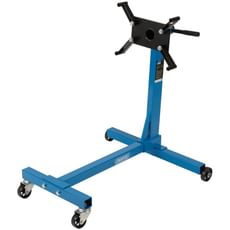
Tooled-Up stocks Draper's professional-grade engine stands featuring 360-degree rotation capabilities, allowing mechanics to position engines at any angle for optimal access to components during rebuilding or maintenance. These stands typically feature heavy-gauge steel construction with powder-coated finishes that resist workshop chemicals and corrosion, ensuring longevity even in busy commercial environments. The mounting heads are designed to accommodate various engine bolt patterns, providing versatility across different vehicle makes and models.
Why Choose Draper Engine Stands & Supports?
Draper's standing in the UK tool market is built on consistent quality and value for professional tradespeople. Their engine stands and supports undergo rigorous testing to ensure they meet stated load capacities with substantial safety margins—a critical consideration when working beneath or around suspended engine assemblies. The brand's engineering approach prioritises stability, with wide-stance bases and robust castor systems that provide mobility without compromising safety during positioning.
Professional mechanics choose Draper engine support equipment because it strikes an excellent balance between commercial-grade capability and cost-effectiveness. Unlike budget alternatives that may flex under load or feature inadequate locking mechanisms, Draper equipment is manufactured to withstand daily workshop use over many years. The brand's comprehensive warranty support and established presence in the UK market mean that tradespeople can invest with confidence, knowing they're purchasing from a manufacturer with genuine accountability and customer service infrastructure.
Another distinguishing factor is Draper's practical design philosophy. Their engine stands feature details that matter in real-world use: secure locking pins that won't work loose, adjustment mechanisms that remain accessible even when loaded, and surface treatments that protect both the equipment and the engines being worked on. This attention to the realities of workshop life separates genuinely professional equipment from superficially similar consumer-grade alternatives.
Who Uses Draper Engine Stands & Supports?
- Professional Motor Mechanics – Independent garages and franchised dealerships requiring reliable engine support equipment for daily repair and maintenance work
- Agricultural Engineers – Workshops servicing tractors, harvesters, and other agricultural machinery with substantial engines
- Plant Mechanics – Professionals maintaining construction equipment, generators, and industrial machinery
- Classic Car Restorers – Specialists working on vintage and classic vehicle rebuilds requiring careful engine handling
- MOT Testing Stations – Facilities requiring support equipment for engine-related repair work identified during inspections
- Motorsport Teams – Racing and rally teams performing frequent engine changes and rebuilds
- Marine Engineers – Professionals servicing boat engines and related marine power units
- Serious DIY Enthusiasts – Home mechanics undertaking engine rebuilds, conversions, or major service work requiring proper support equipment
Key Features of Draper Engine Stands & Supports
Draper engine stands typically feature heavy-duty steel construction with reinforced welding at critical stress points, ensuring structural integrity under maximum load conditions. The rotating head designs incorporate precision bearings that allow smooth 360-degree rotation even when supporting substantial engine weights, with positive locking mechanisms at multiple positions to secure the engine at the desired working angle.
Load capacities across the Draper range are clearly marked and rigorously tested, with models available handling from 450kg up to 680kg or more depending on the specific stand design. The adjustable mounting heads accommodate various engine bolt patterns and sizes, featuring elongated slots and multiple fixing positions that provide compatibility with engines from different manufacturers. Four-leg base designs with swivel castors (typically featuring locking mechanisms) provide stability during use whilst allowing easy repositioning when needed.
Draper's transmission jacks and gearbox support units feature hydraulic lifting mechanisms with precision control, allowing gradual raising and lowering of heavy gearboxes during removal and installation procedures. Tilting cradles with adjustable retaining straps secure awkwardly-shaped transmission housings safely, whilst the compact footprint allows positioning in confined spaces beneath vehicles. Protective saddle surfaces prevent damage to transmission casings and oil pans during handling.
Surface finishes typically include durable powder coating in high-visibility colours, providing both corrosion resistance and improved visibility in busy workshop environments. Safety features such as positive locking pins, secure chain retention systems, and clearly marked capacity ratings reflect Draper's understanding of HSE requirements and professional workshop safety standards.
Popular Draper Engine Stands & Supports
The Draper 450kg Rotating Engine Stand represents the core offering for general automotive workshop use, providing sufficient capacity for most passenger car engines whilst offering the full rotation capability essential for comprehensive rebuild work. Its adjustable mounting head accommodates the majority of engine bolt patterns encountered in European and Asian vehicle manufacture.
Heavy-Duty 680kg Engine Stands from Draper cater to workshops dealing with larger engines from commercial vehicles, agricultural machinery, or high-performance automotive applications. The increased capacity and reinforced construction provide the additional safety margin required when handling substantial cast-iron engine blocks or fully-dressed assemblies including ancillaries.
Draper's Hydraulic Transmission Jacks are essential companions to engine stands, allowing safe removal and installation of gearboxes once engines are lifted clear. Available in various capacities, these specialist jacks feature the precise control necessary when aligning transmission input shafts with engine assemblies during installation—a task where millimetre precision matters significantly.
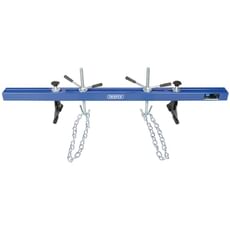
Engine Support Bars and slings from Draper provide alternative support solutions for situations where complete engine removal isn't required, or where preliminary support is needed during the removal process. These adjustable bars span across the engine bay, supporting the engine from above whilst allowing subframe or suspension work to proceed safely beneath.
Safety and Compliance
All Draper engine stands and supports are manufactured to meet relevant UK and European safety standards for workshop lifting and support equipment. Each piece of equipment carries clearly marked Safe Working Load (SWL) ratings that must never be exceeded, with these figures incorporating appropriate safety factors as required by HSE guidance for workshop equipment.
Proper use of engine stands requires ensuring the engine is securely bolted to the mounting head using appropriate grade fasteners, with all mounting points engaged and torqued correctly before releasing other support. The stand should always be positioned on firm, level surfaces, with all castor locks engaged during work. Regular inspection of locking mechanisms, pivot points, and structural welds forms part of responsible workshop equipment maintenance.
When using transmission jacks, operators should ensure the load is properly centred and secured with retaining straps before lifting commences. Hydraulic systems should be checked regularly for fluid levels and seal integrity, with any equipment showing signs of fluid loss immediately withdrawn from service until properly repaired. Following manufacturer guidelines for maximum capacity and proper load distribution isn't merely advisable—it's essential for maintaining safe working conditions in any garage or workshop environment.
Frequently Asked Questions
What weight capacity engine stand do I need for my vehicle?
Most passenger car engines weigh between 100-250kg, making a 450kg capacity Draper engine stand suitable for the majority of applications with a comfortable safety margin. However, for larger engines such as V8 units, diesel engines, or engines being supported with additional components still attached (gearboxes, exhaust manifolds, ancillaries), a 680kg heavy-duty stand provides greater security. Always weigh towards higher capacity if uncertain, and remember that the weight distribution and mounting points matter as much as total weight.
Can Draper engine stands be used with all engine types?
Draper engine stands feature adjustable mounting heads designed to accommodate the vast majority of engine bolt patterns from European, Asian, and American manufacturers. The elongated mounting slots and multiple fixing positions provide flexibility for different engine block configurations. However, always verify that your specific engine's mounting points are compatible with the stand's adjustment range before purchase, particularly for unusual or very old engine designs that may have non-standard mounting arrangements.
How do I maintain my Draper engine stand for long-term reliability?
Regular inspection of all locking pins, pivot points, and welded joints should be conducted before each use, looking for any signs of cracking, distortion, or wear. Keep rotation mechanisms clean and lightly lubricated to ensure smooth operation and prevent seizure. Store stands in dry conditions to minimise corrosion, and touch up any paint damage promptly to prevent rust development. Check castor operation and replace any wheels showing flat spots or bearing roughness. Never exceed the stated capacity, as overloading can cause permanent structural damage that may not be immediately visible.
Do I need special tools to mount an engine on a Draper engine stand?
Most engines can be mounted using standard socket sets and spanners to secure the engine block to the stand's mounting head. You'll need appropriate grade bolts (typically M10 or M12 depending on your engine) of sufficient length to engage both the engine block mounting points and the stand's mounting plate securely. Some mechanics prefer to use existing engine mount bolts if they're the correct specification. A torque wrench is recommended to ensure mounting bolts are adequately tightened without over-stressing threads in aluminium engine blocks.
Can Draper transmission jacks be used for other workshop lifting tasks?
Whilst Draper transmission jacks are specifically designed for gearbox support with features like tilting cradles and retaining straps optimised for transmission shapes, they can be carefully used for supporting other heavy workshop components such as fuel tanks, differential assemblies, or transfer boxes. However, always ensure the load is within the jack's capacity, properly centred on the saddle, and adequately secured. Never use transmission jacks for general lifting where a standard trolley jack would be more appropriate, and never work beneath loads supported solely by hydraulic jacks without additional mechanical support in place.