

Draper Jigsaw Blades

 Loading...
End of content
Error - No more pages to load
Draper Jigsaw Blades at Tooled-Up.com
Draper Tools has earned a distinguished reputation among UK tradespeople and DIY enthusiasts for delivering reliable, high-performance cutting accessories at competitive prices. Their comprehensive range of jigsaw blades represents decades of engineering expertise, offering precision-ground cutting edges suitable for virtually every material and application. From fine woodworking to heavy-duty metal fabrication, Draper jigsaw blades are engineered to deliver clean, accurate cuts whilst maintaining exceptional durability even under demanding site conditions.
The Draper jigsaw blade collection encompasses an extensive variety of blade types, tooth configurations, and material specifications designed to tackle everything from softwood and hardwood to plastics, ceramics, and ferrous metals. Whether you're cutting intricate curves in laminate worktops, preparing timber for joinery work, or slicing through sheet metal on-site, Tooled-Up.com stocks the Draper blade specification to match your exact requirements. Each blade is manufactured to exacting standards, ensuring consistent performance and compatibility with all major jigsaw brands featuring standard T-shank or U-shank fittings.
Draper's commitment to innovation is evident throughout their jigsaw blade range, with specialised options including bi-metal construction for enhanced flexibility and wear resistance, progressive tooth patterns for cleaner cuts, and precision-ground teeth that reduce splintering and tear-out. These technical refinements translate directly into improved cutting performance, reduced material waste, and extended blade life—factors that matter significantly when you're working to tight deadlines or managing project budgets.
Why Choose Draper Jigsaw Blades?
Draper has built its reputation on delivering professional-grade tools and accessories that offer outstanding value without compromising on quality. Their jigsaw blades undergo rigorous quality control procedures to ensure each blade meets strict performance standards before reaching the end user. The brand's extensive experience in the UK tools market means they understand precisely what British tradespeople require: reliable cutting performance, consistent availability, and competitive pricing that respects tight project margins.
The metallurgy employed in Draper jigsaw blades sets them apart from budget alternatives. High-carbon steel (HCS) blades provide excellent flexibility for wood cutting applications, whilst high-speed steel (HSS) variants deliver the hardness required for metal work. Bi-metal blades combine both advantages, offering the flexibility to resist breakage whilst maintaining the cutting edge hardness needed for demanding materials. This thoughtful material selection ensures you're using the optimal blade composition for your specific cutting task.
Another significant advantage of choosing Draper is their comprehensive range availability. Rather than stocking only the most common blade types, Draper offers specialist blades for niche applications—from flush-cutting blades for undercutting door frames to reverse-tooth blades that cut on the downstroke to minimise surface splintering. This depth of range means tradespeople can rely on Draper as a single source for virtually all jigsaw blade requirements.
Who Uses Draper Jigsaw Blades?
Draper jigsaw blades are trusted by a diverse range of professionals and enthusiasts across multiple trades and industries:
- Carpenters and joiners who require precise cuts in solid timber, MDF, and manufactured boards
- Kitchen fitters cutting worktops, plinths, and laminated panels to exact specifications
- Shopfitters and cabinet makers executing intricate curved cuts and detailed shaping work
- Electricians cutting access holes in plasterboard, timber studwork, and plastic trunking
- Plumbers preparing holes for pipework through various substrates including floorboards and joists
- General builders performing versatile cutting tasks across mixed materials on construction sites
- Maintenance engineers requiring reliable blades for repair and modification work
- DIY enthusiasts undertaking home improvement projects demanding professional-quality results
- Automotive technicians cutting bodywork panels and trim materials
- Signage professionals shaping plastics, acrylics, and composite materials
Key Features of Draper Jigsaw Blades
Draper jigsaw blades incorporate several distinctive features that enhance cutting performance and user experience. The precision-ground tooth geometry ensures aggressive cutting action whilst maintaining control, particularly important when following marked lines or executing curved cuts. Progressive tooth patterns—where tooth size varies along the blade length—reduce vibration and deliver smoother cutting action, which translates to less operator fatigue during extended use.
The standardised T-shank fitting employed across most of the Draper range ensures universal compatibility with modern jigsaws, whilst selected U-shank variants remain available for older tool models. This attention to compatibility means the extensive selection at Tooled-Up can accommodate virtually any jigsaw currently in use across UK workshops and building sites.
Material-specific blade designs represent another key feature of the Draper range. Wood-cutting blades feature larger tooth spacing for efficient chip clearance, preventing clogging and maintaining cutting speed through thick sections. Metal-cutting variants incorporate finer teeth that generate smaller chips, essential for maintaining clean edges in sheet steel or aluminium. Specialised blades for ceramics and glass feature carbide-grit edges rather than conventional teeth, providing the abrasive action required for these hard, brittle materials.
Blade length options across the Draper range accommodate different material thicknesses, with shorter blades offering enhanced control for thin materials and longer variants (up to 150mm) capable of cutting through substantial timber sections or deep worktop materials. This dimensional variety ensures you can select the optimal blade length for your specific application.
Popular Draper Jigsaw Blades
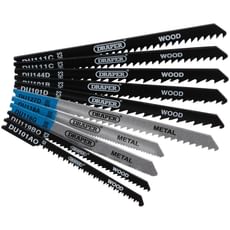
Within the Draper jigsaw blade collection, several product types consistently prove popular among tradespeople and DIY users. Assorted blade sets represent excellent value, typically containing multiple blade types suited to wood, metal, and plastic cutting—ideal for general-purpose toolkits or initial jigsaw setup. These mixed packs ensure you've got appropriate cutting solutions on hand for varied materials without purchasing individual specialised blades.
Wood-cutting blades with progressive tooth patterns remain perennial favourites, particularly among carpenters and joiners who appreciate the combination of cutting speed and clean edge finish. These blades excel in softwood, hardwood, chipboard, and MDF applications. Bi-metal blades have gained significant popularity for their versatility and durability, particularly among professionals who encounter mixed materials throughout their working day and require blades that won't snap when encountering unexpected nails or fixings within timber.
For kitchen fitters and worktop installers, fine-tooth blades designed specifically for laminated materials deliver the splinter-free edges essential for professional-standard installations. Reverse-tooth variants prove particularly valuable when cutting from the visible face of laminated boards. Metal-cutting blades in various tooth configurations serve automotive technicians, HVAC installers, and general metalworkers, whilst specialised flush-cutting blades find favour with flooring specialists and trim carpenters requiring precise clearance cutting.
Safety and Compliance
When using Draper jigsaw blades, adherence to proper safety procedures protects both operator and workpiece. Always ensure the jigsaw is disconnected from its 240V power supply before changing blades—never attempt blade changes with the tool plugged in. Verify that the selected blade is securely locked in the chuck mechanism before commencing cutting operations, as loose blades can detach during use, creating serious hazards.
Personal protective equipment remains essential when operating jigsaws. Safety glasses or a full face shield protect against flying debris, particularly when cutting materials prone to splintering or generating fine dust. Hearing protection should be considered for extended cutting sessions, whilst dust masks or respirators are advisable when cutting manufactured boards containing formaldehyde-based resins or when working with materials generating harmful dust particles.
Select blade specifications appropriate to both the material being cut and the jigsaw's capabilities. Using incorrect blades—such as employing wood-cutting blades on metal—can cause premature blade failure, potentially resulting in breakage and projectile hazards. Always allow blades to reach full operating speed before engaging the workpiece, and maintain controlled feed pressure throughout the cut. Forcing the jigsaw or applying excessive pressure generates heat, accelerates wear, and increases breakage risk.
Ensure workpieces are properly secured before cutting, preventing movement that could bind the blade or cause the jigsaw to kick back. When completing cuts, be mindful that blade sections remain hot immediately after use—allow adequate cooling time before handling or storing blades. Dispose of worn or damaged blades responsibly, ideally in designated sharps containers to prevent injury to others.
Frequently Asked Questions
What's the difference between T-shank and U-shank Draper jigsaw blades?
T-shank blades feature a tang-style fitting that slots into modern tool-free blade change systems, offering quick and secure blade installation. U-shank blades have a U-shaped notch and are typically held by set screws, found on older jigsaw models. Most contemporary jigsaws use T-shank fittings, which Draper supplies as standard across the majority of their range, though U-shank options remain available for older equipment.
How do I choose the right Draper jigsaw blade for my material?
Material selection determines blade choice: high-carbon steel (HCS) blades suit wood and soft plastics; high-speed steel (HSS) blades handle ferrous and non-ferrous metals; bi-metal blades offer versatility across multiple materials and enhanced durability; carbide-grit blades tackle ceramics, glass, and fibreglass. Tooth count also matters—coarser teeth (6-8 TPI) cut faster in wood, whilst finer teeth (14-24 TPI) deliver smoother finishes and suit metal cutting.
How long should Draper jigsaw blades last?
Blade longevity depends on material being cut, cutting technique, and blade quality. In typical wood-cutting applications, a quality Draper blade might deliver several metres of cutting before performance degrades noticeably. Metal-cutting blades wear faster due to the material hardness. Signs indicating blade replacement include reduced cutting speed, increased vibration, burning or discolouration of cut edges, and visible tooth damage. Using appropriate feed pressure and allowing the blade to do the work extends service life considerably.
Can Draper jigsaw blades cut curves and intricate shapes?
Yes, Draper manufactures narrow-profile blades specifically designed for curved and intricate cutting. These blades feature reduced width (typically 3-5mm) allowing tight radius turns whilst maintaining adequate strength. For tightest curves, select blades with narrower profiles and finer teeth. Progressive cutting—making relief cuts to remove waste material—helps when executing particularly tight curves or internal cutouts.
Are Draper jigsaw blades compatible with all jigsaw brands?
Draper T-shank jigsaw blades are compatible with virtually all modern jigsaws featuring standard T-shank fittings, including Bosch, DeWalt, Makita, Milwaukee, and other major manufacturers. The T-shank design represents an industry-standard fitting ensuring cross-brand compatibility. For older jigsaws using proprietary or U-shank fittings, Draper supplies appropriate blade types where these remain in common use across the UK market.