

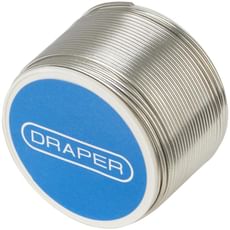
Draper Soldering Wire

 Loading...
End of content
Error - No more pages to load
Draper Soldering Wire at Tooled-Up.com
Draper Tools has been a cornerstone of British manufacturing excellence since 1919, and their soldering wire products exemplify the brand's commitment to delivering professional-grade materials at competitive prices. Whether you're an electronics technician working on intricate circuit boards, a plumber joining copper pipework, or a DIY enthusiast tackling home electronics repairs, Draper soldering wire offers the consistency and reliability required for clean, durable solder joints.
Tooled-Up.com stocks Draper's carefully formulated soldering wire range, which encompasses various alloy compositions and flux cores designed for different applications. From lead-free options that comply with modern environmental regulations to traditional tin-lead alloys favoured for specific professional applications, Draper provides soldering solutions that meet both current BS EN standards and the practical demands of British tradespeople. Each spool is manufactured to exacting specifications, ensuring consistent diameter tolerances and flux distribution throughout the wire.
The Draper soldering wire collection available from Tooled-Up features different wire gauges suitable for everything from fine electronics work to heavier electrical and plumbing applications. Draper's attention to packaging also ensures that soldering wire arrives in excellent condition, with spools that dispense smoothly and protective storage that prevents oxidation and contamination between uses.
Why Choose Draper Soldering Wire?
Draper's reputation for value-engineered products makes their soldering wire an intelligent choice for both professional workshops and home tool kits. The brand understands that consistent solder joint quality depends on wire purity, appropriate flux content, and reliable diameter consistency—aspects where Draper refuses to compromise despite their competitive pricing structure.
British tradespeople have trusted Draper for over a century because the brand consistently delivers products that perform reliably under real-world working conditions. Draper soldering wire produces clean joints with minimal spitting or excess residue, whilst the integrated flux cores are formulated to provide optimal wetting action without requiring additional flux application for most standard jobs. The wire feeds smoothly through both temperature-controlled soldering stations and basic irons, making it versatile across different equipment types.
Furthermore, Draper maintains rigorous quality control processes throughout their supply chain, meaning each batch of soldering wire meets the same high standards. This consistency is crucial when working on projects where joint integrity affects functionality or safety, such as electrical installations, electronic device repairs, or decorative metalwork.
Who Uses Draper Soldering Wire?
- Electronics Technicians – Repairing and assembling circuit boards, control panels, and electronic components
- Electricians – Joining electrical connections in domestic and commercial installations
- Plumbers – Creating watertight joints in copper pipe installations and heating systems
- Automotive Electricians – Repairing vehicle wiring looms and electronic control units
- Jewellers and Metalworkers – Crafting and repairing decorative metalwork and jewellery pieces
- Model Makers and Hobbyists – Building electronic projects, model railways, and radio-controlled vehicles
- Maintenance Engineers – Conducting repairs on industrial equipment and control systems
- Education Sector – Teaching soldering skills in schools, colleges, and training centres
Key Features of Draper Soldering Wire
Draper soldering wire incorporates several design features that enhance usability and joint quality. The flux-cored construction eliminates the need for separate flux application in most scenarios, with the flux content carefully balanced to provide adequate cleaning action without excessive smoke or corrosive residues. This integrated approach saves time and reduces the consumables you need to keep stocked.
The alloy compositions used in Draper soldering wire are selected for optimal flow characteristics and appropriate melting temperatures. Lead-free variants comply with RoHS and REACH regulations, making them suitable for commercial electronics manufacture and repair work where regulatory compliance is mandatory. Traditional tin-lead formulations remain available for applications where their superior wetting properties and lower melting points offer practical advantages.
Diameter consistency throughout each spool ensures predictable solder flow and joint appearance—critical when working on precision electronics or visible decorative work. The wire winds neatly onto manageable spools that fit comfortably in toolboxes and workstation drawers, with labelling that clearly identifies alloy composition, diameter, and flux type to prevent application errors.
Popular Draper Soldering Wire
The Draper range at Tooled-Up encompasses various soldering wire specifications to suit different trades and applications. Lead-free soldering wire options typically feature tin-copper or tin-silver-copper alloys that meet modern environmental standards whilst delivering reliable joint strength for electronics and electrical work. These formulations work effectively with temperature-controlled soldering stations commonly found in professional workshops.
Traditional tin-lead soldering wire remains popular amongst technicians who value its excellent flow characteristics and lower working temperature, particularly useful when working with heat-sensitive components or vintage electronics restoration. Draper offers various diameter options, from fine 0.7mm wire ideal for delicate circuit board work through to heavier gauges suited to electrical junction boxes and plumbing applications.
Specialist formulations for plumbing work feature compositions and flux types specifically designed for copper pipe jointing, creating watertight seals that withstand the pressures and temperatures found in domestic heating and water systems.
Safety and Compliance
When using Draper soldering wire, proper ventilation is essential as flux fumes can irritate respiratory passages. Tooled-Up recommends working in well-ventilated areas or using fume extraction equipment, particularly during prolonged soldering sessions. Safety glasses protect eyes from flux spatter, whilst heat-resistant work surfaces prevent fire hazards.
Draper's lead-free soldering wire formulations comply with current UK and EU environmental regulations including RoHS and REACH, making them suitable for commercial electronics production and repair. When working with traditional lead-containing solders, follow appropriate hygiene practices including thorough handwashing before eating or drinking, as per HSE guidance on lead exposure prevention.
Store soldering wire in dry conditions to prevent flux degradation and wire oxidation, which can compromise joint quality. Keep spools in their original packaging or sealed containers when not in use, and always check material safety data sheets for specific handling guidance related to particular alloy compositions.
Frequently Asked Questions
What diameter Draper soldering wire should I choose?
Wire diameter depends on your application. Electronics work typically uses 0.7mm to 1.0mm for precision, whilst electrical connections and plumbing joints work better with 1.2mm to 2.0mm diameters. Thinner wire offers better control for delicate work, whereas thicker wire delivers solder volume more quickly for larger joints.
Is Draper soldering wire suitable for lead-free requirements?
Yes, Draper manufactures lead-free soldering wire formulations that comply with RoHS and REACH regulations. These typically use tin-copper or tin-silver-copper alloys suitable for commercial electronics manufacture and repair work where environmental compliance is mandatory.
Do I need separate flux when using Draper soldering wire?
Draper soldering wire features integrated flux cores that provide adequate cleaning action for most standard applications. Separate flux paste may benefit heavily oxidised surfaces or particularly challenging joints, but isn't necessary for typical electronics, electrical, or plumbing work.
How should I store Draper soldering wire to maintain quality?
Store soldering wire in dry conditions away from moisture and contaminants. Keep spools in their original packaging or sealed containers when not in use to prevent flux degradation and wire oxidation, both of which can compromise joint quality and solder flow characteristics.
What's the difference between Draper's plumbing and electronics soldering wire?
Plumbing soldering wire typically features different alloy compositions and more aggressive flux types designed for copper pipe jointing at higher temperatures. Electronics soldering wire uses finer diameters and gentler flux formulations suitable for delicate circuit board work and heat-sensive components.