
Facom Files

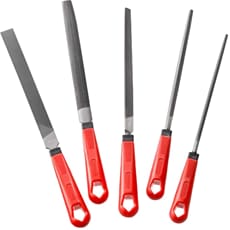
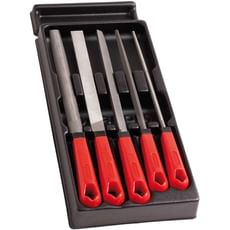
Loading...
End of content
Error - No more pages to load
Facom Files at Tooled-Up.com
Facom has built an exceptional reputation for producing precision hand tools that meet the exacting standards of professional tradespeople, and their range of files exemplifies this commitment to quality. As part of the renowned French manufacturer's comprehensive hand tool collection, Facom files represent the perfect blend of traditional craftsmanship and modern metallurgical expertise. Each file is manufactured to deliver consistent, reliable performance across a wide variety of metalworking, engineering, and finishing applications.
The Facom files collection available from Tooled-Up encompasses everything from fine needle files for intricate precision work to robust bastard files for rapid material removal. Whether you're deburring machined components, shaping metal fabrications, or fine-tuning engineered parts, Facom provides the specialist filing solutions that professionals demand. Their files feature precision-cut teeth that maintain sharpness throughout extended use, delivering superior cutting performance and extended tool life compared to standard alternatives.
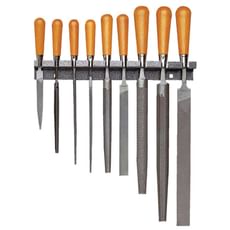
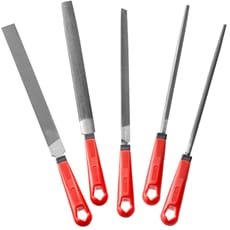
Tooled-Up stocks Facom's complete filing range, including flat files, half-round files, round files, square files, and triangular files in various cuts and sizes. From delicate watchmaker's files measuring just a few inches to heavy-duty industrial files exceeding 300mm in length, the selection caters to every metalworking requirement. Facom's attention to detail extends to the ergonomically designed handles that reduce hand fatigue during prolonged filing operations, making them the preferred choice for trades where precision and comfort are paramount.
Why Choose Facom Files?
Facom's reputation as a premium tool manufacturer is built on over a century of expertise in producing tools for professional use. Their files are no exception, manufactured from high-grade carbon steel that has been precision-hardened to deliver optimal performance characteristics. The heat treatment processes employed by Facom ensure that each file maintains the perfect balance between hardness for cutting efficiency and toughness to resist breakage under demanding workshop conditions.
What truly distinguishes Facom files from competitors is the precision of the tooth cutting process. Using advanced manufacturing techniques, Facom produces files with uniform, sharp teeth that cut consistently across the entire working surface. This precision ensures that material removal is predictable and controlled, allowing skilled tradespeople to achieve the exact tolerances required for professional work. The teeth are also designed to resist clogging, maintaining cutting efficiency even when working with softer metals like aluminium or brass.
Facom's commitment to quality extends throughout the product lifecycle. These files are designed for professionals who rely on their tools daily, which means they must withstand the rigours of commercial workshop environments. The tangs are properly sized and shaped for secure handle attachment, whilst the file bodies resist warping or bending during use. This durability translates into excellent value for money, as Facom files typically outlast cheaper alternatives by a considerable margin, reducing replacement costs over time.
Who Uses Facom Files?
Facom files are the tool of choice for a diverse range of professional tradespeople and skilled craftspeople, including:
- Mechanical Engineers who require precision filing for component fitting and finishing
- Toolmakers and Die Makers working to extremely fine tolerances on jigs, fixtures, and dies
- Automotive Technicians for deburring, shaping, and fitting metal components during repairs and modifications
- Maintenance Engineers in industrial settings who need reliable files for repair and fabrication work
- Metal Fabricators requiring robust files for shaping and finishing fabricated components
- General Fitters across various industries who depend on quality files for everyday metalworking tasks
- Pipe Fitters and Plumbers who need to deburr and shape pipe ends and metal fixtures
- Locksmiths requiring precision files for key cutting and lock mechanism work
- Jewellers and Watchmakers using fine needle files for intricate precious metal work
- Model Engineers and Hobbyists who demand professional-quality tools for precision miniature work
Key Features of Facom Files
Facom files incorporate several distinctive features that contribute to their superior performance. The precision-cut teeth are manufactured using specialised cutting techniques that create uniform, sharp cutting edges across the entire file surface. This consistency ensures predictable material removal rates and superior surface finishes compared to files with irregular tooth patterns. The tooth geometry is carefully engineered for the specific file type and cut grade, optimising performance for different materials and applications.
The steel used in Facom files undergoes rigorous quality control and heat treatment processes to achieve the ideal hardness rating. This ensures the files are hard enough to cut through tough materials efficiently whilst retaining sufficient toughness to resist chipping or breaking under lateral stress. The result is a file that maintains its cutting efficiency throughout its working life, delivering consistent performance from first use through to eventual replacement.
Ergonomic considerations are integral to Facom's file design philosophy. Many files in the range feature handles designed to reduce hand fatigue during extended use, with contoured grips that provide secure control even when working with oily or gloved hands. The handles are securely attached to properly sized tangs, eliminating the risk of handle separation during use—a common failure point in inferior files. The overall balance and weight distribution of Facom files are carefully optimised to enhance user control and reduce strain during precision filing operations.
Popular Facom Files
The Facom files collection encompasses several popular categories, each designed for specific applications. Their engineer's files represent the core of the range, available in various profiles including flat, hand, half-round, round, square, and triangular configurations. These files are offered in different cuts—from rough bastard cut for rapid material removal through second cut for general purpose work to smooth cut for fine finishing operations. Length options typically range from 100mm to 350mm, allowing tradespeople to select the optimal size for their specific requirements.
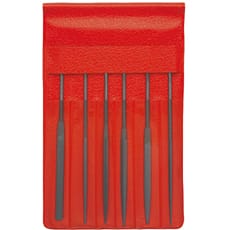
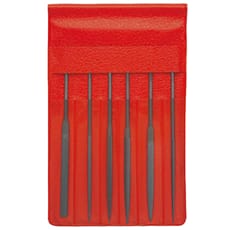
Needle file sets are particularly popular among professionals requiring precision work on small components. These fine files are invaluable for intricate metalworking, jewellery making, and model engineering. Facom's needle files feature hardened steel bodies with precision-cut teeth that allow for detailed shaping and finishing work in confined spaces. The sets typically include various profiles to handle different geometries and access requirements.
Specialist files within the Facom range include chain saw sharpening files for maintaining cutting chains, warding files for lock work, and riffler files featuring curved profiles for sculptural metalwork. This comprehensive selection ensures that professionals across diverse trades can find the exact filing tool they need for specialised applications.
Safety and Compliance
When using Facom files, proper safety practices are essential to prevent injury and ensure optimal results. Always ensure files are fitted with properly secured handles before use—never use a file with an exposed tang as this presents a significant puncture hazard. Inspect files regularly for damage, including chipped teeth, cracks, or mushroomed tangs, and replace damaged files immediately. Work should be securely clamped in a vice at an appropriate height to allow comfortable, controlled filing strokes.
Personal protective equipment is important when filing operations, particularly safety glasses or goggles to protect against metal particles and filings. Work gloves should be avoided during precision filing as they reduce tactile feedback and control, but suitable hand protection should be worn when handling workpieces with sharp edges. Ensure adequate workspace lighting to maintain clear visibility of the work area and prevent eye strain during detailed filing operations.
Proper file maintenance extends tool life and maintains safety standards. Clean files regularly using a file card or wire brush to remove embedded metal particles that reduce cutting efficiency and can cause surface scratching. Store files separately or in protective holders to prevent tooth damage from contact with other tools. Never use files as pry bars, hammers, or scrapers, as this will damage the cutting teeth and potentially cause dangerous breakage. Following these guidelines ensures that Facom files deliver safe, reliable performance throughout their working life whilst meeting the Health and Safety Executive's requirements for hand tool safety in professional environments.
Frequently Asked Questions
What is the difference between single cut and double cut Facom files?
Single cut files have teeth running in one direction across the file face, producing a smoother finish and allowing for more controlled material removal. They're ideal for sharpening, draw filing, and finish work. Double cut files feature a second set of teeth cut at an angle to the first, creating a crosshatch pattern that removes material more aggressively. Double cut files are better suited for rapid stock removal and general shaping work before finishing with a single cut or smooth file.
How do I choose the correct grade of Facom file for my application?
File grades range from rough (bastard cut) through medium (second cut) to fine (smooth cut). Bastard cut files remove material quickly and are used for initial shaping and heavy stock removal. Second cut files offer a balance between material removal and surface finish, making them suitable for general engineering work. Smooth cut files produce fine finishes and are used for final dimensioning and finishing operations. For precision work, consider Facom's needle files which offer even finer cutting characteristics.
Can Facom files be used on materials other than steel?
Yes, Facom files are versatile tools suitable for various materials including aluminium, brass, copper, plastics, and wood, though they're primarily designed for metalworking. When filing softer metals like aluminium, files may clog more readily, so regular cleaning with a file card is essential. For non-ferrous metals and plastics, consider using files with wider tooth spacing that resist clogging. Very hard materials like hardened steel or ceramics will rapidly wear file teeth and should generally be worked using alternative methods.
How should I maintain my Facom files to ensure longevity?
Regular cleaning is crucial for file maintenance. After each use, remove embedded metal particles using a file card, brushing along the tooth direction. For stubborn debris, a wire brush or chalk rubbed into the teeth before use can help prevent clogging. Store files separately or in protective rolls to prevent tooth damage from contact with other tools. Keep files dry to prevent rust, and apply a light coating of oil for long-term storage. Never strike files with hammers or use them as levers, as this will damage teeth and potentially cause dangerous fractures.
Are Facom files suitable for draw filing techniques?
Absolutely. Facom's single cut files are particularly well-suited to draw filing, a technique where the file is held at both ends and drawn across the work surface perpendicular to its length. This method produces exceptionally smooth finishes on flat surfaces and is commonly used in precision engineering and toolmaking. The uniform tooth pattern and consistent hardness of Facom files make them ideal for this application, providing controlled material removal and excellent surface finishes. For best results, use a smooth or second cut single cut file with light, even pressure across the full stroke length.