

Facom Voltage Testers
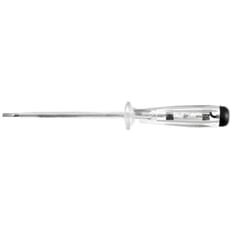
 Loading...
End of content
Error - No more pages to load
Facom Voltage Testers at Tooled-Up.com
Facom, the renowned French manufacturer with over a century of tool-making expertise, brings professional-grade reliability to electrical testing equipment. Facom voltage testers are engineered specifically for tradespeople who demand accuracy, durability and safety when working with electrical installations. These instruments combine precision electronics with robust construction, designed to withstand the rigours of daily site work whilst delivering consistent, dependable results.
The Facom voltage tester range available from Tooled-Up.com represents the brand's commitment to electrical safety and diagnostic efficiency. Each tester undergoes stringent quality control processes, ensuring compliance with the latest UK and European safety standards. From basic voltage detection through to advanced multi-function testing capabilities, Facom's electrical testing instruments are built to meet the exacting requirements of professional electricians and electrical contractors across the United Kingdom.
Whether you're testing 240v mains circuits, verifying isolation before maintenance work, or diagnosing electrical faults, Facom voltage testers provide the confidence that comes from using professional-specification equipment. Their ergonomic designs and clear visual indicators make them practical tools for working in confined spaces, poorly-lit environments and challenging site conditions.
Why Choose Facom Voltage Testers?
Facom's reputation in the professional tools sector extends seamlessly into their electrical testing equipment. The brand's voltage testers are manufactured to exacting standards, incorporating heavy-duty components that resist impact damage, moisture ingress and the general wear associated with toolbag storage and site transportation. This durability translates into longer service life and reduced replacement costs over time.
Safety is paramount when working with live electrical circuits, and Facom voltage testers feature multiple protection mechanisms including CAT-rated insulation, reinforced probe construction and clear voltage indication systems. The brand's attention to ergonomic design ensures that testers are comfortable to hold during extended testing sessions, with non-slip grips and well-positioned controls that can be operated whilst wearing work gloves.
Facom's heritage of innovation means their voltage testers incorporate practical features that reflect real-world electrical testing requirements. Large, backlit displays ensure readability in dark environments, whilst rugged protective holsters and probe caps help maintain equipment in working order between jobs. The brand's commitment to after-sales support and calibration services provides additional peace of mind for professional users who rely on accurate measurements for safety-critical decisions.
Who Uses Facom Voltage Testers?
- Electricians and Electrical Contractors: Professional sparkies conducting installation, testing and certification work across domestic, commercial and industrial settings
- Maintenance Engineers: Facilities management professionals responsible for electrical system upkeep in factories, warehouses and commercial buildings
- Control Panel Builders: Specialists assembling and testing electrical control systems and distribution equipment
- Renewable Energy Installers: Solar PV and wind turbine technicians working with both AC and DC electrical systems
- Building Services Contractors: Multi-trade professionals requiring reliable electrical testing capabilities alongside other installation work
- MOD and Defence Contractors: Engineers working on military installations and equipment requiring certified testing instruments
- Automotive Electricians: Specialists diagnosing electrical faults in vehicles, plant machinery and mobile equipment
- Facilities Managers: Building supervisors conducting routine electrical safety checks and basic fault-finding
Key Features of Facom Voltage Testers
Facom voltage testers are distinguished by their professional-grade construction, featuring impact-resistant housings that protect sensitive electronics from workshop and site damage. The CAT III and CAT IV rated models provide essential overvoltage protection when testing 240v mains circuits, distribution boards and three-phase installations, meeting the safety requirements stipulated by the HSE for electrical work.
Clear visual and audible indication systems ensure unmistakable confirmation of voltage presence, with bright LED arrays and penetrating tone alerts that cut through noisy site environments. Many Facom testers incorporate automatic voltage range detection, eliminating the need for manual range selection and reducing the risk of incorrect settings during testing procedures.
Probe design receives particular attention, with reinforced tips engineered to maintain contact in recessed terminals whilst the shrouded probe bodies prevent accidental contact with adjacent live parts. Flexible, high-visibility test leads resist kinking and cracking, even in cold conditions, whilst maintaining the necessary insulation ratings for safe operation. The Tooled-Up selection includes models with rotating probe tips, magnetic backs for hands-free operation, and integrated torch functions for working in poorly-lit locations such as loft spaces and service ducts.
Popular Facom Voltage Testers
The Facom voltage tester range encompasses solutions for varied electrical testing requirements. Two-pole voltage testers remain essential tools for quickly verifying the presence or absence of mains voltage before commencing work, offering simple pass/fail indication that's invaluable during isolation procedures. These compact instruments fit easily into shirt pockets, ensuring they're always to hand when needed.
Non-contact voltage detectors provide an additional safety layer, allowing electricians to scan for live cables behind plasterboard or within trunking before drilling or cutting. Facom's non-contact testers feature adjustable sensitivity settings, reducing false triggers from induced voltages whilst maintaining reliable detection of energised conductors.
For comprehensive diagnostic work, Facom's multi-function electrical testers combine voltage detection with continuity testing, resistance measurement and phase rotation indication. These versatile instruments reduce the number of separate tools required for installation testing and fault-finding, streamlining the electrician's toolkit without compromising measurement accuracy or safety standards.
Safety and Compliance
All Facom voltage testers stocked at Tooled-Up conform to the relevant BS EN standards for electrical test equipment, ensuring they meet UK regulatory requirements for professional use. CAT ratings indicate the maximum voltage and transient protection levels, with CAT III 1000V instruments suitable for fixed installation testing and CAT IV models appropriate for service entrance and distribution testing where higher fault currents may be encountered.
Proper use of voltage testers is essential for electrical safety. The HSE recommends following the "prove-test-prove" procedure: testing the voltage tester on a known live source, conducting the intended test, then re-verifying the tester's operation on the live source again. This practice confirms the tester is functioning correctly throughout the testing procedure, guarding against false negative readings that could lead to dangerous assumptions about circuit status.
Regular inspection of test leads, probes and insulation is crucial for maintaining safe operation. Facom voltage testers should be visually checked before each use for signs of damage, wear or contamination. Any equipment showing deterioration should be withdrawn from service immediately. Periodic calibration ensures measurement accuracy is maintained, particularly important for testers used in certification work where accurate voltage readings must be recorded on electrical installation certificates.
Frequently Asked Questions
What CAT rating do I need for testing domestic 240v installations?
For standard domestic electrical work involving socket circuits, lighting and consumer units, a CAT III 300V rated voltage tester provides adequate protection. However, many professional electricians opt for CAT III 600V or 1000V instruments for greater safety margins and versatility across domestic and light commercial applications. Facom's higher-rated testers offer this flexibility whilst remaining compact and practical for everyday use.
Are Facom voltage testers suitable for testing solar PV systems?
Yes, Facom voltage testers with appropriate DC voltage testing capabilities can be used for solar PV installations. When selecting a tester for renewable energy work, ensure it's rated for both AC mains testing and the DC voltages encountered in PV strings, which can exceed 600V in larger residential and commercial systems. Models with CAT III and CAT IV ratings provide necessary protection when testing both the DC generation side and AC grid connection points.
How often should Facom voltage testers be calibrated?
For professional electrical contractors conducting testing and certification work, annual calibration is recommended to maintain accuracy and compliance with BS 7671 requirements. Testers subjected to heavy use, harsh environments or suspected damage should be calibrated more frequently. Tooled-Up stocks Facom voltage testers that can be returned to authorised service centres for calibration certification, ensuring traceability and maintaining professional standards.
Can Facom voltage testers detect low voltage systems like 12V and 24V?
Many Facom voltage testers are designed primarily for mains voltage detection (50V and above), with some models specifically calibrated for 240v AC circuits. For reliable testing of extra-low voltage systems such as 12V DC automotive circuits or 24V control systems, a digital multimeter provides more appropriate measurement capabilities. However, Facom's multi-function testers may include continuity and low-voltage testing modes suitable for these applications – check individual product specifications for voltage range details.
What's the difference between contact and non-contact voltage testers?
Contact voltage testers require physical connection to conductors via test probes, providing definitive confirmation of voltage presence and typically indicating approximate voltage levels. Non-contact detectors sense the electromagnetic field around live conductors without requiring direct contact, offering enhanced safety when scanning for hidden cables or checking for voltage through insulation. Professional electricians typically carry both types: non-contact detectors for initial scanning and proximity detection, and contact testers for confirmed voltage verification during isolation procedures. Facom manufactures both styles to suit different testing scenarios and safety protocols.