

Faithfull Dies
 Loading...
End of content
Error - No more pages to load
Faithfull Dies at Tooled-Up.com
Faithfull has established itself as a trusted name in hand tools and workshop equipment, and their range of threading dies exemplifies the brand's commitment to delivering professional-grade cutting tools at accessible prices. Threading dies are essential tools for creating external threads on rods, pipes, and bolts, and Faithfull's comprehensive selection caters to both professional tradespeople and dedicated DIY enthusiasts who demand precision and reliability in their metalworking projects.
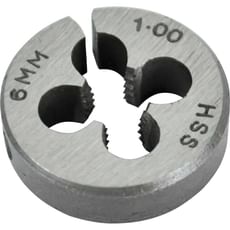
The Faithfull Dies collection available from Tooled-Up.com encompasses a variety of thread cutting solutions designed for different applications and materials. Whether you're working with mild steel, stainless steel, brass, or aluminium, Faithfull produces dies manufactured to exacting standards that ensure clean, accurate threads every time. Their dies are compatible with standard die stocks and are marked clearly with thread size and pitch information for easy identification on busy workshop benches or job sites.
Engineered from high-carbon steel and carefully hardened for extended service life, Faithfull threading dies represent excellent value for money without compromising on cutting performance. The brand's focus on practical, dependable tooling has made their dies a popular choice among plumbers, engineers, maintenance technicians, and fabricators throughout the UK.
Why Choose Faithfull Dies?
Faithfull has built a reputation over decades for producing honest, hardworking tools that deliver consistent results without breaking the bank. Their threading dies are manufactured to recognised standards, ensuring compatibility with both metric and imperial fasteners commonly encountered in UK workshops. The brand's quality control processes mean that each die cuts cleanly with minimal chatter, reducing the physical effort required and producing superior thread quality.
Value is a cornerstone of the Faithfull proposition. While professional-grade threading dies from premium manufacturers can command significant prices, Faithfull offers comparable performance at a more accessible price point. This makes them particularly attractive for tradespeople building their tool collections, apprentices investing in their first proper toolkit, and workshops that need multiple sizes without excessive capital outlay.
The durability of Faithfull Dies means they can be resharpened and continue delivering accurate threads through numerous projects. Their robust construction withstands the demands of daily professional use, whilst the clear size markings remain legible even after years of service. Tooled-Up stocks Faithfull's threading die range to provide customers with reliable cutting tools backed by the retailer's excellent customer service and competitive pricing.
Who Uses Faithfull Dies?
- Plumbers and heating engineers creating threaded connections for pipe installations and repairs
- Maintenance fitters in industrial and manufacturing environments who need to cut replacement threads on damaged components
- Motor mechanics restoring damaged threads on bolts and studs during vehicle repairs
- Fabricators and metal workers producing custom threaded components for bespoke projects
- Agricultural engineers maintaining and repairing farm machinery in remote locations
- General engineers across various sectors requiring accurate thread cutting capabilities
- DIY enthusiasts undertaking metalworking projects at home workshops
- Model engineers creating precision threaded components for their projects
- Apprentices and trainees learning essential metalworking skills with dependable tools
Key Features of Faithfull Dies
Faithfull threading dies are manufactured from high-carbon steel that has been properly hardened and tempered to achieve the optimal balance between hardness for cutting performance and toughness to resist chipping or breaking. The cutting edges are precision ground to create sharp, efficient cutting teeth that slice through material cleanly rather than tearing or deforming the workpiece.
The dies feature chamfered lead-in threads that help guide the die onto the workpiece and distribute cutting forces gradually, making it easier to start threads accurately and reducing the risk of cross-threading. Clear size markings are stamped into each die, displaying both the diameter and thread pitch for quick identification in busy workshop environments.
Faithfull produces their dies in both split and solid configurations. Split dies include an adjustment slot that allows for minor diameter adjustments, enabling you to control thread tightness and compensate for die wear over time. This versatility makes them particularly valuable for repair work where you may need to match existing threads of varying conditions.
The standard hexagonal shape of Faithfull Dies ensures they fit securely in conventional die stocks, preventing slippage during the cutting process and ensuring even force distribution around the die's circumference. This compatibility means they integrate seamlessly into existing toolkits without requiring specialised holders.
Popular Faithfull Dies
Faithfull offers threading dies in comprehensive metric and imperial size ranges to suit the diverse requirements of UK tradespeople. Their metric dies cover common sizes from M3 through to M20 and beyond, with various pitch options available for fine and coarse threading applications. Imperial dies span popular BSW, BSF, UNC, and UNF thread forms in frequently used diameters.
Individual dies are available for tradespeople who need specific sizes, whilst die sets provide excellent value for those establishing a complete threading capability. These sets typically include the most commonly required sizes housed in sturdy storage cases that keep dies organised and protected. Popular set configurations include metric-only, imperial-only, or combination sets covering both measurement systems.
Split dies are particularly sought-after for their adjustability and ease of starting, making them ideal for field work and repair applications. Solid dies, whilst less adjustable, offer maximum rigidity and are preferred for production work where consistent thread dimensions are paramount.
Safety and Compliance
When using Faithfull Dies, proper workshop safety practices are essential. Always secure workpieces firmly in a vice or suitable holding device before attempting to cut threads – never attempt to hold small components by hand during threading operations. Use appropriate cutting fluid or thread cutting compound to reduce heat buildup, improve surface finish, and extend die life.
Wear safety glasses to protect your eyes from metal chips and swarf produced during the cutting process. Keep fingers clear of rotating dies and ensure die stocks are properly tightened before commencing work. Inspect dies regularly for wear, damage, or dull cutting edges – worn dies require excessive force and produce poor quality threads that may fail in service.
Clean dies thoroughly after use to remove metal particles and cutting fluid, then apply a light coating of oil to prevent corrosion during storage. Store dies in protective cases or compartmented boxes to prevent damage to cutting edges and keep size markings visible. Follow HSE guidance regarding manual handling and ergonomic working practices when performing repetitive threading operations.
Frequently Asked Questions
What's the difference between split and solid Faithfull Dies?
Split dies feature an adjustment slot that allows you to open or close the die slightly to adjust thread fit and compensate for wear. They're easier to start on workpieces and ideal for repair work. Solid dies have no adjustment mechanism, offering maximum rigidity and consistency for production threading where precise, repeatable dimensions are required.
Can Faithfull Dies be used on stainless steel?
Yes, Faithfull Dies can cut threads in stainless steel, though this material is more challenging to work than mild steel. Use plenty of appropriate cutting fluid, work slowly with steady pressure, and reverse the die frequently to break chips. Stainless steel work will cause more wear to dies than softer materials, so monitor cutting edge condition carefully.
How do I know which thread pitch to choose?
Thread pitch depends on your application and what you're threading onto. Coarse threads (fewer threads per inch or larger metric pitch) are stronger, faster to cut, and more tolerant of damage, making them suitable for general construction and quick assembly work. Fine threads (more threads per inch or smaller metric pitch) offer finer adjustment and better vibration resistance, ideal for precision instruments and applications requiring secure fastening.
Why is my Faithfull Die cutting oversize or loose threads?
Oversized threads typically result from worn dies with dulled cutting edges, excessive adjustment on split dies opening them too wide, or inadequate workpiece diameter. Ensure your starting rod diameter matches the recommended size for the thread you're cutting (slightly under the nominal thread diameter). If the die is worn, it may need replacement rather than adjustment.
Do I need different dies for metric and imperial threads?
Yes, metric and imperial threading systems are fundamentally different and require separate dies. Metric threads are specified in millimetres with pitch measured as the distance between threads, whilst imperial threads use fractional or numbered sizes with threads per inch. Using the wrong die system will produce incompatible threads that won't mate properly with corresponding nuts or threaded holes.