

Faithfull Wood Working Vices
 Loading...
End of content
Error - No more pages to load
Faithfull Wood Working Vices at Tooled-Up.com
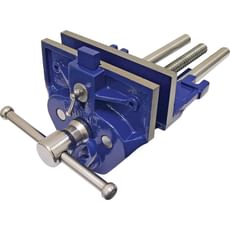
Faithfull has established itself as a trusted name in woodworking equipment, and their range of woodworking vices exemplifies the brand's commitment to delivering robust, reliable workholding solutions for both professional woodworkers and dedicated DIY enthusiasts. With decades of experience manufacturing essential workshop equipment, Faithfull understands the demands placed on woodworking vices in daily use, from fine furniture making to heavy-duty joinery work.
The Faithfull woodworking vice collection available from Tooled-Up.com combines traditional engineering principles with quality materials to provide secure, stable workholding across a variety of applications. Whether you're working with hardwoods, softwoods, or sheet materials, Faithfull's carefully designed vices offer the grip strength and precision alignment that skilled craftspeople demand. Each vice in the range has been developed to meet the practical needs of real workshop environments, where durability and consistent performance are non-negotiable.
From compact bench-mounted models ideal for smaller workshops to heavy-duty cast iron vices designed for professional joinery shops, Faithfull provides solutions that cater to different workspace requirements and budgets. Their woodworking vices feature carefully engineered components including precision-machined screws, durable jaw faces, and robust mounting systems that ensure years of reliable service.
Why Choose Faithfull Wood Working Vices?
Faithfull has built its reputation on delivering professional-grade tools at accessible price points, making quality woodworking equipment available to a broader range of users. Their woodworking vices embody this philosophy, offering construction quality and performance characteristics typically associated with premium brands, whilst remaining competitively priced for tradespeople managing tool budgets and hobbyists investing in their workshop setup.
The brand's attention to manufacturing detail ensures that critical components like guide bars and screw threads are built to precise tolerances, delivering smooth operation and minimal play even after extended use. Faithfull's use of cast iron construction in their larger models provides the mass and rigidity essential for absorbing the forces generated during planing, chiselling, and sawing operations. The jaw faces are designed to provide maximum grip without damaging workpieces, and many models feature replaceable wooden jaw liners that can be customised or renewed as needed.
Faithfull's commitment to quality control means each vice undergoes rigorous testing before leaving the factory, ensuring consistent performance across their entire product range. This reliability has made Faithfull a go-to brand for professionals who need equipment they can depend on day after day, project after project.
Who Uses Faithfull Wood Working Vices?
- Professional Cabinet Makers and Joiners: Craftspeople producing fine furniture and bespoke joinery who require reliable workholding for precision operations
- Site Carpenters and Chippies: Tradespeople working on construction sites who need portable or workshop-based vices for cutting and fitting work
- Furniture Restoration Specialists: Professionals working with antique and period furniture who need secure but gentle workholding
- Shopfitters and Carpenters: Tradespeople fabricating fitted furniture, shopfronts, and commercial joinery
- Educational Institutions:Schools, colleges, and training centres equipping woodworking workshops for student use
- Serious DIY Enthusiasts: Home woodworkers investing in quality equipment for their personal workshops
- Theatre and Set Builders: Professionals constructing scenic elements and stage furniture requiring versatile workholding
Key Features of Faithfull Wood Working Vices
Faithfull woodworking vices incorporate several design features that distinguish them in the marketplace. Cast iron construction provides exceptional rigidity and stability, essential characteristics when working with hand tools where any movement can compromise accuracy. The substantial casting weight also helps dampen vibration during power tool operations, contributing to cleaner cuts and safer working conditions.
The precision-machined screw mechanisms found throughout the Faithfull range deliver smooth, consistent operation with minimal backlash. This engineering quality ensures that jaw alignment remains true even after thousands of operating cycles, maintaining the vice's ability to hold work securely without slippage. Quick-release mechanisms on selected models allow rapid repositioning of the jaw, significantly improving workflow efficiency when processing multiple components.
Faithfull pays particular attention to jaw design, incorporating features like stepped faces that accommodate varying workpiece thicknesses and provide multiple clamping options. The provision for wooden jaw liners allows users to protect delicate workpieces and customise the gripping surface for specific applications. Robust mounting systems with pre-drilled holes simplify installation to workshop benches, ensuring secure fixing that won't loosen under working loads.
Popular Faithfull Wood Working Vices
The Faithfull woodworking vice range encompasses several distinct types, each optimised for particular applications. Their quick-release woodworking vices represent perhaps the most popular choice, combining rapid jaw adjustment with secure clamping for everyday workshop tasks. These models feature a trigger mechanism that disengages the screw thread, allowing the jaw to slide freely for quick positioning before final tightening.
Heavy-duty cast iron bench vices from Faithfull provide the ultimate in stability and clamping force, ideal for professional workshops where demanding operations are routine. Front vices designed for mounting at the front edge of traditional joiner's benches offer excellent accessibility and leverage for hand planing and edge work. Faithfull also produces compact vices suitable for smaller benches and portable workstations, ensuring that even space-constrained workshops can benefit from quality workholding equipment.
Safety and Compliance
When installing and using Faithfull woodworking vices, adherence to proper safety procedures ensures both optimal performance and user protection. Vices should be securely bolted to a substantial workbench using appropriate fixings that match the mounting hole dimensions. The bench itself must be sufficiently robust to withstand the forces generated during clamping and working operations without movement or distortion.
Users should regularly inspect vice components for wear, particularly screw threads, guide bars, and jaw faces, replacing any worn elements before they compromise holding security. When clamping workpieces, ensure the load is distributed evenly across the jaw faces to prevent distortion of either the work or the vice itself. Never exceed the vice's rated capacity or use extension tubes to increase leverage beyond design parameters, as this can cause component failure and potential injury.
Wooden jaw liners should be maintained in good condition and replaced when damaged, as splintered or worn liners can mark workpieces and reduce grip effectiveness. Keep screw threads clean and lightly lubricated to ensure smooth operation and prevent premature wear. When not in use, store the vice with jaws slightly open to reduce stress on the screw mechanism.
Frequently Asked Questions
What size Faithfull woodworking vice do I need for my workshop?
Vice size selection depends on your typical workpiece dimensions and available bench space. For general purpose woodworking, a vice with 175-230mm jaw width suits most applications. Smaller 150mm models work well for compact benches and lighter duties, whilst 250mm+ vices are preferred for professional joinery shops handling larger components. Consider both the maximum opening capacity and throat depth when matching a vice to your needs.
How do I properly mount a Faithfull woodworking vice to my bench?
Position the vice so the front jaw sits flush with or slightly below the bench surface, allowing long workpieces to be supported along their length. Mark and drill mounting holes through the bench using the vice base as a template, ensuring adequate clearance beneath for bolt heads or nuts. Use appropriately sized coach bolts or machine screws with large washers beneath the bench to distribute clamping loads. Tighten fixings securely whilst checking that the vice mechanism operates freely without binding.
Can I replace the jaw liners on Faithfull woodworking vices?
Yes, most Faithfull woodworking vices feature removable wooden jaw liners that can be replaced when worn or damaged. Standard liners are typically hardwood pieces fixed with screws through the metal jaw faces. You can either purchase replacement liners or fabricate custom ones from suitable hardwood, allowing you to tailor the jaw surface to specific applications or add features like leather faces for delicate work.
What maintenance do Faithfull woodworking vices require?
Regular maintenance extends vice life and ensures consistent performance. Clean sawdust and debris from screw threads and guide bars periodically, then apply a light coating of machine oil or dry lubricant. Check mounting bolts for tightness every few months, as working forces can gradually loosen fixings. Inspect jaw faces and liners for damage, replacing wooden components as needed. If the vice develops excessive play or binding, check for worn guide bars or damaged screw threads that may require professional repair or replacement.
Are Faithfull woodworking vices suitable for metalworking applications?
Whilst Faithfull woodworking vices are specifically designed for timber work, they can handle occasional light metalworking tasks when fitted with appropriate jaw protection. However, for regular metalworking, a dedicated engineer's vice is recommended as these feature hardened steel jaws, serrated gripping surfaces, and construction optimised for the higher clamping forces and tool impacts associated with metal fabrication. Using woodworking vices extensively for metalwork may cause premature wear and damage to components designed for softer materials.