

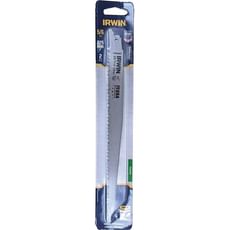
Irwin Sabre & Reciprocating Saw Blades
 Loading...
End of content
Error - No more pages to load
Irwin Sabre & Reciprocating Saw Blades at Tooled-Up.com
Irwin has established itself as a trusted name in cutting technology, and their sabre and reciprocating saw blades exemplify the brand's commitment to durability and precision. With decades of experience in manufacturing professional-grade cutting solutions, Irwin understands the demanding requirements of both tradespeople and serious DIY enthusiasts. Their reciprocating saw blades are engineered to tackle everything from demolition work and pipe cutting to intricate pruning tasks, delivering consistent performance across a wide range of materials including wood, metal, plastics, and composites.
The Irwin range available from Tooled-Up.com encompasses blades specifically designed for different cutting applications, ensuring that professionals can select the optimal blade for their particular task. Whether you're cutting through nail-embedded wood on a renovation project, slicing through cast iron pipework, or tackling tough demolition work, Irwin's engineered blade solutions provide the cutting speed and longevity that demanding jobs require. Each blade features carefully considered tooth geometry and material composition to maximise cutting efficiency whilst minimising vibration and blade deflection.
From bi-metal construction that combines flexibility with hardness, to carbide-tipped options for the most abrasive materials, Irwin sabre and reciprocating saw blades represent a comprehensive solution for cutting professionals. The brand's focus on innovation means their blades incorporate features like aggressive tooth designs for faster cutting, reinforced shoulders for extended blade life, and anti-stick coatings that reduce friction and heat build-up during prolonged use.
Why Choose Irwin Sabre & Reciprocating Saw Blades?
Irwin's reputation in the cutting tools sector is built on delivering professional-grade performance at competitive price points. The brand invests heavily in research and development, utilising advanced metallurgy and precision manufacturing processes to create blades that outlast standard alternatives. Their bi-metal construction, found in many of their reciprocating saw blades, combines high-speed steel cutting edges with flexible spring steel bodies, creating blades that resist breakage even under demanding conditions whilst maintaining sharp cutting edges for longer.
One of the key advantages of choosing Irwin is their application-specific blade design philosophy. Rather than producing generic blades, Irwin engineers their products for specific materials and cutting scenarios. This specialised approach means that an Irwin blade designed for wood demolition will feature different tooth patterns, set angles, and materials compared to one engineered for metal cutting, ensuring optimal performance for each application. This attention to detail translates directly into faster cutting speeds, cleaner cuts, and reduced user fatigue on site.
The brand's commitment to quality control ensures consistent performance across their entire range. Irwin blades undergo rigorous testing to verify their durability and cutting performance, giving tradespeople confidence that each blade will perform as expected. This reliability is particularly valued on commercial sites where downtime and blade changes represent both time and cost implications.
Who Uses Irwin Sabre & Reciprocating Saw Blades?
Irwin sabre and reciprocating saw blades are the choice of numerous trade professionals and demanding users, including:
- Demolition Contractors - requiring robust blades that can handle nail-embedded timber, mixed materials, and punishing cutting conditions
- Plumbers - cutting through various pipe materials including copper, PVC, cast iron, and steel pipework
- Electricians - making precise cuts in cable trays, conduit, and accessing confined spaces
- Carpenters and Joiners - for flush cutting, trim work, and cutting timber in awkward positions
- HVAC Engineers - cutting ductwork, brackets, and making modifications to existing installations
- Landscapers and Tree Surgeons - using pruning-specific blades for branch cutting and garden maintenance
- General Builders - requiring versatile blades for the varied cutting tasks encountered on building sites
- Maintenance Engineers - needing reliable cutting solutions for repair and modification work
- DIY Enthusiasts - undertaking home renovation projects requiring professional-quality cutting performance
Key Features of Irwin Sabre & Reciprocating Saw Blades
Irwin incorporates several distinctive technologies and features across their reciprocating saw blade range that enhance performance and durability:
Bi-Metal Construction: Many Irwin blades feature bi-metal technology, combining 8% cobalt high-speed steel cutting edges electron beam welded to a flexible spring steel backing. This construction provides the perfect balance between hardness for edge retention and flexibility to resist breakage, even when the blade encounters unexpected obstacles or binding conditions.
Aggressive Tooth Geometry: Irwin engineers their tooth patterns to maximise material removal rates whilst maintaining control. Their demolition blades often feature wider tooth spacing with deep gullets to efficiently clear debris, whilst metal-cutting variants use finer tooth pitches for smoother, more controlled cuts through harder materials.
Optimised Blade Lengths: The range includes various blade lengths from compact 150mm options for confined spaces through to extended 300mm+ blades for deeper cuts, ensuring the right tool for every application.
Universal Fitment: Irwin reciprocating saw blades typically feature universal shank designs compatible with all major reciprocating saw brands, providing versatility across different tool platforms.
Anti-Stick Coatings: Selected Irwin blades incorporate low-friction coatings that reduce heat build-up and prevent material adhesion, resulting in faster cutting speeds and extended blade life, particularly when cutting resinous woods or sticky materials.
Reinforced Construction: Thicker blade bodies in appropriate models reduce deflection and vibration, providing straighter cuts and improved control, particularly important when working with power-hungry reciprocating saws.
Popular Irwin Sabre & Reciprocating Saw Blades
Browse the Irwin selection at Tooled-Up.com to find blades engineered for specific applications:
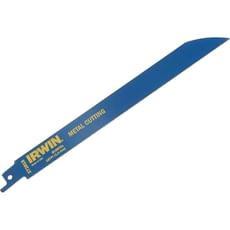
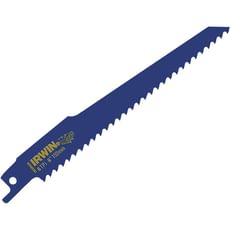
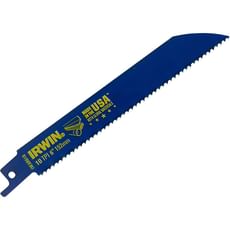
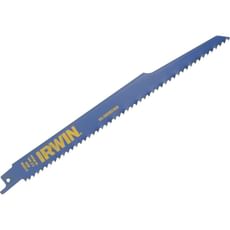
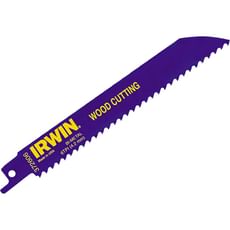
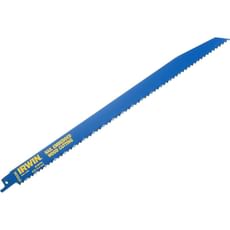
Wood Cutting Blades: Irwin's wood-cutting reciprocating saw blades feature aggressive tooth patterns with typically 6 TPI (teeth per inch) configurations, designed to cut quickly through timber, particle board, and composite materials. These blades excel in demolition work where speed is essential, and are particularly effective when cutting through wood containing nails or screws.
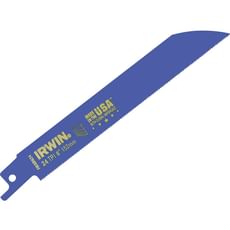
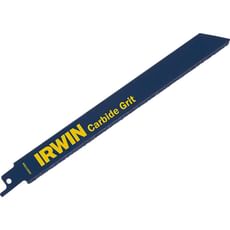
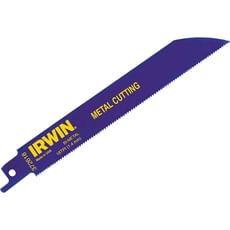
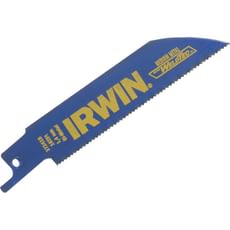
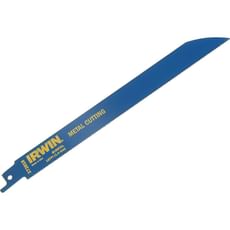
Metal Cutting Blades: For cutting ferrous and non-ferrous metals, Irwin produces blades with finer tooth configurations (typically 14-24 TPI) that provide controlled, burr-free cuts through materials including steel, aluminium, copper, and cast iron. The bi-metal construction ensures these blades withstand the heat generated during metal cutting whilst maintaining their cutting edge.
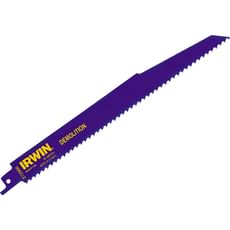
Demolition Blades: Purpose-designed for the toughest applications, Irwin demolition blades combine rugged construction with aggressive cutting action, capable of tackling mixed materials, embedded fasteners, and demanding site conditions that would quickly destroy standard blades.
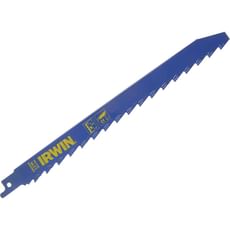
Pruning Blades: Irwin's pruning-specific reciprocating saw blades feature specially designed tooth patterns optimised for cutting green wood and live branches, with curved blade profiles that improve cutting efficiency in landscaping applications.
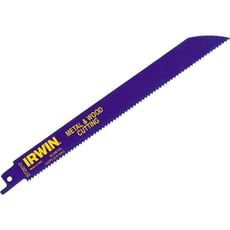
Multi-Material Blades: For applications involving varied materials, Irwin produces versatile multi-material blades that balance cutting speed and durability across wood, metal, and plastic, reducing the need for frequent blade changes on diverse projects.
Safety and Compliance
When using Irwin sabre and reciprocating saw blades, adherence to UK health and safety guidelines is essential. Always ensure that the blade is appropriate for the material being cut and that it's correctly installed in the saw with the teeth facing the correct direction. The HSE recommends that operators wear appropriate personal protective equipment including safety glasses or goggles to protect against flying debris, hearing protection due to the noise generated by reciprocating saws, and sturdy gloves when handling or changing blades.
Before commencing work, inspect blades for damage including cracked, bent, or excessively worn teeth, as compromised blades can break during operation, creating serious safety hazards. Always disconnect the saw from its power source before changing blades, and ensure the blade is securely locked in the chuck before use. When cutting, maintain a firm grip on the saw and position yourself to avoid injury should the blade bind or break.
Be particularly cautious when cutting materials that may contain hidden hazards such as electrical cables, water pipes, or structural elements. Always verify what lies beyond the cutting surface before proceeding. Irwin blades should be used within their designed parameters – forcing a blade beyond its intended application or using excessive pressure can lead to premature failure and potential injury. Dispose of worn blades responsibly, wrapping them securely before disposal to prevent injury to waste handlers.
Frequently Asked Questions
What does TPI mean on Irwin reciprocating saw blades, and which should I choose?
TPI stands for "teeth per inch" and indicates the tooth density on the blade. Lower TPI (6-10) provides faster, more aggressive cuts ideal for wood and demolition work, whilst higher TPI (14-24) gives finer, more controlled cuts better suited to metal and detailed work. For general wood cutting, choose 6-10 TPI; for metal, select 14-24 TPI; for multi-material applications, 10-14 TPI offers a practical compromise.
How long should an Irwin reciprocating saw blade last?
Blade life depends on numerous factors including the material being cut, cutting technique, saw power, and blade maintenance. Under typical conditions, an Irwin bi-metal blade might deliver 50-200 cuts in standard timber before requiring replacement. Cutting through abrasive materials, metal, or nail-embedded wood will reduce blade life. Signs that replacement is needed include noticeably slower cutting speeds, excessive vibration, or visible tooth damage.
Can Irwin reciprocating saw blades be used in any brand of reciprocating saw?
Yes, Irwin reciprocating saw blades typically feature universal shank designs that fit all major reciprocating saw brands including Makita, DeWalt, Milwaukee, Bosch, and others. The standard fitting ensures compatibility across different tool platforms. However, always verify that the blade is properly secured in the chuck before use, as different saws may have slightly different clamping mechanisms.
What's the difference between Irwin's bi-metal and standard carbon steel blades?
Bi-metal blades combine a high-speed steel cutting edge with a flexible spring steel body, offering superior durability, heat resistance, and flexibility compared to standard carbon steel blades. They're significantly more resistant to breakage and maintain their sharpness longer, particularly when cutting metal or encountering hidden fasteners. Whilst bi-metal blades cost more initially, their extended lifespan typically makes them more economical for professional use.
Are Irwin reciprocating saw blades suitable for cutting through nails and screws?
Many Irwin reciprocating saw blades, particularly their bi-metal demolition variants, are specifically designed to cut through nail-embedded wood and can handle occasional contact with fasteners without immediate failure. However, repeatedly cutting directly through thick nails or screws will accelerate wear. For demolition work where encountering fasteners is inevitable, choose Irwin's heavy-duty demolition blades which feature reinforced construction and are engineered to withstand such demanding conditions.