

Makita Brads & Nails
 Loading...
End of content
Error - No more pages to load
Makita Brads & Nails at Tooled-Up.com
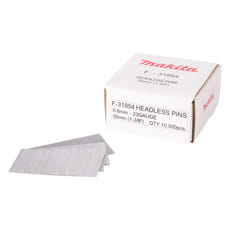
When it comes to fixing consumables for pneumatic and cordless nailers, Makita has established itself as a trusted name among UK tradespeople and serious DIY enthusiasts. The Makita brads and nails range is engineered to deliver consistent performance across demanding applications, from first-fix carpentry to precision trim work. Designed specifically for compatibility with Makita's extensive line of nailers and brad guns, these fasteners ensure optimal feeding, reduced jamming, and professional results every time.
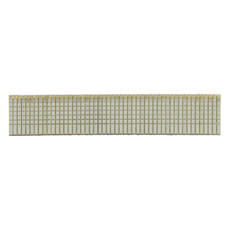
Tooled-Up.com stocks a comprehensive selection of Makita brads and nails in various gauges, lengths, and finishes to suit different materials and applications. Whether you're working with softwood, hardwood, MDF, or composite materials, the Makita range provides the right fastener for the job. Each product is manufactured to exacting standards, ensuring dimensional consistency that prevents misfires and maximises productivity on site.
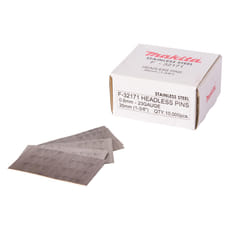
From 18-gauge brad nails for delicate mouldings to heavy-duty framing nails for structural work, the range covers the full spectrum of fixing requirements. Makita's attention to detail extends to the packaging, with clearly labelled boxes and strips that make it easy to identify the correct fastener and monitor stock levels during busy projects.
Why Choose Makita Brads & Nails?
Makita's reputation in the power tool industry extends seamlessly to their consumables range. Each brad and nail is manufactured using high-quality steel with precision collation that ensures smooth, reliable feeding through Makita nailers. This reduces downtime caused by jams and misfires – a critical consideration when you're working to tight deadlines on site.
The galvanised and stainless steel options available in the Makita range provide excellent corrosion resistance for exterior applications and moisture-prone environments. This longevity means your finished work maintains its structural integrity and visual appeal for years to come. Makita's quality control processes ensure that every fastener meets strict dimensional tolerances, resulting in consistent penetration depth and holding power across the entire strip or coil.
Professional tradespeople appreciate that Makita brads and nails are engineered to work seamlessly with the brand's cordless and pneumatic nailers, maximising the performance of their existing tool investment. The compatibility testing that Makita conducts means you can trust that these fasteners will perform optimally with your Makita nailer, reducing wear on the tool's drive mechanism and extending its working life.
Who Uses Makita Brads & Nails?
- Carpenters and joiners – for fixing architraves, skirting boards, and custom joinery
- Cabinet makers – securing face frames, backing panels, and decorative mouldings
- Shop fitters – installing displays, fixtures, and retail interiors
- Flooring specialists – fixing hardwood floors, beading, and trims
- Framers – structural work requiring heavy-gauge nails
- Decking contractors – exterior applications demanding corrosion-resistant fasteners
- Renovation contractors – general fix work across various materials
- Furniture makers – precision fixing for bespoke pieces
- Exhibition builders – temporary and permanent installations
- DIY enthusiasts – home improvement projects requiring professional-quality results
Key Features of Makita Brads & Nails
Precision Collation: Each strip or coil is assembled with exacting tolerances to ensure smooth feeding and consistent firing, minimising tool jams and maximising productivity.
Material Quality: Manufactured from high-grade steel with appropriate coatings for different applications, including bright finish for interior work and hot-dipped galvanised for exterior use.
Gauge Variety: Available in multiple gauges from fine 18-gauge brads for delicate trim work through to robust 15-gauge and heavier nails for structural applications.
Length Options: Comprehensive range of lengths from 15mm through to 65mm and beyond, covering everything from thin panel work to heavy timber framing.
Angled and Straight Options: Different collation angles to match specific Makita nailer models, ensuring perfect compatibility.
Head Configurations: Various head styles including lost-head for concealed fixing and clipped-head for high-density nailing in tight spaces.
Corrosion Protection: Stainless steel and galvanised options provide excellent rust resistance for exterior applications and humid environments.
Popular Makita Brads & Nails
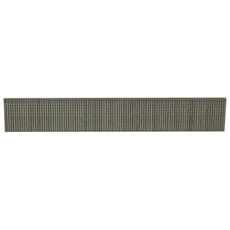
18-Gauge Brad Nails: The go-to choice for finish carpentry, these slim-profile fasteners are ideal for fixing architraves, picture rails, and delicate mouldings without splitting the timber. Available at Tooled-Up in lengths from 15mm to 50mm.
16-Gauge Finish Nails: Offering greater holding power than brads whilst maintaining a relatively small profile, these are perfect for skirting boards, door casings, and heavier trim work.
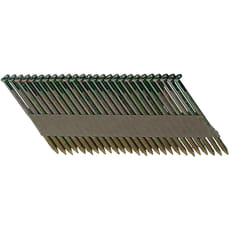
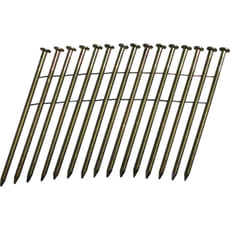
15-Gauge Angled Nails: The workhorse of the construction site, these provide excellent holding power for framing, fencing, and structural applications. The angled collation allows access into tight corners.
Galvanised Nails: Essential for exterior decking, fencing, and any application where moisture exposure is a concern. The protective coating ensures long-term durability.
Stainless Steel Fasteners: Premium option for coastal environments, wet rooms, and anywhere maximum corrosion resistance is required.
Safety and Compliance
All Makita brads and nails are manufactured to meet relevant British and European standards, ensuring they're suitable for use in professional and domestic applications throughout the UK. When using these fasteners, always follow HSE guidelines for nail gun operation, including wearing appropriate eye protection and ensuring clear working zones.
Store fasteners in a dry environment to maintain the integrity of any protective coatings. Check that the gauge and length are appropriate for both your Makita nailer model and the material being fixed. Never exceed the recommended fastener specifications for your tool, as this can cause damage to the firing mechanism and create safety hazards.
Dispose of any bent or damaged fasteners responsibly, and never attempt to straighten and reuse compromised nails, as this can lead to unpredictable performance and potential injury.
Frequently Asked Questions
Are Makita brads and nails compatible with other brands of nailers?
While Makita fasteners are engineered specifically for Makita nailers to ensure optimal performance, they may work in other brands using the same gauge and collation angle. However, for guaranteed reliability and to maintain warranty coverage, it's recommended to use Makita fasteners with Makita tools.
What's the difference between galvanised and stainless steel nails?
Galvanised nails have a zinc coating that provides good corrosion resistance for most exterior applications and represent excellent value. Stainless steel fasteners offer superior corrosion resistance for coastal environments, wet rooms, or anywhere maximum durability is required, but come at a premium price point.
How do I choose the correct nail length for my application?
As a general rule, the fastener should penetrate through the material being fixed and at least 20-25mm into the substrate. For structural applications, consult relevant building regulations. For trim work, ensure sufficient penetration without breakthrough on the opposite side.
Can I use Makita brads in hardwood without pre-drilling?
This depends on the hardwood species and the gauge of brad being used. For very dense hardwoods like oak or iroko, pre-drilling pilot holes may be necessary to prevent splitting, even with fine-gauge brads. For softer hardwoods and with 18-gauge brads, direct nailing is usually successful.
How should I store Makita fasteners to maintain their quality?
Store in a cool, dry location away from moisture to prevent corrosion of unprotected steel fasteners and to maintain the integrity of protective coatings. Keep fasteners in their original packaging until needed, and avoid exposure to site conditions where they could become contaminated with dust or debris that might cause feeding issues.