

Makita Countersinks
 Loading...
End of content
Error - No more pages to load
Makita Countersinks at Tooled-Up.com
Makita's reputation for precision engineering and professional-grade tooling extends comprehensively into their countersink range, where Japanese manufacturing excellence meets the exacting demands of UK tradespeople and serious DIY enthusiasts. As a brand synonymous with reliability and innovation, Makita produces countersinks that deliver consistently clean, accurate results across a variety of materials including wood, metal, and composite substrates. The Tooled-Up Makita range encompasses both individual countersink bits and comprehensive countersink sets designed to handle everything from fine joinery work to heavy-duty metalworking applications.
Whether you're a professional carpenter creating flush screw fixings in cabinet work, a metalworker preparing precise countersunk holes for machine screws, or a maintenance engineer working across multiple materials, Makita countersinks provide the accuracy and durability required for professional results. Available from Tooled-Up.com, these precision-engineered tools feature carefully designed cutting geometries that reduce chatter, prevent material tear-out, and create perfectly angled recesses for flush screw head installation every time.
Why Choose Makita Countersinks?
Makita's commitment to quality manufacturing is evident in every countersink they produce. Unlike economy alternatives that dull quickly or produce inconsistent results, Makita countersinks are manufactured from high-grade tool steel with precision heat treatment processes that maximise edge retention and working life. The brand's rigorous quality control standards ensure that each cutting edge is ground to exacting tolerances, delivering consistent performance across hundreds of applications without the dimensional drift that plagues inferior products.
The engineering philosophy behind Makita countersinks prioritises user experience alongside cutting performance. Carefully designed flute geometries ensure efficient chip evacuation, preventing material build-up that can cause binding or poor finish quality. The brand's attention to detail extends to shank design, with precise sizing that eliminates wobble in drill chucks and ensures true running even at higher speeds. This combination of material science and thoughtful engineering means Makita countersinks maintain their cutting performance longer, reduce the frequency of replacement, and deliver superior value over their working life.
Makita's reputation within the professional trades community provides additional confidence. The brand's extensive warranty support and proven track record mean that when you invest in Makita countersinks, you're choosing tools backed by decades of manufacturing expertise and a commitment to supporting professional users who depend on their equipment daily.
Who Uses Makita Countersinks?
- Carpenters and Joiners: Creating flush screw fixings in cabinet making, furniture construction, and architectural joinery
- Metalworkers and Fabricators: Preparing countersunk holes for machine screws and rivets in steel, aluminium, and brass
- Shopfitters: Installing fixtures, fittings, and display units with professional flush-mounted fastenings
- Maintenance Engineers: Repair and installation work across diverse materials and applications
- Aerospace and Precision Engineering: Applications requiring exact countersink angles and consistent dimensional accuracy
- Automotive Technicians: Bodywork repairs and component installation requiring flush fastener placement
- Electrical Contractors: Installing switch plates, consumer units, and electrical accessories with neat, flush fixings
- Serious DIY Enthusiasts: Home improvement projects where professional results and tool longevity justify quality investment
Key Features of Makita Countersinks
Makita countersinks incorporate several distinctive features that elevate them above standard offerings. The precision-ground cutting edges are manufactured to exact angles—typically 82° for metalwork or 90° for woodwork—ensuring perfect match with corresponding screw head profiles. This precision eliminates the gap between fastener and workpiece that occurs with poorly manufactured countersinks, delivering both aesthetic and functional benefits.
The high-speed steel (HSS) construction used throughout the Makita countersink range provides the hardness necessary for cutting performance whilst maintaining sufficient toughness to resist fracture under demanding conditions. Selected models feature titanium nitride (TiN) coating, which reduces friction, improves chip flow, and significantly extends tool life, particularly when working with harder materials or in production environments where cutting speeds are elevated.
Makita's flute design deserves particular attention. The carefully calculated helix angles and flute depth ensure that swarf is efficiently evacuated from the cutting zone, preventing the clogging that causes burning, poor surface finish, and premature tool wear. This becomes especially important when countersinking deeper holes or working with materials that produce stringy chips.
The shank design on Makita countersinks features precision tolerances that ensure concentricity when mounted in drill chucks or magnetic bit holders. This attention to detail prevents the wobble that creates oversized or out-of-round countersinks, ensuring consistent hole quality throughout production runs or across multiple installation points.
Popular Makita Countersinks
The Makita countersink range at Tooled-Up encompasses several configurations to suit different applications and working methods. Single-flute countersinks offer aggressive cutting action and excellent chip clearance, making them ideal for softwoods and quick production work where material removal rate is prioritised. Multi-flute designs provide smoother cutting action with reduced chatter, perfect for hardwoods, metals, and applications where surface finish quality is paramount.
Deburring countersinks feature a different cutting geometry optimised for removing sharp edges and burrs from drilled holes rather than creating angled recesses for screw heads. These prove invaluable in metalwork and maintenance applications where safety and component quality depend on proper edge preparation.
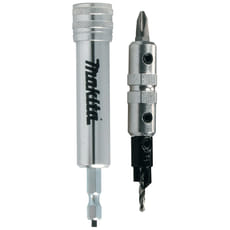
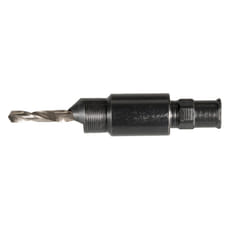
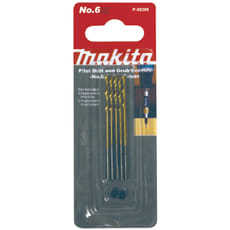
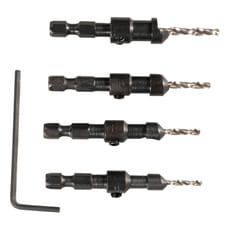
Combination drill and countersink bits represent another popular choice, allowing users to drill pilot holes and create countersinks in a single operation. These time-saving tools are particularly valued in production environments and repetitive installation work where efficiency directly impacts profitability.
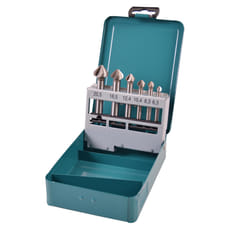
Countersink sets provide comprehensive coverage across common screw sizes and applications, offering professional tradespeople and well-equipped workshops the flexibility to tackle any countersinking requirement without purchasing individual bits for every eventuality.
Safety and Compliance
When using Makita countersinks, adherence to Health and Safety Executive (HSE) guidance on rotating machinery and cutting tools is essential. Always secure workpieces properly before drilling or countersinking—hand-held work can result in the tool grabbing and causing injury. Wear appropriate eye protection to guard against flying chips and swarf, and ensure loose clothing, jewellery, and long hair are secured away from rotating components.
Select appropriate operating speeds for the material and countersink size being used. Excessive speed in larger countersinks or harder materials generates heat that can damage both the tool and workpiece whilst creating a burn hazard. Consult Makita's recommendations and general machining guidelines for appropriate speeds and feeds.
Inspect countersinks before each use for damage, dullness, or wear. Damaged cutting tools can shatter under load, whilst dull tools require excessive pressure that increases the risk of slipping and workpiece damage. Replace worn countersinks promptly rather than attempting to extract additional service life from compromised tooling.
When working in professional environments, ensure compliance with relevant BS EN standards for power tool use and personal protective equipment. Maintain organised workspaces that prevent trip hazards from power cables, and ensure adequate dust extraction when countersinking materials that generate fine particulate.
Frequently Asked Questions
What's the difference between 82° and 90° Makita countersinks?
The angle refers to the included angle of the countersink cone. 82° countersinks match standard metric countersunk screws (DIN 963/ISO 2009) commonly used in metalwork and engineering applications. 90° countersinks suit traditional woodscrews and certain Imperial fasteners. Always match your countersink angle to your screw head profile for proper flush seating. Makita produces both angles to ensure compatibility across all fastener types.
Can I use Makita countersinks in both hand drills and pillar drills?
Yes, Makita countersinks work effectively in both applications. However, pillar drills offer superior results because they maintain perfect perpendicularity to the workpiece, ensuring concentrically true countersinks. When using hand drills, take care to keep the drill perpendicular to the work surface and avoid excessive pressure that might cause the tool to wander. For critical work requiring precise alignment, a pillar drill or drill press is recommended.
How do I know when my Makita countersink needs replacing?
Signs of wear include increased cutting pressure required, chattering or vibration during use, burn marks on the workpiece, rough or torn surface finish in the countersink, and visibly damaged or rounded cutting edges. Quality countersinks like those from Makita should produce clean, smooth countersinks with minimal pressure throughout their service life. Once performance deteriorates noticeably, replacement is more economical than struggling with compromised tooling.
What speed should I run my drill when using Makita countersinks?
Speed depends on material and countersink size. For wood, 1500-2000 RPM works well for most applications. Metals require slower speeds: 500-800 RPM for steel, 1000-1500 RPM for aluminium and brass. Larger countersinks need proportionally slower speeds than smaller ones. Start conservatively and increase speed if cutting performance seems sluggish, but avoid excessive speed that generates heat and dulls the cutting edges prematurely.
Are Makita countersinks suitable for composite materials and plastics?
Yes, Makita countersinks handle composites and plastics effectively, though technique matters. Use moderate speeds to prevent melting in thermoplastics, and ensure sharp cutting edges to avoid delamination in composite materials like fibreglass or carbon fibre. The efficient chip evacuation of Makita's flute design helps prevent heat build-up that can damage temperature-sensitive materials. For extensive work in abrasive composites, consider TiN-coated Makita countersinks for extended tool life.