

Makita Laser Levels
 Loading...
End of content
Error - No more pages to load
Makita Laser Levels at Tooled-Up.com
Makita has established itself as a leading manufacturer of precision measuring tools, and their laser level range exemplifies the brand's commitment to accuracy, durability and innovation. Known for delivering professional-grade equipment that withstands the demands of daily site work, Makita laser levels combine cutting-edge technology with user-friendly operation. Whether you're a professional tradesperson requiring millimetre-perfect accuracy for large-scale projects or a serious DIY enthusiast tackling home improvements, Makita's laser measuring solutions deliver consistent, reliable performance in challenging working conditions.
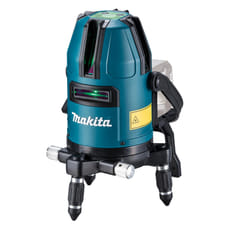
The Makita laser level collection available from Tooled-Up.com encompasses everything from compact self-levelling dot lasers ideal for quick reference work, through to sophisticated rotating line lasers suitable for large construction sites. Each model is engineered with Makita's renowned attention to detail, featuring robust housings that protect sensitive internal components from knocks, dust and moisture. Many models in the range offer IP54 or higher protection ratings, ensuring they continue performing accurately even in demanding outdoor environments or dusty interior applications.
Tooled-Up stocks Makita laser levels suited to various trades and applications, including cross-line lasers for wall and floor tiling, rotating lasers for groundworks and foundations, and combination units that offer multiple projection modes. Battery-powered models typically run on Makita's interchangeable lithium-ion battery platform, allowing tradespeople already invested in the Makita system to share power sources across their tool collection, whilst mains-powered versions offer continuous operation for extended site work.
Why Choose Makita Laser Levels?
Makita's reputation for producing tools that deliver professional results day after day extends fully to their laser level range. The brand's Japanese engineering heritage means every laser level undergoes rigorous quality control and precision calibration before leaving the factory. This attention to detail translates into measuring equipment you can trust for critical alignment work, where even slight inaccuracies can result in costly mistakes or project delays.
Durability is a hallmark of Makita laser levels. Recognising that site conditions are rarely ideal, Makita designs their measuring equipment with reinforced housings, shock-absorbing internal mounting systems, and sealed components that prevent dust and moisture ingress. Many models feature protective cages or frames that allow the unit to survive drops and impacts that would damage lesser equipment. This robustness means reduced downtime and lower long-term ownership costs, as the tools continue performing accurately season after season.
Innovation drives Makita's laser level development, with features like self-levelling pendulum systems that automatically adjust for minor surface irregularities, out-of-level warnings that alert users when the base isn't properly positioned, and pulse modes that enable detector compatibility for extended range work. Many Makita models offer variable brightness settings or pulse modes, ensuring visibility in bright sunlight or when working over extended distances. The ergonomic design considerations, including intuitive controls and clear displays, mean less time spent consulting manuals and more time focused on the job at hand.
Who Uses Makita Laser Levels?
Makita laser levels serve a diverse range of professionals and skilled users across multiple trades and industries:
- Builders and General Contractors: For setting out foundations, checking wall plumb, and establishing level references throughout construction projects
- Carpenters and Joiners: Installing kitchens, fitting suspended ceilings, hanging doors, and ensuring cabinetry is perfectly level
- Electricians: Positioning socket outlets, light fittings and consumer units at consistent heights with precise horizontal and vertical references
- Plumbers and Heating Engineers: Installing pipework with correct falls, positioning radiators level, and fitting bathroom suites accurately
- Tilers and Floor Layers: Establishing level datum lines for wall tiling and checking floor flatness before laying ceramic, stone or wooden flooring
- Plasterers and Drywall Installers: Setting out metal stud partitions, checking wall flatness, and installing plasterboard with accurate alignment
- Landscapers and Groundworkers: Establishing gradients for drainage, setting out patios and paving, and checking level for retaining walls
- Shopfitters and Interior Designers: Installing retail displays, positioning shelving systems, and creating level references for decorative features
- Serious DIY Enthusiasts: Tackling home renovation projects with professional accuracy for lasting, quality results
Key Features of Makita Laser Levels
Makita laser levels incorporate numerous features that enhance accuracy, usability and versatility across different working environments:
Self-Levelling Technology: Advanced pendulum systems automatically level the laser plane within a specified range (typically ±3 degrees), eliminating manual adjustment and reducing setup time. Out-of-level warnings alert users if the base is positioned beyond the self-levelling range, preventing inaccurate measurements.
Multiple Projection Modes: Many Makita models offer horizontal, vertical and cross-line projection options, with some featuring additional plumb-down or plumb-up points. This versatility means one tool can handle multiple layout tasks without repositioning or using separate equipment.
Pulse Mode and Detector Compatibility: For outdoor work or long-distance applications where the laser line becomes difficult to see, pulse mode enables use with laser detectors, effectively extending the working range to 50 metres or more depending on the model.
Robust Construction: Impact-resistant housings with rubber overmoulding protect against drops and knocks. Sealed optical systems prevent dust and moisture affecting accuracy, with many models carrying IP54 or IP56 protection ratings suitable for outdoor use.
Battery Flexibility: Models compatible with Makita's 10.8V, 14.4V or 18V lithium-ion battery platforms integrate seamlessly into existing Makita tool collections, whilst dedicated battery packs or 240V mains options suit different working preferences.
Adjustable Brightness: Variable laser intensity allows optimisation for different lighting conditions, conserving battery life in darker environments whilst maximising visibility in bright sunlight or well-lit interiors.
Tripod Compatibility: Standard 5/8-inch or 1/4-inch tripod threads enable stable mounting at various heights, essential for large-scale layout work or when projecting level references across entire rooms.
Popular Makita Laser Levels
The Makita laser level range at Tooled-Up encompasses several distinct product categories, each designed for specific applications and user requirements:
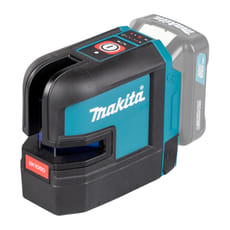
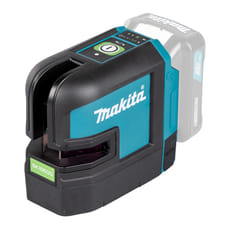
Self-Levelling Cross-Line Lasers: These versatile units project horizontal and vertical lines simultaneously, creating a cross-hair reference perfect for tiling, electrical installation and general carpentry. Compact designs with magnetic brackets or wall mounts make them ideal for interior trades requiring frequent repositioning. Models typically offer ranges of 10-15 metres indoors, with detector compatibility extending this for larger spaces.
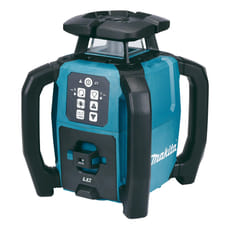
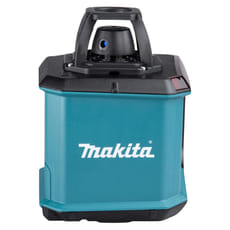
Rotating Laser Levels: For construction sites, groundworks and large commercial projects, Makita's rotating lasers project a 360-degree level plane by spinning the laser diode at high speed. These professional-grade instruments offer working ranges exceeding 100 metres when used with a detector, making them suitable for setting out foundations, checking floor levels across large areas, and establishing height datums for exterior cladding work.
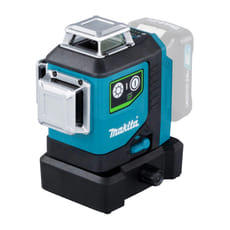
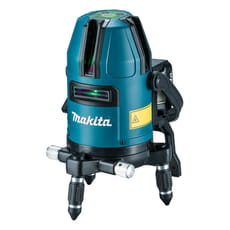
Multi-Line Lasers: Advanced models project multiple lines simultaneously – horizontal, vertical, and plumb points – creating a comprehensive reference grid. These sophisticated tools suit demanding applications like shopfitting, suspended ceiling installation, and complex carpentry where multiple reference planes accelerate workflow.
Dot Lasers: Compact and portable, dot lasers project individual reference points rather than continuous lines. These economical options suit pointing applications, simple transfer measurements, and situations where full line projection isn't necessary. Their small size makes them convenient for electricians and plumbers working in confined spaces.
Safety and Compliance
Makita laser levels comply with international laser safety standards, typically classified as Class 2 laser products under BS EN 60825-1. Class 2 lasers are considered safe for brief viewing but should never be stared at directly. The natural aversion response (blinking) provides adequate protection during momentary exposure, though users should always avoid deliberately viewing the laser beam.
When operating Makita laser levels on UK construction sites or in commercial environments, users should observe HSE guidance on laser safety. This includes ensuring other workers are aware of laser operation, positioning equipment to avoid eye-level projection where possible, and using warning signs in public areas. Never point lasers at vehicles, aircraft or people, as even low-power lasers can cause distraction or temporary vision impairment.
For outdoor work or when using detector mode for extended range applications, ensure batteries are fully charged or mains power is safely connected using appropriate 240V supply with RCD protection. Secure laser levels on stable tripods or mounting surfaces to prevent toppling, particularly on uneven ground or scaffolding platforms. Always transport laser levels in their protective cases to maintain calibration accuracy and prevent damage to sensitive internal components.
Frequently Asked Questions
How accurate are Makita laser levels?
Makita laser levels typically offer accuracy of ±0.3mm per metre to ±0.1mm per metre depending on the model, with professional rotating lasers at the higher precision end. This means over a 10-metre distance, deviation would be just 1-3mm, more than sufficient for most trade applications. Accuracy can be affected by extreme temperatures or impacts, so regular verification against known level references is recommended for critical work.
Can Makita laser levels be used outdoors in bright sunlight?
Yes, though laser visibility decreases in bright conditions. Many Makita models feature pulse mode specifically for outdoor use – this makes the laser beam invisible to the naked eye but detectable by compatible laser receivers or detectors, effectively extending the working range to 50+ metres even in full sunlight. Some models also offer high-intensity laser modes that improve visibility in challenging lighting conditions.
Are Makita laser levels compatible with other brands' batteries?
Makita laser levels designed for the company's lithium-ion battery platform only accept genuine Makita batteries of the correct voltage (10.8V, 14.4V or 18V depending on model). The batteries are not compatible with other manufacturers' systems. However, for tradespeople already using Makita cordless tools, this means the same batteries power multiple tools, reducing the number of chargers and spare batteries needed on site.
What's the difference between a cross-line laser and a rotating laser?
Cross-line lasers project static horizontal and vertical lines in a fixed pattern, typically creating a cross or right-angle reference visible within a 120-180 degree arc. They're ideal for interior work like tiling, carpentry and electrical installation. Rotating lasers spin the laser diode to create a full 360-degree level plane, offering greater range and all-around visibility essential for large construction sites, groundworks and exterior applications. Rotating lasers generally cost more but provide greater versatility for professional contractors.
How long do batteries last in Makita cordless laser levels?
Runtime varies significantly based on battery capacity, ambient temperature, and usage pattern. A typical 18V 3.0Ah Makita battery might power a cross-line laser for 8-15 hours of continuous use, whilst rotating lasers with their spinning mechanisms consume more power, offering 4-8 hours per charge. Using pulse mode or reduced brightness settings extends battery life. For all-day operation without interruption, keeping a spare charged battery on site is advisable, or consider mains-powered models for static workshop or long-duration site applications.