

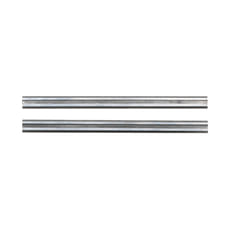
Makita Planer Blades
 Loading...
End of content
Error - No more pages to load
Makita Planer Blades at Tooled-Up.com
Makita has established itself as a benchmark for quality and precision in woodworking accessories, and their planer blades exemplify this commitment to excellence. Engineered to deliver consistently smooth finishes and exceptional longevity, Makita planer blades are manufactured using high-grade tungsten carbide and specialist steel alloys that maintain their cutting edge through prolonged use. Whether you're working with softwoods, hardwoods, or challenging grain patterns, these replacement blades ensure your Makita planers continue to perform at their peak.
Designed specifically for compatibility with Makita's extensive range of electric planers, these blades undergo rigorous quality control to guarantee perfect dimensional accuracy and balance. This precision engineering minimises vibration during operation and delivers the superior surface finish that professional tradespeople demand. The blades are available in various widths to suit different Makita planer models, from compact 82mm blades for portable planers through to wider options for heavy-duty benchtop machines.
Tooled-Up.com stocks genuine Makita replacement planer blades that maintain the exact specifications required for optimal performance. Using authentic Makita blades ensures proper fitment, safe operation, and maintains your tool's warranty coverage, whilst delivering the cutting performance that has made Makita a trusted name in professional workshops across the UK.
Why Choose Makita Planer Blades?
Makita's reputation for engineering excellence extends throughout their accessories range, with planer blades manufactured to the same exacting standards as their power tools. The brand's commitment to research and development has resulted in blade geometries and edge treatments that significantly extend cutting life between sharpenings. Many professional joiners and carpenters report that Makita blades maintain their sharpness up to 30% longer than comparable alternatives, reducing downtime and replacement costs.
The precision grinding process employed in manufacturing Makita planer blades creates exceptionally consistent cutting edges across the full blade width. This attention to detail translates directly into superior planing results, with minimal tearing or chipping even when working against the grain. The blades feature carefully engineered relief angles that reduce cutting resistance, allowing your planer motor to work more efficiently whilst generating less heat during extended use.
Quality control is paramount in Makita's manufacturing facilities, with each blade inspected for dimensional accuracy, edge sharpness, and material consistency. This rigorous approach ensures that every set of replacement blades performs identically to the originals supplied with your Makita planer, maintaining the tool's performance characteristics throughout its service life.
Who Uses Makita Planer Blades?
- Professional Joiners and Carpenters: Tradespeople who depend on consistent, high-quality finishes for door hanging, window fitting, and bespoke joinery work
- Cabinet Makers: Craftspeople requiring precision planing for furniture construction and fine woodworking projects
- Shopfitters: Professionals working on commercial installations where accurate timber preparation is essential
- Building Contractors: General builders who need reliable planing capabilities for first and second fix carpentry
- Maintenance Engineers: Site operatives responsible for building maintenance and refurbishment projects
- Serious DIY Enthusiasts: Home woodworkers who invest in quality tools and accessories for renovation and hobby projects
- Educational Workshops: Training facilities and colleges teaching woodworking and construction skills
Key Features of Makita Planer Blades
Makita planer blades incorporate several distinctive features that differentiate them from generic alternatives. The tungsten carbide tipped (TCT) variants offer exceptional durability when working with abrasive materials, composite boards, or reclaimed timber that may contain hidden fixings. These TCT blades can often be resharpened multiple times by specialist sharpening services, providing excellent long-term value despite their premium initial cost.
The standard high-speed steel (HSS) blades feature a precisely controlled hardening process that creates an optimal balance between edge retention and impact resistance. This heat treatment prevents the brittleness that can cause chipping or breakage when encountering knots or grain irregularities. The blades are ground to extremely tight tolerances, typically within 0.1mm across their length, ensuring perfectly parallel cuts and eliminating the stepped finishes that can result from poorly matched blades.
Makita's blade design incorporates specific mounting hole patterns and precise thickness specifications that ensure perfect alignment within the planer's cutter block. This exact fitment is critical for balanced rotation at high speeds, reducing vibration and extending bearing life in your planer. The blades also feature chamfered edges on the mounting surfaces to facilitate easier installation and removal during blade changes.
Popular Makita Planer Blades
The most commonly specified Makita planer blades at Tooled-Up correspond to their best-selling planer models. The 82mm reversible blades suit the popular KP0800 and similar compact planers, offering the convenience of simply flipping the blades when one edge dulls, effectively doubling the usable life before sharpening becomes necessary. These are ideal for site work and general carpentry applications.
For users of Makita's professional-grade planers, the 110mm blade sets provide the wider cutting capacity required for dimensioning larger timber sections and preparing door stiles. Available in both standard HSS and premium TCT variants, these blades cater to different usage patterns and material types. The TCT options are particularly valued by contractors working with treated timbers or engineered wood products.
Makita also supplies specialist planer blades for their cordless planer range, engineered to work efficiently with battery power systems. These blades feature optimised geometries that reduce cutting resistance, maximising the number of passes achievable per battery charge whilst maintaining excellent finish quality.
Safety and Compliance
Planer blades are exceptionally sharp cutting tools that demand careful handling and proper installation procedures. Always disconnect your planer from the 240v mains supply or remove the battery pack before attempting blade changes. Makita provides detailed instructions with each planer regarding correct blade installation, torque specifications for securing bolts, and proper blade orientation.
Ensure replacement blades are installed in matched sets to maintain cutter block balance. Using blades of differing weights or dimensions can create dangerous vibrations and poor cutting results. Always wear appropriate personal protective equipment including safety glasses and cut-resistant gloves when handling planer blades. The HSE recommends regular inspection of cutting tools for damage or excessive wear, replacing blades before they become dangerously dull.
Genuine Makita planer blades comply with relevant UK and European safety standards for cutting tool accessories. Proper blade maintenance, including regular cleaning of resin deposits and professional sharpening when required, ensures safe operation and optimal performance throughout the blade's service life.
Frequently Asked Questions
How often should I replace Makita planer blades?
Blade replacement frequency depends on usage intensity and the materials being planed. Professional tradespeople working daily may need to sharpen or replace blades weekly, whilst occasional users might achieve months of service. Replace blades when you notice increased planing effort, burn marks on timber, or visible nicks in the cutting edge. Reversible blades can simply be flipped when one edge dulls, effectively doubling their lifespan.
Can I use non-Makita blades in my Makita planer?
Whilst aftermarket blades may physically fit, using genuine Makita blades ensures proper dimensional accuracy, material specifications, and balanced performance. Non-genuine blades may void your warranty and could potentially cause damage to your planer if they're manufactured to inferior tolerances. The modest cost difference is insignificant compared to the risk of damaging an expensive power tool.
What's the difference between HSS and TCT Makita planer blades?
High-speed steel (HSS) blades offer excellent performance with natural timbers and are more economical for general carpentry work. Tungsten carbide tipped (TCT) blades provide significantly longer edge life, particularly when working with abrasive materials like MDF, chipboard, or treated timber. TCT blades cost more initially but can be more economical for high-volume users or those regularly working with challenging materials.
How do I know which Makita planer blades fit my model?
Check your planer's model number (usually found on the nameplate) and consult the manual or Makita's specification charts. Blade width is the primary consideration, with common sizes including 82mm, 110mm, and 155mm. The product listings at Tooled-Up specify compatible Makita planer models for each blade type, making selection straightforward.
Can Makita planer blades be sharpened?
Yes, both HSS and TCT Makita planer blades can be professionally resharpened multiple times before replacement becomes necessary. Specialist sharpening services use precision grinding equipment to restore the correct blade geometry and edge angles. However, blades with significant damage, such as deep nicks or cracks, should be replaced rather than sharpened. Regular sharpening extends blade life considerably and maintains optimal planing performance.