

Makita Polishers
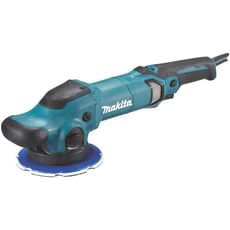
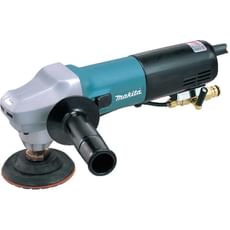
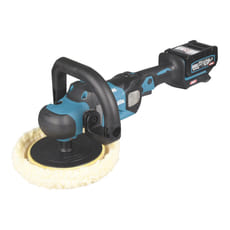
 Loading...
End of content
Error - No more pages to load
Makita Polishers at Tooled-Up.com
Makita has established itself as a leading manufacturer of professional-grade polishing equipment, delivering tools that combine Japanese engineering precision with practical innovation. The Makita polisher range available from Tooled-Up.com encompasses everything from compact detailing machines to powerful rotary polishers designed for demanding industrial applications. Whether you're working in automotive finishing, boat maintenance, stone fabrication, or general surface restoration, Makita's polishing solutions offer the reliability and performance that professionals demand.
Known for their exceptional build quality and user-focused design, Makita polishers feature powerful motors that maintain consistent speed under load, ergonomic handles that reduce operator fatigue during extended use, and robust construction that withstands the rigours of daily professional use. The range includes both 240v corded models for workshop applications and cordless options powered by Makita's renowned LXT battery platform, providing flexibility for mobile detailing work and sites without convenient mains access.
From compact 125mm angle polishers perfect for tight spaces and intricate detailing work, through to larger sander-polishers capable of tackling extensive surface areas, the Makita polisher collection at Tooled-Up caters to diverse professional requirements. Each tool is engineered to deliver smooth, vibration-free operation whilst maintaining the power needed to work through compounds, remove scratches, and achieve showroom-quality finishes.
Why Choose Makita Polishers?
Makita's reputation in the polishing equipment sector stems from decades of manufacturing expertise and continuous investment in tool technology. Their polishers are distinguished by exceptionally smooth-running motors that eliminate the juddering and vibration common in lesser machines, allowing operators to maintain precise control whilst achieving consistent, swirl-free finishes. The brand's commitment to user comfort is evident in features like rubberised soft-grip handles, strategically positioned controls, and well-balanced weight distribution that reduces arm strain during prolonged polishing sessions.
Professional detailers, fabricators, and restoration specialists choose Makita polishers for their reliability under continuous use. These tools are built to withstand the demands of commercial workshops where equipment runs for hours daily, featuring robust gear housings, effective dust sealing on applicable models, and motor designs that resist heat build-up. Makita's variable speed control systems provide precise adjustment across a wide RPM range, enabling operators to match the tool's performance to specific materials, compounds, and finishing requirements—from aggressive cutting with coarse compounds to final high-gloss buffing.
The brand's integration of cordless technology into their polishing range represents a significant advantage for mobile detailers and site-based professionals. Makita's LXT battery platform delivers genuine cordless performance without the compromise in power that often characterises battery-operated polishers, whilst the extensive LXT tool ecosystem means batteries and chargers can be shared across multiple tools, reducing investment costs and improving workflow efficiency.
Who Uses Makita Polishers?
- Professional vehicle detailers restoring paintwork and achieving mirror finishes on cars, motorcycles, and commercial vehicles
- Automotive body shops performing final finishing on refinished panels and paint correction work
- Marine engineers and boat builders polishing gelcoat surfaces, stainless steel fittings, and restoring weathered fibreglass
- Stone masons and worktop fabricators achieving polished finishes on granite, marble, and engineered stone surfaces
- Furniture restorers and woodworkers buffing lacquered surfaces and achieving fine finishes on decorative pieces
- Metal fabricators and engineers polishing stainless steel, aluminium, and brass components to specification
- Maintenance contractors restoring floors, countertops, and architectural features in commercial properties
- Caravan and motorhome specialists maintaining and restoring exterior panels and gelcoat surfaces
Key Features of Makita Polishers
Variable Speed Control: Electronic speed adjustment allows precise matching of RPM to material type and compound grade, from 600 to 3,000 RPM on typical models, preventing material damage and optimising finishing results.
Soft Start Technology: Gradual acceleration prevents compound splatter and provides better control when initiating polishing operations, particularly important when working on vertical surfaces or with fresh compounds.
Constant Speed Control: Advanced electronics maintain consistent pad speed under varying load conditions, ensuring uniform results across the entire work surface without bogging down when pressure is applied.
Ergonomic Design: Carefully positioned side handles, rubberised grip zones, and balanced weight distribution reduce operator fatigue and improve control during extended polishing sessions.
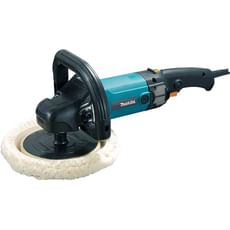
Loop Handle Configuration: Selected models feature a rear loop handle design that provides excellent control and allows operators to apply even pressure whilst maintaining comfortable working positions.
Pad Brake System: Rapid pad deceleration when the trigger is released prevents compound fling-off and material damage, particularly valuable when working near trim, glass, or other sensitive areas.
Thread Lock Spindle: Tool-free pad changes using spindle lock mechanisms speed up workflow when switching between cutting, polishing, and finishing pads.
Popular Makita Polishers
Rotary Polishers: Makita's rotary polisher models are favoured by experienced detailers and fabricators for their ability to quickly remove heavy oxidation, deep scratches, and surface defects. These direct-drive machines deliver consistent torque and are ideal for compound cutting before transitioning to finer finishing stages.
Random Orbital Polishers: Combining rotation with oscillation, Makita's orbital polishers provide safer operation for less experienced users whilst still delivering excellent correction capabilities. The orbital action reduces the risk of burning through paint or creating holograms, making these models popular in body shops and with mobile detailers.
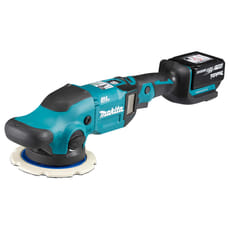
Cordless Polishers: Powered by Makita's 18V LXT battery system, cordless polishers deliver the freedom to work without mains constraints whilst maintaining sufficient power for serious correction work. These models are particularly valued by mobile detailers, marine specialists, and contractors working on sites with limited electrical access.
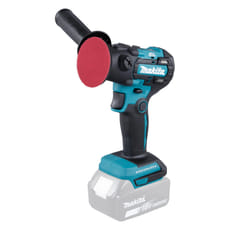
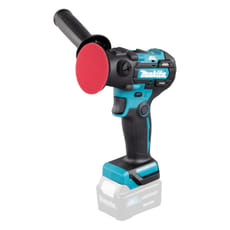
Compact Angle Polishers: Smaller diameter models (typically 125mm) excel in detailed work, reaching into recessed panels, around trim pieces, and across complex curved surfaces where larger machines cannot operate effectively.
Safety and Compliance
All Makita polishers supplied through Tooled-Up.com comply with relevant UK and European safety standards, including CE marking and conformity with the Supply of Machinery (Safety) Regulations 2008. Models intended for 240v mains operation feature standard UK three-pin plugs and are suitable for use with 13A domestic and commercial electrical supplies.
When operating Makita polishers, users should observe HSE guidance regarding vibration exposure, particularly during extended use. Whilst Makita's engineering minimises vibration levels, operators should monitor exposure duration and implement appropriate control measures as outlined in the Control of Vibration at Work Regulations 2005.
Appropriate personal protective equipment is essential when polishing. Safety glasses protect against compound splatter, whilst dust masks rated to FFP2 or higher should be worn when dry polishing or working with materials that generate harmful dust. Hearing protection may be advisable during prolonged use in enclosed workshops. Loose clothing, jewellery, and long hair should be secured to prevent entanglement with rotating pads.
Ensure polishing pads are correctly fitted and secure before operation. Inspect pads regularly for damage or deterioration, replacing worn or torn backing plates and bonnets to maintain safe operation. Never exceed the manufacturer's specified maximum pad diameter for your particular model, as oversized pads can create dangerous imbalance and loss of control.
Frequently Asked Questions
What's the difference between Makita rotary and orbital polishers?
Rotary polishers spin in a single circular motion, delivering more aggressive cutting power ideal for heavy correction work, paint restoration, and hard materials, but requiring greater skill to avoid damage. Orbital polishers combine rotation with oscillation, providing safer operation with reduced risk of burning through paint or creating swirl marks, making them better suited for less experienced users and fine finishing work.
Can Makita cordless polishers match the performance of 240v models?
Makita's 18V LXT cordless polishers deliver impressive performance that closely matches corded equivalents for most detailing and light industrial applications. Battery runtime typically provides 20-40 minutes of continuous operation depending on speed settings and load, with the convenience of cordless operation proving invaluable for mobile work. However, for continuous all-day workshop use or extremely demanding industrial applications, 240v models still offer the advantage of unlimited runtime.
What pad sizes work with Makita polishers?
Makita polishers accommodate various pad sizes depending on the specific model. Compact angle polishers typically accept 115-125mm pads, whilst larger models work with 150-180mm pads. Always verify the maximum pad diameter specified for your particular model and ensure backing plates are correctly matched to both the machine's spindle thread and your chosen polishing pads. Using oversized pads creates dangerous imbalance and can damage the tool.
Are Makita polishers suitable for removing deep scratches from car paintwork?
Yes, Makita rotary polishers paired with appropriate cutting compounds can effectively remove moderate to deep scratches, oxidation, and paint defects. The key is matching the correct pad firmness and compound grade to the severity of the damage, working progressively through cutting, polishing, and finishing stages. Random orbital models are better suited to light to moderate correction work and are safer for less experienced users, whilst rotary machines offer maximum correction capability in skilled hands.
How do I maintain my Makita polisher for long service life?
After each use, wipe down the tool body to remove compound residue, paying particular attention to ventilation slots which can become clogged with polish and dust. Inspect power cables and plugs regularly for damage. Clean or replace backing plates when compound builds up around spindle threads. For cordless models, follow Makita's battery care guidelines, storing batteries partially charged in cool, dry conditions. Periodically check carbon brushes (on applicable models) and have the tool serviced by an authorised Makita service centre if performance diminishes or unusual noises develop.