

Moore and Wright Levels & Accessories
 Loading...
End of content
Error - No more pages to load
Moore and Wright Levels & Accessories at Tooled-Up.com
Moore and Wright has built an exceptional reputation over more than a century as one of Britain's most trusted names in precision measurement and levelling equipment. The Moore and Wright Levels & Accessories range represents the pinnacle of accuracy and reliability for professionals who demand uncompromising quality in their measuring tools. From precision spirit levels engineered to exacting tolerances to specialist accessories designed to enhance measurement accuracy, every product bearing the Moore and Wright name reflects the brand's commitment to British manufacturing excellence and metrological precision.
Tooled-Up.com stocks a comprehensive selection of Moore and Wright levelling solutions, catering to tradespeople, engineers, and quality control professionals who understand that accurate measurement is fundamental to quality workmanship. These aren't consumer-grade levels that lose their calibration after a few knocks on site—Moore and Wright levels are workshop-grade instruments built to maintain their accuracy even in demanding industrial environments. The range includes precision engineer's levels with ground and graduated vials, pocket levels for quick checks, and specialist accessories such as magnetic bases, adjustment screws, and replacement vials that extend the working life of these professional tools.
What distinguishes Moore and Wright levels from standard construction levels is their engineering heritage. These instruments are manufactured to the same exacting standards as the company's micrometers, callipers, and gauge blocks. Each level undergoes rigorous calibration and testing, with many featuring individually certified accuracy readings. For professionals working in precision engineering, machine installation, metalworking, and quality inspection, this level of accuracy isn't a luxury—it's an essential requirement for achieving repeatable, verifiable results that meet British and European standards.
Why Choose Moore and Wright Levels & Accessories?
Moore and Wright's reputation in precision measurement extends naturally into their levelling equipment, where the same attention to accuracy, build quality, and longevity defines every product. The brand's levels are manufactured from high-grade materials including cast iron, precision-ground steel, and aerospace-grade aluminium alloys that resist warping and maintain dimensional stability across temperature variations. This material science ensures that a Moore and Wright level purchased today will deliver the same accuracy decades from now—a long-term investment that professional engineers understand and value.
The vials used in Moore and Wright levels are acrylic or glass tubes filled with specially formulated spirit and sealed to prevent evaporation or contamination. These vials are ground to precise radii and mounted in adjustable housings that allow for field calibration if required. Many models feature magnified vials with fine graduation marks, enabling users to detect deviations as small as 0.02mm per metre. This level of sensitivity is essential for machinery installation, surface plate verification, and precision metalworking where even minor angular errors can compound into significant dimensional problems.
Beyond the instruments themselves, Moore and Wright provides comprehensive accessory support including protective cases, magnetic mounting bases, and calibration certificates traceable to national standards. This ecosystem of products ensures that professionals can maintain, verify, and extend the capability of their levelling equipment throughout its working life. The brand's commitment to backwards compatibility means that accessories and replacement parts remain available for models that may be decades old—a refreshing contrast to the disposable culture that dominates much of today's tool market.
Who Uses Moore and Wright Levels & Accessories?
Moore and Wright levelling equipment serves a specialised audience of professionals where measurement accuracy directly impacts quality, safety, and regulatory compliance:
- Precision Engineers - For machine tool alignment, surface plate verification, and component inspection in manufacturing environments
- Toolmakers and Machinists - Setting up workpieces on milling machines, lathes, and grinding equipment where angular accuracy is critical
- Quality Control Inspectors - Verifying flatness, parallelism, and angular relationships in manufactured components
- Mechanical Fitters - Installing and aligning industrial machinery, conveyor systems, and production equipment
- Maintenance Engineers - Checking machine tool geometry during preventative maintenance and troubleshooting
- Metrology Technicians - Calibration laboratories requiring reference-grade levelling instruments with certified accuracy
- Apprentices and Training Institutions - Learning proper measurement techniques with professional-grade equipment
- Tool and Die Makers - Precision setup work in press tool manufacturing and mould making
Key Features of Moore and Wright Levels & Accessories
Moore and Wright levels incorporate several distinguishing features that set them apart from general construction levels. Precision-ground reference surfaces provide accurate datum planes for measurement, with flatness tolerances typically within 0.02mm across the entire length. These ground surfaces allow the level to be placed directly onto machined components, surface plates, or machine tool tables with confidence that the reading reflects the true condition of the work surface rather than irregularities in the level itself.
The vial mounting systems feature adjustable housings with fine-pitch adjustment screws, allowing users to recalibrate the instrument if it's knocked out of alignment or to compensate for known angular relationships. This adjustability transforms a simple level into a versatile angle-setting instrument. Some models incorporate multiple vials oriented at right angles, enabling simultaneous checking of perpendicular planes—particularly useful when aligning machinery or verifying component squareness.
Material selection reflects Moore and Wright's engineering focus. Cast iron bases provide excellent damping characteristics and dimensional stability, while maintaining the weight necessary for secure placement on vertical surfaces. Precision levels often feature protective cases lined with shock-absorbing foam, recognising that these instruments require careful handling to maintain their calibration. Accessories available at Tooled-Up include magnetic bases that allow hands-free operation on ferrous surfaces, extension pieces for checking larger workpieces, and replacement vials for refurbishing older instruments.
Popular Moore and Wright Levels & Accessories
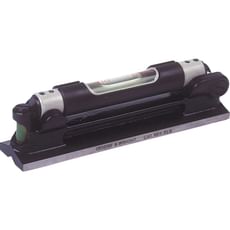
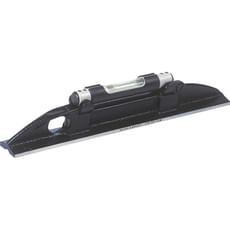
The Moore and Wright precision engineer's level represents the core of the range—a cast iron or machined aluminium body with ground reference surfaces and a high-sensitivity vial calibrated to detect deviations of 0.02mm per metre or finer. These levels are available in various lengths from compact 150mm pocket versions to 300mm workshop standards, each suited to different inspection tasks and workspace constraints.
Pocket levels provide a convenient solution for quick checks and field work, featuring robust construction in a compact format that fits into toolboxes or apron pockets. Despite their size, these instruments maintain the accuracy standards expected from Moore and Wright, making them ideal for on-site verification work or installation tasks where portability is essential.
Accessories extend the functionality of Moore and Wright levels significantly. Magnetic bases transform a standard level into a hands-free instrument for checking vertical surfaces or machine components. Adjustment kits provide the tools necessary for field calibration, while protective cases ensure safe storage and transport. Replacement vials allow refurbishment of instruments that have been damaged or lost calibration, extending the working life of these precision tools and supporting sustainable practices by avoiding unnecessary disposal of otherwise serviceable equipment.
Safety and Compliance
While levelling instruments don't present the hazards associated with powered equipment, proper usage remains important for both personal safety and measurement integrity. Moore and Wright levels should be stored in their protective cases when not in use to prevent damage to precision-ground surfaces and vial assemblies. Dropping or striking a precision level can compromise its calibration, potentially leading to measurement errors that affect subsequent work quality.
Regular verification against known reference standards ensures continued accuracy. Professional users should periodically check their levels against a calibrated surface plate or reference angle block, particularly if the instrument has been subjected to impact or transported to different sites. Many quality-conscious workshops maintain calibration records for measurement equipment, including levels, as part of their ISO 9001 quality management systems or to satisfy customer audit requirements.
When using levels on machinery or in industrial environments, ensure stable placement and be aware of magnetic fields if using instruments with magnetic bases, as strong fields can affect readings. For critical measurements where decisions about component acceptance or machinery alignment depend on level readings, consider using instruments with current calibration certificates traceable to national standards—a service that Moore and Wright and authorised calibration laboratories can provide.
Frequently Asked Questions
What accuracy can I expect from Moore and Wright precision levels?
Moore and Wright engineer's levels typically offer sensitivities of 0.02mm per metre (approximately 4 arc seconds), with some models achieving even finer resolution. This represents significantly greater accuracy than standard construction levels, which may only detect deviations of 0.5mm per metre or coarser. The actual accuracy depends on the specific model, vial specification, and current calibration status. For applications requiring certified accuracy, Moore and Wright levels can be supplied with calibration certificates traceable to national measurement standards.
How do Moore and Wright levels differ from standard spirit levels?
Moore and Wright levels are precision measurement instruments rather than general construction tools. They feature precision-ground reference surfaces, high-sensitivity vials with fine graduations, adjustable vial mountings for calibration, and robust construction from materials like cast iron or precision-machined aluminium. These characteristics make them suitable for engineering applications such as machine tool alignment, surface plate verification, and quality inspection where accuracy requirements far exceed those of typical building or carpentry work.
Can Moore and Wright levels be recalibrated if they're knocked out of adjustment?
Many Moore and Wright precision levels feature adjustable vial mountings with fine-pitch adjustment screws, allowing recalibration if the instrument is knocked or drifts out of specification. The adjustment process requires a known reference surface (such as a calibrated surface plate) and careful incremental adjustments while checking readings in multiple orientations. For critical applications or if users lack suitable reference standards, authorised calibration laboratories can provide professional recalibration services with traceable certification.
What length of Moore and Wright level should I choose for my application?
Level length should match your typical workpiece size and inspection requirements. Compact 150mm pocket levels suit small components, field work, and situations where workspace is limited. Standard 200-250mm levels provide versatility for general workshop use, component inspection, and machine setup tasks. Longer 300mm levels offer greater stability and are better suited to checking larger surfaces or spanning across mounting points. For specialised applications, consider whether you need additional features such as multiple vials for checking perpendicular planes simultaneously.
Are Moore and Wright levels suitable for use on construction sites?
While Moore and Wright levels are exceptionally well-made, they're designed primarily as workshop measurement instruments for precision engineering rather than robust site tools for construction work. The ground reference surfaces and sensitive vials require careful handling and protection from impact, dust, and moisture. For construction applications where levels may be dropped, exposed to weather, or used roughly, traditional builder's levels from specialist construction tool manufacturers represent a more appropriate choice. Reserve Moore and Wright precision levels for controlled workshop environments where their accuracy capabilities can be properly utilised and protected.