

Nicholson Files

 Loading...
End of content
Error - No more pages to load
Nicholson Files at Tooled-Up.com
Nicholson has been a trusted name in metalworking and precision filing for over two centuries, establishing itself as one of the world's most respected manufacturers of hand files and rasps. Founded in 1864 in Providence, Rhode Island, the brand has built an unrivalled reputation for producing files that deliver exceptional cutting performance, durability, and reliability across demanding professional applications. Today, Nicholson continues to set the standard for quality in the industry, combining time-honoured manufacturing expertise with modern metallurgical advances to create tools that tradespeople depend on daily.
The Nicholson Files range available from Tooled-Up.com represents the pinnacle of hand filing technology, offering solutions for metalworkers, engineers, toolmakers, and maintenance professionals who demand precision and longevity from their tools. From mill files and hand files to needle files and specialised shapes, Nicholson's comprehensive portfolio caters to every filing application imaginable. Whether you're deburring sharp edges, smoothing welds, shaping metal components, or performing delicate finishing work, Nicholson files deliver the cutting efficiency and control that professionals require.
Each Nicholson file is manufactured using carefully selected high-carbon steel, hardened and tempered to exacting specifications to ensure optimal tooth sharpness and edge retention. The brand's distinctive American pattern files feature precisely cut teeth that provide aggressive material removal whilst maintaining excellent surface finish quality. This attention to detail in both materials and manufacturing processes ensures that every file bearing the Nicholson name meets the rigorous standards expected by skilled tradespeople across the UK and beyond.
Why Choose Nicholson Files?
Nicholson's reputation is built on consistent quality and performance that professionals can rely on job after job. The brand's files are renowned for their sharp, precisely formed teeth that cut faster and last longer than inferior alternatives, reducing fatigue and improving productivity on the workbench or site. The superior hardness of Nicholson files means they maintain their cutting edge through extended use, providing exceptional value over their working life.
Another distinguishing factor is the extensive range of profiles, cuts, and lengths that Nicholson offers. From coarse bastard cuts for rapid stock removal to smooth cuts for fine finishing work, and from flat and half-round profiles to specialist shapes like triangular, round, and square files, Nicholson provides the right tool for every specific filing task. This versatility makes Nicholson the go-to choice for workshops that need reliable filing solutions across diverse applications.
The ergonomic design of Nicholson files also deserves recognition, with tangs designed for secure handle fitting and balanced weight distribution that reduces user fatigue during prolonged filing operations. Many experienced tradespeople who have tried various brands consistently return to Nicholson, testament to the superior feel and performance these files deliver in real-world applications.
Who Uses Nicholson Files?
- Metalworkers and Fabricators: For deburring, shaping, and finishing metal components and weldments
- Engineers and Fitters: Precision filing for mechanical assemblies and maintenance work
- Toolmakers and Die Makers: Fine finishing and fitting of precision tooling components
- Automotive Technicians: Filing and shaping metal parts during repair and restoration work
- Maintenance Engineers: General filing tasks across industrial maintenance applications
- Jewellers and Craftspeople: Particularly needle files for delicate precision work
- Plumbers and Pipefitters: Deburring and smoothing cut pipe ends and fittings
- DIY Enthusiasts: Home workshop applications requiring quality filing tools
- Model Makers: Precision shaping and finishing of detailed components
Key Features of Nicholson Files
Premium High-Carbon Steel Construction: Nicholson files are forged from specially selected high-carbon steel alloys that provide the ideal balance of hardness for edge retention and toughness to resist breakage during demanding applications.
Precision-Cut Teeth: The brand's distinctive tooth patterns are cut with exceptional accuracy, ensuring uniform cutting action across the entire file surface. This precision manufacturing results in superior material removal rates and excellent surface finish quality.
Optimised Hardness: Each file undergoes carefully controlled heat treatment processes to achieve the optimal hardness level for its intended application, typically in the range of 62-66 HRC, ensuring maximum durability and cutting performance.
American Pattern Design: Nicholson's American pattern files feature a tapered design that provides versatility for both general filing and work in confined spaces, with tooth configurations optimised for various materials and applications.
Comprehensive Range of Cuts: Available in coarse (bastard), medium (second cut), and fine (smooth) tooth configurations, allowing selection of the appropriate aggressiveness for each specific task, from rapid stock removal to fine finishing.
Multiple Profile Options: An extensive selection of cross-sectional shapes including flat, hand, half-round, round, square, triangular, and specialist profiles ensures the right file geometry for every filing requirement.
Popular Nicholson Files
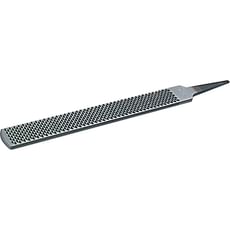
Hand Files: These versatile general-purpose files feature safe edges (one smooth edge without teeth) making them ideal for filing into corners and shoulders without damaging adjacent surfaces. Available in various lengths and cuts, they're essential workshop tools.
Mill Files: Single-cut files designed primarily for draw filing and producing smooth finishes on metal surfaces. Popular amongst engineers and metalworkers for achieving fine surface quality on lathe work and precision components.
Flat Files: Double-cut files with teeth on all surfaces, perfect for general-purpose filing applications. Their rectangular cross-section makes them suitable for filing flat surfaces, edges, and slots across various materials.
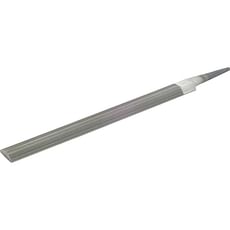
Half-Round Files: Featuring a flat face on one side and curved on the other, these versatile files are invaluable for working on both flat surfaces and concave curves, making them amongst the most frequently used profiles in any workshop.
Needle Files: Precision miniature files available in multiple profiles, essential for detailed work, jewellery making, die fitting, and any application requiring fine control and access to restricted areas. Tooled-Up stocks Nicholson's comprehensive needle file sets for maximum versatility.
Round and Half-Round Files: Ideal for enlarging holes, filing concave surfaces, and working on curved profiles. The round files are particularly useful for sizing circular openings, whilst half-round versions offer dual functionality.
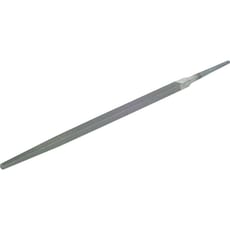
Three-Square (Triangular) Files: Perfect for filing acute internal angles, clearing square corners, and sharpening saw teeth. The 60-degree profile provides access where standard flat files cannot reach.
Safety and Compliance
Whilst files are relatively simple hand tools, proper usage is essential for both safety and optimal performance. Always fit a secure, comfortable handle to the file tang before use, as the sharp tang can cause serious hand injuries if the file catches or slips during operation. Never use a file without a properly fitted handle, and regularly inspect handles for damage or looseness.
Wear appropriate eye protection when filing, as metal particles can be ejected during cutting action. Ensure adequate lighting and secure workpiece clamping to maintain control throughout the filing operation. Files should never be used as prying tools or struck with hammers, as the hardened steel can shatter, creating dangerous fragments.
Keep files clean and free from accumulated metal particles (pinning) by regularly cleaning with a file card or wire brush, working along the tooth direction. Store files separately or with protective covers to prevent tooth damage from contact with other tools. A damaged or worn file not only performs poorly but can slip unexpectedly, creating potential safety hazards.
For professional environments, ensure filing operations comply with HSE guidelines regarding manual handling, repetitive strain injury prevention, and workplace organisation. Regular breaks and proper ergonomic technique help prevent fatigue-related injuries during extended filing tasks.
Frequently Asked Questions
What makes Nicholson files superior to budget alternatives?
Nicholson files are manufactured from premium high-carbon steel with precisely controlled heat treatment, resulting in harder, sharper teeth that cut faster and last significantly longer than cheaper files. The precision tooth cutting process ensures uniform performance across the entire file surface, whilst the optimised metallurgy provides exceptional edge retention. Professionals find that Nicholson files remain sharp through many times more use than budget alternatives, making them far more economical over their working life despite the higher initial investment.
How do I choose the correct cut (coarseness) for my application?
File cut selection depends on the material being worked and the desired finish. Bastard cut (coarse) files remove material quickly and are ideal for rapid stock removal on softer metals and initial shaping work. Second cut (medium) files provide a balance between material removal and surface finish, suitable for general-purpose filing. Smooth cut (fine) files produce the finest finish and are used for final finishing operations and work on harder materials. As a general rule, use the coarsest cut that achieves your required surface finish to maximise efficiency.
Can Nicholson files be resharpened when they become dull?
Unlike saw blades, files cannot be practically resharpened once worn. The teeth are formed by precision cutting into hardened steel, and resharpening would require specialised equipment and expertise that makes it economically unviable. However, quality Nicholson files provide exceptional service life before requiring replacement. Proper maintenance, including regular cleaning to prevent pinning, using appropriate pressure (files cut on the forward stroke only), and storing files properly to prevent tooth damage, will maximise their working life significantly.
What's the difference between American pattern and Swiss pattern files?
Nicholson specialises in American pattern files, which feature a tapered design throughout their length and are typically more robust, making them ideal for general metalworking, fabrication, and maintenance applications. American pattern files generally have coarser teeth and remove material more aggressively. Swiss pattern files, by contrast, are precision tools with parallel sides and finer tooth configurations, designed primarily for toolmaking, die work, and applications requiring extremely precise control and fine finishes. For most trade applications, Nicholson's American pattern files provide the optimal combination of versatility and performance.
How should I maintain my Nicholson files for maximum longevity?
Regular cleaning is essential - use a file card (wire brush designed specifically for files) to remove metal particles from between the teeth after each use, brushing along the tooth direction. For stubborn pinning (metal particles wedged between teeth), chalk applied to the file surface before use can help prevent buildup. Store files individually or with protective sleeves to prevent teeth from contacting other hard surfaces. Never use files on materials harder than the file itself, and avoid applying excessive pressure, which can break teeth. Always use the full length of the file with smooth, even strokes, and rotate the file periodically to ensure even wear across all surfaces.