

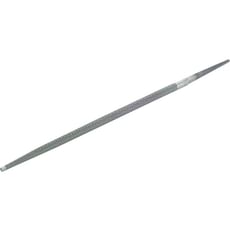
Nicholson Round Files
 Loading...
End of content
Error - No more pages to load
Nicholson Round Files at Tooled-Up.com
Nicholson has been manufacturing premium hand files since 1864, establishing itself as one of the most trusted names in metalworking tools. The Nicholson Round Files range represents over 150 years of expertise in producing precision filing tools that deliver exceptional performance across demanding applications. Whether you're working with soft metals, hardened steel, or intricate curved surfaces, Nicholson's round files are engineered to provide consistent, controlled material removal with every stroke.
Available from Tooled-Up.com, the Nicholson Round Files collection encompasses various sizes, cuts, and handle configurations to suit different filing requirements. From delicate jewellery work to heavy-duty automotive repairs, these files are manufactured to exacting standards that professional tradespeople and serious DIY enthusiasts have relied upon for generations. Each file features carefully engineered tooth patterns that resist clogging whilst maintaining aggressive cutting action, ensuring optimal performance throughout its service life.
The round file profile makes these tools indispensable for enlarging circular holes, filing concave surfaces, and reaching into tight radiused areas where other file shapes simply cannot reach. Nicholson's commitment to metallurgical excellence means their round files maintain sharp cutting edges far longer than economy alternatives, delivering superior value through extended tool life and reduced replacement frequency.
Why Choose Nicholson Round Files?
Nicholson's reputation for quality stems from their rigorous manufacturing processes and premium material selection. Each round file undergoes precision forging followed by heat treatment processes that optimise hardness whilst maintaining the necessary toughness to resist breakage under heavy filing pressure. The result is a tool that balances aggressive cutting performance with exceptional durability.
The tooth geometry on Nicholson Round Files is engineered using advanced metallurgical research, creating cutting edges that slice through material efficiently whilst minimising user fatigue. This scientific approach to tooth design means less effort is required to achieve the desired material removal rate, allowing tradespeople to work faster and with greater accuracy. The files resist pinning—the accumulation of metal particles between teeth—which commonly plagues inferior files and reduces cutting efficiency.
Nicholson's quality control standards ensure consistency across their entire production run. When you purchase a Nicholson round file, you can trust that it will perform identically to the previous one you bought, making it easier to estimate project timelines and maintain quality standards across your work. This consistency has made Nicholson the preferred choice for professional workshops, apprenticeship programmes, and technical colleges throughout the UK.
Who Uses Nicholson Round Files?
Nicholson Round Files are specified by professionals across numerous trades and industries:
- Metalworkers and Fabricators – for finishing welded joints, deburring holes, and shaping curved metal components
- Automotive Technicians – for enlarging mounting holes, modifying brackets, and precision fitting work
- Toolmakers and Die Makers – for creating precise radiused features and finishing machined components
- Maintenance Engineers – for on-site repairs, modifications, and emergency fabrication work
- Jewellers and Silversmiths – for delicate shaping and finishing of precious metal pieces
- Model Engineers and Hobbyists – for accurate finishing work on small-scale projects
- Gunsmiths and Locksmiths – for precision fitting and modification of metal components
- Agricultural Engineers – for field repairs and equipment maintenance
- Plumbers and Pipefitters – for deburring pipe ends and modifying fittings
Key Features of Nicholson Round Files
Nicholson Round Files incorporate several distinctive features that differentiate them from competing products. The files are manufactured from high-carbon alloy steel, carefully selected for its ability to accept and retain a hardened cutting edge whilst resisting brittleness. This material choice provides the optimal balance between cutting performance and structural integrity.
The tooth patterns are available in various cuts—from coarse through to smooth—allowing users to select the appropriate aggressiveness for their specific application. Coarse cut files remove material rapidly for initial shaping work, whilst smooth cut files provide fine finishing capabilities for precision applications. Second cut files offer a versatile middle ground suitable for general-purpose filing operations.
Each file features a tapered profile that enhances versatility, allowing access to different sized holes and radiused surfaces with a single tool. The tang design accommodates secure handle attachment, ensuring the file remains firmly fixed during use and preventing dangerous slippage. Many Nicholson round files are available with ergonomically designed handles that reduce hand fatigue during extended filing operations whilst providing excellent control for precision work.
The consistent diameter tolerances maintained throughout Nicholson's manufacturing process ensure that the file cuts evenly along its entire working length, preventing the formation of unwanted tapers or irregularities in the workpiece. This precision manufacturing approach reflects Nicholson's heritage as a supplier to exacting industrial applications where dimensional accuracy is paramount.
Popular Nicholson Round Files
The Nicholson range at Tooled-Up includes round files in various standard lengths, typically ranging from 100mm through to 300mm, accommodating everything from intricate detailed work to larger-scale filing operations. The most popular sizes for general trade work are 200mm and 250mm lengths, which provide an excellent balance between manoeuvrability and working capacity.
Second cut round files represent the most versatile option within the range, offering efficient material removal rates whilst producing acceptably smooth surface finishes for most applications. These files are ideal for tradespeople who require a single file capable of handling diverse tasks without needing to switch between coarse and fine options constantly.
Nicholson also manufactures specialist round files for specific applications, including extra-slim patterns for watchmaking and jewellery work, and robust industrial grades designed for heavy-duty metalworking environments. Some ranges feature ergonomic bi-material handles that provide superior grip and comfort during prolonged use, whilst others are supplied as unhandled tangs for users who prefer to fit their own custom handles.
Safety and Compliance
When using Nicholson Round Files, adherence to Health and Safety Executive (HSE) guidelines for hand tool usage is essential. Always ensure the file handle is securely fitted and free from cracks or damage before commencing work. Never use a file without a properly fitted handle, as the exposed tang presents a serious puncture hazard that could cause significant hand injuries.
Files should only be used with a pushing motion—never in a sawing action—as this can cause tooth breakage and create dangerous sharp fragments. Maintain a firm grip and ensure the workpiece is securely clamped or held in a vice to prevent movement during filing. Always file away from your body to minimise injury risk should the tool slip.
Wear appropriate personal protective equipment including safety glasses to protect against metal particles, and consider using work gloves for prolonged filing operations. Keep files clean and free from accumulated metal particles by regularly brushing with a file card, as clogged teeth reduce cutting efficiency and increase the force required, raising the risk of tool slippage.
Store Nicholson Round Files separately to prevent the teeth from contacting other tools or files, which causes premature dulling. Many professionals use tool rolls or individual sleeves to protect their files when not in use, preserving the cutting edges and extending tool life.
Frequently Asked Questions
What cut grade should I choose for general metalworking with Nicholson Round Files?
Second cut Nicholson round files offer the best all-round performance for general metalworking applications. They remove material efficiently whilst producing a reasonably smooth finish, eliminating the need to switch between coarse and fine files for most tasks. Choose bastard (coarse) cut for rapid stock removal on soft materials, and smooth cut for finishing operations on hardened steels or when surface quality is critical.
How long should a Nicholson Round File last with regular professional use?
With proper care and appropriate application, Nicholson round files typically outlast economy alternatives by a significant margin. Professional tradespeople report service lives of several months to years depending on usage intensity and materials being filed. Filing softer materials like aluminium or brass extends file life considerably compared to working with hardened steels. Regular cleaning with a file card and proper storage significantly extends cutting edge retention.
Can Nicholson Round Files be resharpened when they become dull?
Hand files, including Nicholson round files, cannot be practically resharpened once the cutting edges have dulled. The teeth are formed during manufacturing through precision cutting or milling processes that cannot be replicated through conventional sharpening methods. However, regular cleaning to prevent pinning and appropriate application (avoiding excessively hard materials) maximises the usable life of the file before replacement becomes necessary.
What diameter round file do I need for enlarging specific hole sizes?
Select a round file with a diameter slightly smaller than your target hole size to allow effective cutting action. For precision work, the file diameter should be approximately 1-2mm smaller than the finished hole diameter. Nicholson round files feature a tapered profile, meaning diameter varies along the length—use the section of the file that provides optimal contact with your workpiece for most efficient material removal and best surface finish.
Are Nicholson Round Files suitable for filing plastics and wood?
Whilst Nicholson round files are engineered primarily for metalworking applications, they can be used on harder plastics and some hardwoods when necessary. However, softer materials tend to clog the teeth rapidly, reducing cutting efficiency. For regular work with plastics or wood, consider specialist files designed for these materials, which feature tooth geometries optimised to prevent clogging. If you must use a metal file on these materials, select a coarse cut and clean the teeth frequently during use.