

Oakey Glass Sandpaper

 Loading...
End of content
Error - No more pages to load
Oakey Glass Sandpaper at Tooled-Up.com
Oakey has been a trusted name in abrasives for over 240 years, and their glass sandpaper represents one of the finest traditional sanding solutions available to British tradespeople and DIY enthusiasts. Glass sandpaper, also known as flint paper, utilises crushed flint glass particles bonded to a flexible backing paper, creating an economical yet effective abrasive sheet ideal for hand sanding applications. The Oakey glass sandpaper range available from Tooled-Up.com delivers consistent performance across a variety of materials including wood, paint, plaster, and metal.
What distinguishes Oakey glass sandpaper from generic alternatives is the precision manufacturing process and quality control that ensures uniform grit distribution and reliable performance. Each sheet is manufactured to exacting standards at Oakey's facilities, maintaining the heritage craftsmanship that has made this British brand synonymous with quality abrasives. Whether you're preparing surfaces for decoration, removing old finishes, or smoothing rough timber, Oakey glass sandpaper provides a cost-effective solution that doesn't compromise on results.
Glass sandpaper remains particularly popular for tasks where the abrasive may become clogged quickly, as its economical price point makes it the sensible choice for single-use or short-duration sanding work. Tooled-Up stocks Oakey glass sandpaper in various grit sizes to suit different applications, from coarse grades for rapid stock removal to fine grades for finishing work.
Why Choose Oakey Glass Sandpaper?
Oakey's reputation as Britain's leading abrasives manufacturer is built on consistent quality and reliability. Their glass sandpaper benefits from over two centuries of manufacturing expertise, ensuring that each sheet delivers predictable performance. The flint glass particles are carefully graded and bonded using specialised adhesives that provide excellent grain retention during use, maximising the working life of each sheet.
The economical nature of glass sandpaper makes it the intelligent choice for decorators, joiners, and general tradespeople who need reliable performance without unnecessary expense. Unlike premium aluminium oxide abrasives, glass sandpaper is designed for tasks where cost-effectiveness is paramount, particularly when working with materials that quickly load the abrasive surface. Oakey glass sandpaper also generates less static than synthetic alternatives, making it suitable for dry sanding applications where dust control is important.
Professional tradespeople appreciate the consistency of Oakey products - when you select a specific grit grade, you can trust that it will perform exactly as expected, job after job. This reliability is crucial for achieving uniform finishes and maintaining productivity on site.
Who Uses Oakey Glass Sandpaper?
- Painters and Decorators: For preparing walls, woodwork, and previously painted surfaces before applying new coatings
- Joiners and Carpenters: Hand sanding timber components, smoothing joints, and preparing wood for finishing
- Cabinet Makers: Fine finishing work on furniture and joinery where hand sanding provides superior control
- Maintenance Teams: General preparation and repair work in commercial and residential settings
- DIY Enthusiasts: Home improvement projects requiring economical yet effective abrasive sheets
- Restoration Specialists: Working on heritage projects where traditional materials and techniques are preferred
- Educational Facilities: Workshops and training centres teaching traditional hand sanding skills
- Property Maintenance Contractors: Preparing surfaces during refurbishment and renovation work
Key Features of Oakey Glass Sandpaper
Oakey glass sandpaper incorporates several distinctive features that ensure consistent performance. The crushed flint glass abrasive provides sharp, aggressive cutting action that's particularly effective on softer materials like timber and plaster. The flexible paper backing allows the sandpaper to conform to contoured surfaces and facilitates both flat and shaped sanding applications.
The carefully controlled grit sizing ensures uniform scratch patterns and predictable stock removal rates, enabling tradespeople to achieve the desired surface finish efficiently. Oakey's bonding technology secures the glass particles firmly to the backing, minimising premature grain loss and extending the useful working life of each sheet. The paper backing is specifically selected for its tear resistance and dimensional stability, preventing the sheet from disintegrating during vigorous hand sanding.
Available in standard sheet sizes, Oakey glass sandpaper can be easily cut or folded to suit different applications and hand-sanding techniques. The product is designed to be used dry, making it suitable for workshop and on-site applications where wet sanding isn't practical or desirable.
Popular Oakey Glass Sandpaper
The Oakey glass sandpaper range at Tooled-Up encompasses various grit grades to address different surface preparation requirements. Coarse grit glass sandpaper (typically 40-60 grit) is ideal for rapid material removal, stripping old paint, and smoothing very rough timber. These aggressive grades quickly level uneven surfaces and remove substantial amounts of material with minimal effort.
Medium grit options (80-100 grit) represent the most versatile choice for general-purpose sanding, offering a balance between stock removal and surface smoothness. These grades are popular for preparing timber for painting, smoothing filler, and general surface preparation work. Fine grit glass sandpaper (120-180 grit) is selected for final finishing operations before painting or varnishing, creating smooth surfaces that accept coatings evenly.
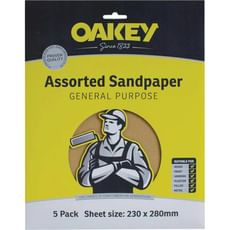
Professional decorators often purchase assorted grit packs that provide a selection of grades for progressing through preparation stages, from initial stripping through to final finishing. This approach ensures the right abrasive is always available for each phase of the work.
Safety and Compliance
When using Oakey glass sandpaper, appropriate personal protective equipment should be worn to minimise exposure to dust and particulates. Safety glasses or goggles protect eyes from airborne debris, whilst a suitable dust mask or respirator prevents inhalation of fine particles, particularly important when sanding materials that may contain harmful substances. The Health and Safety Executive (HSE) provides guidance on controlling exposure to wood dust and other hazardous materials encountered during sanding operations.
Adequate ventilation should be maintained when sanding indoors, and dust extraction or collection systems should be employed where practical to minimise airborne contamination. Users should be aware of COSHH regulations when sanding surfaces that may contain lead paint, preservatives, or other hazardous substances. Always inspect materials before sanding to identify potential hazards, and take appropriate precautions.
Glass sandpaper should be stored in dry conditions to prevent moisture absorption, which can affect the backing paper's integrity and the adhesive bond. Dispose of used sandpaper responsibly, particularly when it contains residues from hazardous materials.
Frequently Asked Questions
What's the difference between Oakey glass sandpaper and aluminium oxide abrasives?
Glass sandpaper uses crushed flint glass as the abrasive material and is more economical, making it ideal for tasks where the paper may become clogged quickly or need frequent replacement. Aluminium oxide abrasives are more durable and longer-lasting, making them better suited for extended sanding operations. Glass sandpaper remains the cost-effective choice for decorating preparation and general-purpose hand sanding.
Can Oakey glass sandpaper be used wet?
No, glass sandpaper is designed exclusively for dry sanding applications. The paper backing and adhesive system aren't waterproof, so exposure to moisture will cause the sheet to deteriorate and the abrasive grains to detach. For wet sanding operations, use Oakey's dedicated wet and dry abrasive papers which feature waterproof backing and bonding.
Which grit should I choose for preparing woodwork before painting?
For bare timber, start with 80 or 100 grit to smooth the surface, then progress to 120 or 150 grit for a final finish. If you're sanding previously painted woodwork, begin with 80 grit to remove loose paint and smooth rough areas, then finish with 120 grit. For smoothing between coats of paint or primer, 120 to 150 grit provides ideal results.
How long does Oakey glass sandpaper last compared to other abrasives?
Glass sandpaper has a shorter working life than aluminium oxide or silicon carbide abrasives, but this is reflected in its lower cost. It's designed as an economical option for tasks where the paper loads quickly with paint, plaster dust, or resinous wood residues. For these applications, the cost-effectiveness of glass sandpaper makes it more economical than using premium abrasives that would become clogged just as quickly.
Is Oakey glass sandpaper suitable for metal surfaces?
Whilst glass sandpaper can be used on metal for light cleaning or rust removal, it's not the optimal choice for metalworking applications. The flint glass abrasive is relatively soft compared to materials specifically designed for metal, such as emery cloth or aluminium oxide papers. For occasional light metal preparation, glass sandpaper will work, but dedicated metal abrasives provide better performance and longevity.