

Ridgid Taps & Dies
 Loading...
End of content
Error - No more pages to load
Ridgid Taps & Dies at Tooled-Up.com
Ridgid has earned its reputation as a trusted name in threading tools through decades of engineering excellence and unwavering commitment to quality. The company's range of taps and dies represents the culmination of extensive research and real-world testing, delivering threading solutions that professionals rely on daily. From hand taps and tap sets to comprehensive die heads and threading equipment, Ridgid's catalogue addresses the full spectrum of threading requirements across industrial, plumbing, and general engineering applications.
What distinguishes Ridgid in the threading tools market is their focus on durability and precision. Each tap and die is manufactured to exacting tolerances using premium-grade materials, ensuring clean, accurate threads even in demanding applications. The brand's threading tools are engineered to withstand the rigours of professional use, maintaining their cutting edge and dimensional accuracy through countless threading operations. Tooled-Up.com stocks Ridgid's comprehensive threading solutions, providing tradespeople and engineers with access to tools that deliver consistent performance across ferrous and non-ferrous materials alike.
Ridgid's expertise extends beyond basic taps and dies to include specialised threading equipment such as pipe threading machines, ratcheting tap wrenches, and precision die stocks. This breadth of offering makes Ridgid a complete threading solution provider, capable of meeting requirements from fine instrument work through to heavy-duty pipe threading on construction sites. The brand's commitment to innovation is evident in features such as optimised flute geometry for improved chip clearance and proprietary cutting angles that reduce torque requirements whilst maintaining thread quality.
Why Choose Ridgid Taps & Dies?
Ridgid's threading tools are renowned for their exceptional longevity, a critical consideration for professionals where tool replacement represents both direct costs and productivity losses. The company employs advanced heat treatment processes and premium steel alloys that resist wear whilst maintaining the hardness necessary for clean cutting action. This translates to taps and dies that maintain their performance characteristics through extended service life, providing superior value over time.
Precision is paramount in threading operations, and Ridgid tools consistently deliver accurate thread profiles that ensure proper fit and function. Whether creating threads for British Standard Pipe (BSP) connections, metric fasteners, or unified thread forms, Ridgid taps and dies produce threads within specified tolerances. This reliability eliminates the frustration of poorly fitting connections and reduces the likelihood of joint failures in critical applications.
The brand's reputation within the plumbing and pipefitting trades is particularly strong, built upon generations of professionals who have depended on Ridgid threading equipment for pipe installation work. This heritage informs the design of their entire threading range, resulting in tools that reflect genuine understanding of trade requirements. From ergonomic handles that reduce operator fatigue to cleverly designed chip clearance features that prevent binding, Ridgid products demonstrate practical innovation born from workshop experience.
Who Uses Ridgid Taps & Dies?
- Plumbers and Pipefitters: Creating threaded connections for water, gas, and heating systems using BSP and NPT threading standards
- Maintenance Engineers: Repairing damaged threads and creating new threaded holes in industrial equipment and machinery
- General Fabricators: Producing threaded connections in steelwork, frames, and custom fabrications
- Plant Engineers: Maintaining and repairing industrial plant equipment where threading operations are routine maintenance tasks
- Motor Vehicle Technicians: Repairing stripped threads in engine blocks, gearboxes, and chassis components
- Marine Engineers: Creating and maintaining threaded connections in shipbuilding and vessel maintenance where corrosion resistance is critical
- HVAC Installers: Threading pipe for heating, ventilation, and air conditioning systems in commercial and residential installations
- Agricultural Engineers: Maintaining and repairing farm machinery where field repairs often require threading operations
Key Features of Ridgid Taps & Dies
High-Speed Steel Construction: Ridgid employs premium HSS alloys in their tap and die manufacture, providing the ideal combination of hardness for cutting action and toughness to resist breakage under load. This material selection ensures consistent performance across various workpiece materials from aluminium through to stainless steel.
Precision Ground Threads: Every Ridgid tap and die features precision-ground thread forms that ensure accurate reproduction of specified thread profiles. This attention to detail guarantees proper fit with mating components and eliminates the common problems associated with poorly formed threads.
Optimised Flute Design: The flute geometry on Ridgid taps is engineered to provide efficient chip evacuation, preventing the binding and tap breakage that occurs when swarf accumulates in the cutting area. This design consideration is particularly beneficial when threading blind holes or working with materials that produce long, stringy chips.
Clear Size Marking: Each tool is clearly marked with size designations and thread specifications, enabling quick identification even in busy workshop environments. This seemingly simple feature significantly improves workflow efficiency and reduces the risk of selecting incorrect tools.
Chamfer Configurations: Ridgid offers taps with various chamfer configurations—taper, plug, and bottoming—allowing users to select the appropriate tool for their specific application, whether starting threads easily or threading to the bottom of blind holes.
Popular Ridgid Taps & Dies
Hand Tap Sets: Comprehensive sets containing taper, second, and plug taps in commonly used sizes provide complete threading capability for both through-holes and blind holes. Available at Tooled-Up in metric, BSW, BSF, and UNC configurations to suit various application requirements.
Pipe Threading Dies: Specifically designed for creating external threads on pipe, these dies are essential for plumbing and pipefitting work. Ridgid's pipe dies accommodate BSP and NPT standards, ensuring compatibility with UK plumbing systems and equipment.
Adjustable Die Stocks: Precision die holders that accept various die sizes whilst providing fine adjustment capability for controlling thread fit. The robust construction ensures proper die alignment for accurate thread cutting.
Ratcheting Tap Wrenches: Ergonomically designed wrenches that reduce the effort required for tapping operations whilst providing positive control. The ratcheting mechanism is particularly valuable when working in confined spaces where full rotation isn't possible.
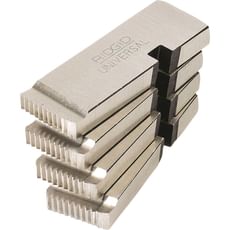
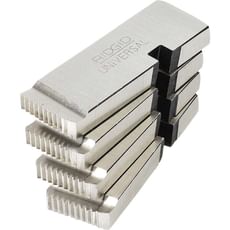
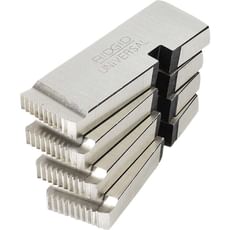
Threading Machine Dies: Heavy-duty dies designed for use with Ridgid's pipe threading machines, capable of threading pipe up to several inches in diameter. These dies are essential equipment for commercial plumbing contractors and mechanical services companies.
Safety and Compliance
When using Ridgid taps and dies, operators should observe proper safety protocols to prevent injury and ensure optimal results. Always wear appropriate eye protection to guard against flying chips and broken tool fragments. Use cutting fluid suitable for the workpiece material to reduce heat generation and extend tool life whilst improving thread finish.
Ensure workpieces are securely clamped before commencing threading operations, as unexpected movement can result in broken taps, damaged threads, and potential injury. When using hand taps, apply steady, even pressure and reverse the tap periodically to break chips and prevent binding. Never force a tap that encounters significant resistance, as this typically indicates a problem requiring assessment rather than additional force.
Store taps and dies properly to prevent damage to cutting edges and thread forms. Even minor damage can compromise thread accuracy and increase the likelihood of tool breakage during use. Inspect tools regularly for wear, chipping, or damage, and remove compromised tools from service immediately.
For powered threading operations using Ridgid threading machines, ensure equipment is properly maintained according to manufacturer specifications and that operators have received appropriate training. Threading machines contain powerful drive mechanisms that demand respect and proper operating procedures.
Frequently Asked Questions
What thread standards do Ridgid taps and dies cover?
Ridgid manufactures taps and dies for all common thread standards used in the UK, including metric (ISO), BSP (British Standard Pipe), BSW (British Standard Whitworth), BSF (British Standard Fine), UNC, UNF, and NPT threads. The Tooled-Up range includes both individual tools and comprehensive sets covering frequently used sizes in each standard.
How do I select the correct tap drill size for Ridgid taps?
Tap drill size depends on the thread size and pitch being created, with the hole diameter slightly smaller than the tap's minor diameter to leave material for thread formation. Ridgid provides tap drill charts with their threading products, and standard engineering references list appropriate drill sizes for all common thread forms. Generally, the tap drill produces a hole that results in approximately 75% thread depth, providing optimal strength whilst minimising tapping torque.
Can Ridgid taps be used for threading stainless steel?
Yes, Ridgid HSS taps are suitable for threading stainless steel, though this material demands specific techniques for successful results. Use reduced cutting speeds compared to mild steel, apply generous quantities of appropriate cutting fluid, and reverse the tap frequently to break chips. Stainless steel work-hardens readily, so maintain consistent forward progress to prevent the tap from rubbing against work-hardened material. For extensive stainless steel threading, consider Ridgid's premium tap ranges that offer enhanced performance in difficult materials.
What's the difference between taper, plug, and bottoming taps?
These terms refer to the length of the chamfered lead on the tap's cutting end. Taper taps have an extended chamfer over 7-10 threads, making them easy to start and ideal for through-holes. Plug taps feature a medium chamfer over 3-5 threads, providing a balance between ease of starting and the ability to thread closer to the bottom of blind holes. Bottoming taps have minimal chamfer over 1-2 threads, allowing threads to be cut nearly to the bottom of blind holes, but they require a pilot hole already threaded by a taper or plug tap.
How should Ridgid threading tools be maintained?
Clean taps and dies thoroughly after each use to remove cutting fluid residue and metal particles that can cause corrosion or interfere with subsequent operations. Store tools in organised holders or cases that prevent contact between cutting edges. Apply a light coating of rust-preventive oil if tools will be stored for extended periods. Inspect threads regularly under magnification for signs of wear, chipping, or damage. Sharpen or replace tools showing significant wear to maintain thread quality and reduce the risk of breakage during use.