

Sealey Anvils
 Loading...
End of content
Error - No more pages to load
Sealey Anvils at Tooled-Up.com
Sealey has established itself as one of the UK's most trusted names in workshop equipment, and their range of anvils exemplifies the brand's commitment to delivering robust, reliable metalworking tools for professional tradespeople and dedicated DIY enthusiasts. Built to withstand the demanding rigours of blacksmithing, fabrication work, and general metalwork, Sealey anvils combine traditional craftsmanship with modern manufacturing techniques to deliver exceptional durability and performance.
Whether you're a professional blacksmith requiring a heavy-duty centrepiece for your forge, a fabricator needing a solid striking surface for forming and shaping metal, or a maintenance engineer looking for a dependable workshop anvil, the Sealey range available from Tooled-Up.com provides options to suit various applications and budgets. These anvils feature hardened steel construction with carefully engineered horn, face, and heel sections designed to facilitate a wide range of metalworking operations.
Sealey anvils are manufactured to exacting standards, with properly heat-treated working surfaces that resist deformation and maintain their shape even under repeated heavy impacts. The Tooled-Up selection includes various weight capacities, ensuring both portability for mobile engineering work and substantial mass for stationary workshop installations where maximum stability is essential.
Why Choose Sealey Anvils?
Sealey's reputation for producing value-engineered tools without compromising on quality makes their anvils an intelligent choice for tradespeople who demand reliability. The brand's anvils feature correctly proportioned designs that provide proper mass distribution, ensuring effective energy transfer when striking metal and reducing vibration that can cause user fatigue during extended working sessions.
The hardened steel construction used throughout Sealey's anvil range delivers exceptional resistance to chipping, cracking, and surface damage—common issues with inferior anvils that can compromise both work quality and user safety. Sealey applies rigorous quality control measures throughout the manufacturing process, ensuring each anvil meets the brand's exacting standards before reaching customers.
Sealey anvils offer outstanding value when compared to premium alternatives, making professional-grade metalworking equipment accessible to a broader range of users. This cost-effectiveness doesn't mean compromised performance; rather, it reflects Sealey's efficient manufacturing processes and commitment to delivering tools that represent genuine investment value for working professionals.
Who Uses Sealey Anvils?
- Blacksmiths and Farriers: Traditional metalworkers requiring authentic forging equipment for shaping horseshoes, decorative ironwork, and functional metalwork
- Fabricators and Welders: Metal fabrication professionals who need solid striking surfaces for forming, bending, and straightening steel components
- Agricultural Engineers: Farm maintenance specialists repairing machinery and equipment in rural workshop environments
- Automotive Restoration Specialists: Classic car restorers shaping custom panels and straightening chassis components
- Maintenance Engineers: Industrial maintenance teams requiring reliable anvils for on-site metalwork and equipment repairs
- Educational Institutions: Colleges and training centres teaching traditional metalworking skills and fabrication techniques
- Jewellery Makers: Craftspeople working with precious metals who require smaller anvils for detailed forming work
- DIY Enthusiasts: Home workshop users tackling metalwork projects and general repairs
Key Features of Sealey Anvils
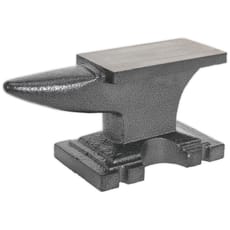
Sealey anvils incorporate several design features that distinguish them within the metalworking equipment market. The hardened steel face provides an exceptionally flat, smooth working surface that allows precise metal shaping without unwanted surface marking. This carefully machined face maintains its flatness even after thousands of hammer strikes, ensuring consistent results throughout the anvil's working life.
The horn section—the tapered, rounded projection extending from the anvil body—features proper geometric proportioning that facilitates effective ring and curve forming. Sealey engineers this component with appropriate taper angles and radius transitions, enabling metalworkers to achieve accurate curves in various metal thicknesses and materials.
Robust mounting holes are integrated into Sealey anvil bases, allowing secure fastening to workbenches, stumps, or dedicated anvil stands. This thoughtful feature ensures stability during heavy striking operations, preventing anvil movement that could compromise work accuracy and pose safety risks. The substantial mass of Sealey anvils provides excellent inertia, absorbing impact energy efficiently and reducing rebound that can tire users during extended working periods.
Surface finish receives particular attention in Sealey's manufacturing process, with properly deburred edges and smooth transitions between different anvil sections. This attention to detail prevents snagging on workpieces and reduces the risk of injury during handling and operation.
Popular Sealey Anvils
The Sealey anvil range encompasses various weights and configurations to suit different metalworking requirements. Lighter models, typically ranging from 5kg to 15kg, provide excellent portability for mobile engineers and those with limited workshop space. These compact anvils deliver surprising capability despite their modest size, handling light fabrication work, jewellery making, and general workshop tasks effectively.
Medium-weight anvils between 20kg and 50kg represent the most versatile option for general metalworking, offering sufficient mass for effective metal shaping whilst remaining manageable for repositioning within workshop environments. These models prove particularly popular with agricultural engineers, maintenance professionals, and small fabrication businesses.
Heavy-duty Sealey anvils exceeding 50kg provide the substantial mass required for serious blacksmithing, heavy fabrication, and industrial metalworking applications. These professional-grade anvils deliver maximum stability and energy absorption, enabling effective work on thick steel sections and demanding forging operations.
Safety and Compliance
When using Sealey anvils, adherence to proper workshop safety practices is essential. Always position anvils at an appropriate working height—typically around knuckle height when standing—to maintain correct posture and reduce strain during extended metalworking sessions. Ensure anvils are securely mounted to prevent movement or tipping during striking operations, which could result in injury or workpiece damage.
Wear appropriate personal protective equipment including safety glasses or face shields to protect against metal fragments and scale that can be ejected during hammering operations. Steel-toed safety boots provide essential foot protection should tools or workpieces fall during metalworking activities. Heat-resistant gloves are necessary when handling hot metal in forging applications, though should be removed when operating power tools near the anvil to prevent entanglement hazards.
Regular inspection of the anvil working surface helps identify damage such as chips, cracks, or deformation that could compromise work quality or safety. Sealey anvils should be kept clean and free from oil or grease that could cause tools or workpieces to slip unexpectedly. Always ensure adequate lighting and clear working space around the anvil to facilitate safe operation and reduce accident risk in accordance with HSE workshop safety guidelines.
Frequently Asked Questions
What weight Sealey anvil do I need for general workshop metalwork?
For general fabrication, repairs, and light forging work, a Sealey anvil between 25kg and 40kg provides an excellent balance of capability and practicality. This weight range offers sufficient mass for effective metal shaping whilst remaining manageable for workshop positioning. Heavier anvils above 50kg suit dedicated blacksmithing applications, whilst lighter models under 20kg work well for jewellery making, small repairs, and mobile engineering work.
How should I mount my Sealey anvil for best results?
Secure your Sealey anvil to a substantial wooden stump, steel stand, or heavy workbench using the integrated mounting holes and appropriate fasteners. The anvil face should sit approximately at knuckle height when you're standing in a natural working position. Ensure the mounting surface is level and stable, with the anvil positioned where you have adequate swing space for hammering operations. Some metalworkers place the anvil on a resilient base material to reduce noise transmission, though this should not compromise stability.
Can Sealey anvils be used for hot forging work?
Yes, Sealey anvils are suitable for hot forging applications including blacksmithing and farrier work. The hardened steel construction withstands the thermal cycling associated with hot metal work, and the properly heat-treated face resists damage from high-temperature workpieces. However, avoid quenching hot metal directly on the anvil face, as rapid thermal shock can potentially cause surface damage over time. Always allow the anvil to cool naturally if it becomes warm during extended forging sessions.
Do Sealey anvils require any special maintenance?
Sealey anvils require minimal maintenance but benefit from basic care. Keep the working surface clean and lightly oiled with a thin film of machine oil to prevent surface corrosion, particularly in damp workshop environments. Remove any metal debris, scale, or hammer marks using a wire brush, and periodically check mounting fasteners remain tight. Avoid using the anvil face as a cutting surface, as this can cause damage—use the hardy hole or a sacrificial steel plate for cutting operations instead.
What's the difference between a Sealey anvil and more expensive alternatives?
Sealey anvils offer excellent value by focusing on essential functionality and robust construction without the premium pricing associated with specialist forging equipment manufacturers. Whilst ultra-premium anvils may feature marginally harder face treatments or traditional forged construction, Sealey's modern manufacturing delivers comparable performance for the vast majority of metalworking applications at significantly lower cost. For professional tradespeople and serious DIY users seeking reliable, durable metalworking equipment without unnecessary expense, Sealey anvils represent outstanding value.