

Sealey Cylinder Leakage Testers
 Loading...
End of content
Error - No more pages to load
Sealey Cylinder Leakage Testers at Tooled-Up.com
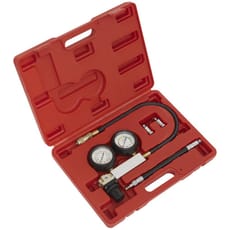
Sealey has established itself as a trusted name in automotive diagnostic equipment, and their cylinder leakage testers exemplify the brand's commitment to precision engineering and professional-grade performance. These specialist diagnostic tools enable mechanics, automotive technicians, and engine rebuilders to accurately identify internal engine problems by measuring the percentage of pressure loss in individual cylinders. By pressurising cylinders and monitoring where air escapes, Sealey cylinder leakage testers help pinpoint issues such as worn piston rings, damaged valves, blown head gaskets, and cracked cylinder heads—problems that would otherwise require extensive disassembly to diagnose.
The Sealey range available from Tooled-Up.com features dual-gauge design configurations that simultaneously display both input pressure and leakage percentage, making diagnostics faster and more intuitive. Built to withstand the demands of busy professional workshops, these testers incorporate robust pressure regulators, precision gauges, and comprehensive adaptor sets to suit various engine types. Whether you're running a main dealer workshop, an independent garage, or a specialist engine reconditioning business, Sealey's cylinder leakage testing equipment delivers the accuracy and reliability required for confident diagnostic decisions.
Unlike compression testers that only measure cranking pressure, cylinder leakage testers provide a more detailed analysis of engine condition by revealing exactly where cylinder pressure is being lost. This makes them invaluable for pre-purchase vehicle inspections, warranty work verification, and determining whether an engine requires minor remedial work or complete overhaul. Sealey's thoughtful design approach ensures these testers are accessible to both experienced technicians and those newer to advanced engine diagnostics.
Why Choose Sealey Cylinder Leakage Testers?
Sealey's reputation for producing dependable workshop equipment at competitive prices makes their cylinder leakage testers an intelligent investment for professional users. The brand's extensive experience in automotive tooling means their testers incorporate practical features that matter in real-world workshop environments—clear gauge faces for easy reading in poor lighting, durable construction to survive being dropped or knocked, and pressure regulators that maintain consistent test pressures for repeatable results.
Quality control is paramount with Sealey products, and their cylinder leakage testers undergo rigorous testing to ensure gauge accuracy and pressure regulation consistency. The dual-gauge configuration employed across the range eliminates guesswork by providing instant visual confirmation of both supply pressure and leakage percentage, allowing technicians to complete tests efficiently without constantly adjusting or recalculating. Comprehensive adaptor kits included with Sealey testers ensure compatibility with the vast majority of petrol engines encountered in UK workshops, from classic British motors to modern European and Asian vehicles.
The brand's established UK distribution network and excellent after-sales support provide additional confidence for professional buyers. Sealey backs their products with reliable warranty coverage and maintains readily available spare parts and accessories, ensuring your diagnostic equipment remains operational for years of service. This combination of proven performance, practical design, and dependable support explains why Sealey cylinder leakage testers are found in workshops throughout the United Kingdom.
Who Uses Sealey Cylinder Leakage Testers?
Sealey cylinder leakage testers serve a diverse range of automotive professionals and enthusiasts:
- Independent garage mechanics performing comprehensive engine diagnostics and health checks
- Main dealer workshops conducting warranty investigations and pre-delivery inspections
- Engine reconditioners and rebuilders verifying cylinder integrity before and after machining work
- MOT testing stations investigating emission failures and performance issues
- Mobile mechanics requiring portable diagnostic equipment for on-site assessments
- Classic car restorers evaluating engine condition on potential purchases or restoration projects
- Motorsport technicians monitoring engine condition between race events
- Agricultural and plant mechanics maintaining stationary engines and specialist equipment
- Marine engineers diagnosing problems in boat engines and auxiliary power units
- Serious DIY enthusiasts undertaking their own engine rebuilds and performance modifications
Key Features of Sealey Cylinder Leakage Testers
Sealey cylinder leakage testers incorporate several distinctive features that enhance diagnostic accuracy and workshop usability. The dual-gauge display system provides simultaneous monitoring of regulated air pressure and cylinder leakage percentage, with colour-coded gauge faces for quick interpretation. Precision pressure regulators maintain consistent 100 PSI test pressure—the industry standard for cylinder leakage testing—ensuring repeatable and comparable results across multiple tests.
Robust metal construction throughout the gauge housing and regulator assembly ensures longevity in demanding workshop environments, whilst flexible high-pressure hoses provide operator freedom when working around crowded engine bays. Quick-disconnect couplings enable fast connection to workshop air supplies, and the inclusion of comprehensive spark plug thread adaptors ensures compatibility with 14mm and 18mm installations in both standard and deep-well configurations.
The Tooled-Up Sealey range features calibrated gauges that clearly indicate acceptable leakage ranges, helping less experienced technicians interpret test results confidently. Many models include protective carry cases for secure storage and transportation, keeping precision components safe from workshop hazards. Whisper attachments allow technicians to listen at the oil filler, exhaust, inlet manifold, and cooling system to pinpoint exactly where cylinder pressure is escaping—whether through worn rings, leaking valves, damaged gaskets, or cracked castings.
Popular Sealey Cylinder Leakage Testers
Sealey's cylinder leakage tester range typically features professional-grade models designed for comprehensive engine diagnostics in workshop environments. Their dual-gauge testers represent the most popular configuration, combining an input pressure gauge showing regulated air supply with a leakage percentage gauge calibrated from 0-100%. These units generally include multiple spark plug thread adaptors to suit various engine types, along with the necessary hoses and connectors for immediate use upon delivery.
Professional workshop models feature large, easy-to-read gauge faces—typically 63mm or larger—with clear numerical markings and colour-coded zones indicating acceptable and problematic leakage levels. These testers connect directly to standard workshop compressed air supplies and include built-in regulators to maintain the precise 100 PSI testing pressure required for accurate diagnostics. Supplied in protective storage cases, these comprehensive kits provide everything needed for professional cylinder leakage testing across petrol engines from motorcycles to commercial vehicles.
Safety and Compliance
When using Sealey cylinder leakage testers, proper safety procedures must be followed to prevent injury and ensure accurate results. Always ensure the engine being tested is at top dead centre on the compression stroke for the cylinder under examination—failure to position correctly may result in the engine rotating unexpectedly when air pressure is applied. Remove the vehicle from gear, apply the handbrake, and consider additional wheel chocks for safety.
Compressed air systems should be properly maintained with adequate moisture separation and filtration to ensure consistent test pressure and prevent gauge damage. Never exceed the maximum rated pressure for the tester, and regularly inspect hoses for damage, wear, or deterioration. Eye protection should be worn when working with compressed air systems, and hearing protection is advisable when using whisper attachments in noisy workshop environments.
Ensure adequate workshop ventilation when testing engines, as exhaust gases may escape through leaking exhaust valves during testing procedures. Regular calibration checks help maintain diagnostic accuracy—comparison against known-good cylinders or manufacturer specifications ensures test results remain reliable. Store Sealey cylinder leakage testers in their protective cases when not in use to prevent gauge damage and maintain calibration integrity.
Frequently Asked Questions
What air pressure do Sealey cylinder leakage testers require?
Sealey cylinder leakage testers typically require a workshop compressed air supply of 120-150 PSI minimum. The built-in regulator reduces this to the standard testing pressure of 100 PSI, which is maintained consistently during testing to ensure accurate leakage percentage readings across all cylinders.
How do cylinder leakage testers differ from compression testers?
Whilst compression testers measure the pressure generated during cranking, cylinder leakage testers introduce controlled air pressure into stationary cylinders and measure how much escapes. This reveals not just that pressure is being lost, but exactly where—through rings, valves, head gaskets, or cracks—making diagnosis more precise and informative.
What's considered an acceptable leakage percentage?
Generally, cylinder leakage below 10% indicates excellent condition, 10-20% is acceptable for used engines, 20-30% suggests wear requiring monitoring, and above 30% typically indicates significant problems requiring repair. However, consistency across cylinders is equally important—large variations between cylinders often indicate specific component failures.
Can Sealey cylinder leakage testers be used on diesel engines?
Whilst Sealey cylinder leakage testers can physically accommodate diesel engine spark plug holes (using appropriate glow plug adaptors), they're primarily designed for petrol engines. Diesel engines' higher compression ratios and different combustion chamber designs mean results may be harder to interpret accurately compared to purpose-designed diesel compression testing equipment.
Do I need special training to use a cylinder leakage tester?
Whilst basic operation is straightforward, accurate testing requires understanding engine timing, cylinder positioning at top dead centre, and interpretation of where air escapes. Experienced mechanics will find Sealey cylinder leakage testers intuitive, whilst those newer to engine diagnostics should seek guidance or training to ensure correct procedure and meaningful results interpretation.