

Sealey Mallets

 Loading...
End of content
Error - No more pages to load
Sealey Mallets at Tooled-Up.com
Sealey has established itself as one of the UK's most trusted names in hand tools, and their mallet range exemplifies the brand's commitment to quality and durability. For over four decades, Sealey has been manufacturing striking tools that meet the demanding requirements of professional tradespeople and serious DIY enthusiasts alike. The comprehensive selection of Sealey mallets available from Tooled-Up.com encompasses everything from traditional rubber-faced models to specialist soft-face and composite designs, each engineered to deliver precise, controlled strikes without damaging workpieces.
What distinguishes Sealey's approach to mallet design is their focus on practical innovation rather than unnecessary complexity. Each mallet in the Sealey range features carefully selected materials matched to specific applications—whether that's non-marring white rubber for assembly work, resilient fibreglass handles for shock absorption, or traditional ash wood construction for those who prefer classic craftsmanship. Tooled-Up stocks the complete spectrum of Sealey mallets, ensuring tradespeople can find the exact tool specification required for their particular discipline, from delicate trim carpentry to heavy-duty metal fabrication.
Sealey mallets are designed with the realities of British workshop and site conditions in mind. The brand understands that tools need to withstand not just the impact forces of repeated strikes, but also the temperature fluctuations, moisture exposure, and general rough-and-tumble of professional use. This practical engineering philosophy has made Sealey the go-to choice for thousands of UK tradespeople who demand tools that simply work, day after day, without fuss or failure.
Why Choose Sealey Mallets?
Sealey's reputation in the striking tools sector rests on three fundamental pillars: consistent quality, exceptional value, and comprehensive product coverage. Unlike some manufacturers who focus on narrow product ranges, Sealey offers mallets in every weight class and material combination, meaning professionals never need to compromise by using an inappropriate tool for the job at hand. The brand's quality control processes ensure that each mallet leaving their facilities meets stringent performance criteria, with particular attention paid to head retention, handle integrity, and striking face durability.
The value proposition Sealey offers is particularly compelling in today's economic climate. These are professional-grade tools priced accessibly enough that tradespeople can maintain properly equipped toolkits without breaking the bank. This doesn't mean corner-cutting—Sealey mallets routinely outperform premium-priced alternatives in independent durability testing. The brand achieves this balance through efficient manufacturing processes and decades of supply chain optimisation, passing savings directly to end users.
Innovation at Sealey focuses on incremental improvements that genuinely benefit users rather than gimmickry. Recent developments include improved handle ergonomics that reduce user fatigue during extended use, upgraded striking face compounds that resist chunking and degradation, and thoughtful design touches like colour-coded heads for quick identification in busy workshops. For tradespeople investing in Sealey mallets, these refinements translate into tools that work harder and last longer.
Who Uses Sealey Mallets?
Sealey mallets are the daily workhorses for a diverse range of professionals and skilled enthusiasts:
- Joiners and Carpenters: Relying on Sealey rubber and soft-face mallets for non-marring assembly work, door hanging, and precision fitting
- Motor Vehicle Technicians: Using Sealey mallets for bodywork panel manipulation, wheel trim fitting, and component assembly without surface damage
- Sheet Metal Workers: Depending on Sealey's heavier mallets for forming, shaping, and panel beating applications
- Maintenance Engineers: Keeping Sealey mallets in their tool kits for machinery assembly, bearing fitting, and general mechanical work
- Shopfitters and Installers: Choosing Sealey for retail fixture assembly and point-of-sale installation work
- Cabinet Makers: Preferring Sealey's precision-balanced mallets for fine furniture assembly and veneer work
- Ground Workers and Civil Engineers: Utilising heavier Sealey mallets for formwork construction and temporary structure assembly
- DIY Enthusiasts: Investing in Sealey quality for home workshop projects, flat-pack assembly, and general making and mending
Key Features of Sealey Mallets
Sealey incorporates numerous design features that enhance the performance and longevity of their mallet range. Handle construction typically utilises either seasoned ash wood with visible grain patterns for traditional models, or fibreglass-reinforced cores with textured rubber over-moulding for modern designs. The fibreglass variants offer superior shock absorption, reducing vibration transmission to the user's hand and wrist—a critical consideration for professionals facing long working days with repetitive striking tasks.
The striking faces on Sealey mallets employ carefully formulated rubber compounds, ranging from soft white rubber for delicate assembly work through to harder black rubber for more forceful applications. Multi-material heads featuring replaceable nylon or copper faces provide versatility, allowing users to switch between materials depending on workpiece sensitivity. Head weights are precisely calibrated, typically ranging from 340g through to 1130g, ensuring appropriate momentum delivery without excessive force that might damage components.
Handle-to-head attachment represents a critical failure point on inferior mallets, which is why Sealey employs robust mechanical fixing methods supplemented by chemical bonding agents. This dual approach prevents the head loosening even under sustained heavy use. Handle lengths are optimised for control and leverage, with hanging holes or lanyard points incorporated for secure storage and drop prevention when working at height.
Popular Sealey Mallets
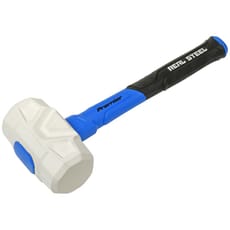
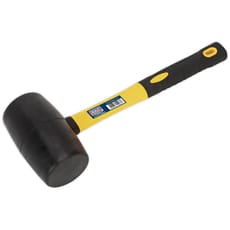
The Sealey mallet portfolio encompasses several distinct product families, each targeting specific applications. Their rubber mallet range remains consistently popular, featuring traditional black rubber heads on hardwood handles in weights from 454g to 908g—ideal general-purpose options for workshops and site work. White rubber mallets provide non-marking alternatives for finished surface work, particularly valued in joinery and automotive applications.
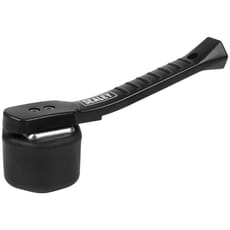
Soft-face mallets with replaceable nylon or composite heads represent another strong category, offering extended service life since worn faces can be renewed rather than replacing the entire tool. Sealey's dead-blow mallets incorporate loose steel shot within hollow heads, eliminating rebound and delivering concentrated striking force—particularly effective for precision alignment work and stubborn assembly tasks.
For specialists requiring traditional materials, Sealey produces copper and brass-faced mallets that won't create sparks in potentially explosive atmospheres, meeting the needs of chemical plants, refineries, and munitions facilities. Their rawhide mallets serve leatherworkers, jewellers, and other craftspeople requiring the ultimate in non-marring striking capability.
Safety and Compliance
Sealey manufactures mallets in accordance with relevant British and European standards, ensuring tools meet prescribed safety requirements for hand-striking implements. Users should conduct pre-use inspections, checking for head security, handle integrity, and striking face condition. Any mallet showing cracks, chips, or loosening should be withdrawn from service immediately to prevent potential injury from component failure during use.
The Health and Safety Executive recommends selecting the appropriate mallet weight and face material for each specific task. Using excessively heavy mallets causes unnecessary fatigue and increases injury risk, whilst too-light tools may require excessive force, potentially leading to repetitive strain injuries. Sealey's comprehensive weight range allows proper tool selection following HSE guidance.
Appropriate personal protective equipment should accompany mallet use, particularly safety glasses or goggles to protect against struck object debris or, in extreme cases, fragmented striking face material. Gloves with adequate grip enhance control whilst padding protects hands during extended use. When working at height, tool lanyards prevent dropped mallets becoming struck-by hazards for personnel below.
Frequently Asked Questions
What's the difference between Sealey's rubber and soft-face mallets?
Rubber mallets feature solid rubber heads permanently fixed to handles, whilst soft-face mallets have replaceable face inserts (typically nylon, copper, or composite materials) threaded or pressed into metal head bodies. Rubber mallets offer simplicity and economy for general workshop use, whereas soft-face mallets provide versatility and extended service life through replaceable faces, making them more cost-effective for heavy professional use.
How do I maintain my Sealey mallet to ensure maximum lifespan?
Store mallets in dry conditions away from direct sunlight, which can degrade rubber compounds. Periodically check head security and tighten if necessary. Clean striking faces to remove embedded debris that might transfer to workpieces. For wooden-handled models, occasionally treat handles with linseed oil to prevent drying and splitting. Replace worn or damaged mallets promptly rather than continuing to use compromised tools.
Which Sealey mallet weight should I choose for general workshop use?
For versatile general-purpose applications, a 680g to 908g rubber mallet provides sufficient mass for most assembly, adjustment, and light forming work without being unwieldy. Professionals often keep multiple weights available—lighter mallets (340g-454g) for delicate work and heavier models (1130g+) for demanding applications. Consider the materials you work with most frequently when selecting weight.
Are Sealey mallets suitable for automotive bodywork?
Absolutely. Sealey produces specific mallets designed for automotive applications, including rubber mallets for trim and moulding fitting, dead-blow mallets for panel alignment, and specialist body repair mallets. The non-marring properties of Sealey's rubber compounds make them ideal for working on painted surfaces without causing damage. Many motor trade professionals rely exclusively on Sealey striking tools.
Can I replace the handle on a Sealey mallet if it breaks?
Whilst some traditional wooden-handled mallets can theoretically be re-handled, the mechanical and adhesive bonding methods Sealey employs make this impractical for most users. Modern fibreglass-handled models cannot be economically repaired. Given Sealey's competitive pricing, replacement typically represents better value than attempted repair, ensuring you're working with tools in known, safe condition rather than potentially compromised implements.