

Sealey Taps & Dies
 Loading...
End of content
Error - No more pages to load
Sealey Taps & Dies at Tooled-Up.com
Sealey has established itself as one of the UK's most trusted names in professional hand tools, and their taps and dies collection exemplifies the brand's commitment to precision engineering and durability. Whether you're a professional engineer restoring damaged threads or a tradesperson creating new fastening points, Sealey's comprehensive range of thread-cutting tools delivers consistent, reliable performance across a wide variety of applications. From individual tap and die pieces to complete sets housed in robust storage cases, Sealey provides threading solutions for metric, imperial, and specialist applications.
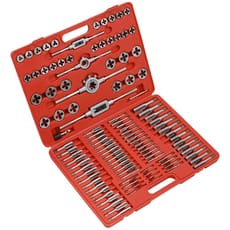
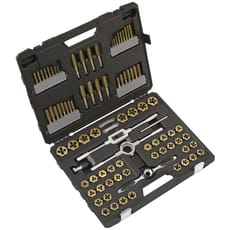
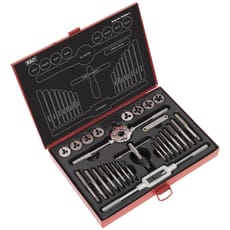
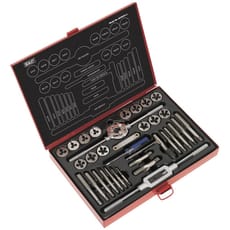
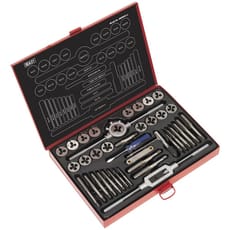
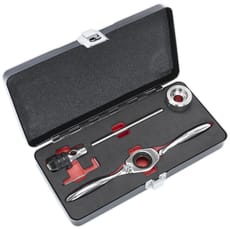
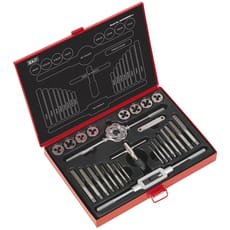
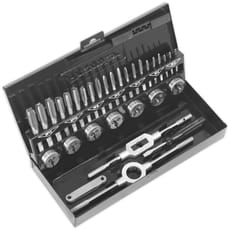
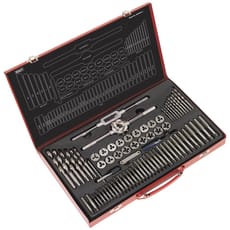
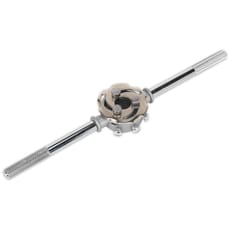
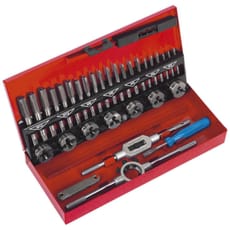
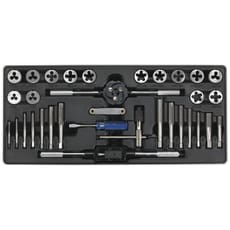
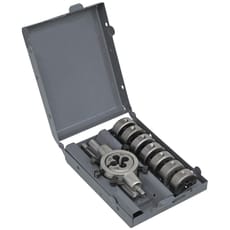
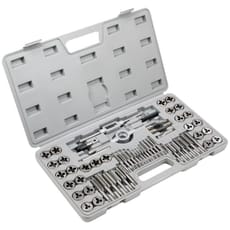
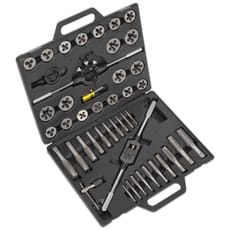
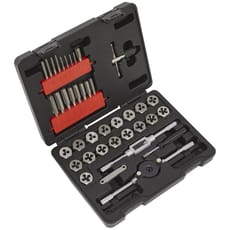
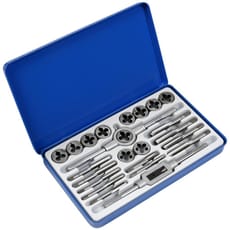
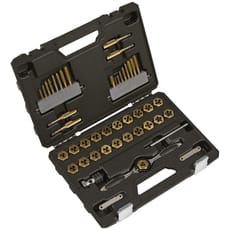
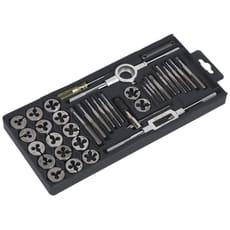
The Sealey taps and dies range encompasses everything from high-carbon steel hand taps in taper, second, and plug configurations to circular split dies and adjustable die stocks. Tooled-Up.com stocks Sealey's popular combination sets that include both tap and die selections alongside the necessary wrenches and holders, providing tradespeople with complete threading solutions in one purchase. These sets are particularly valued by mobile engineers and workshop professionals who require comprehensive threading capabilities without carrying multiple individual tools.
Manufactured to exacting standards, Sealey taps and dies feature precision-ground cutting edges that produce clean, accurate threads in materials ranging from soft aluminium to hardened steel. The range includes both general-purpose threading tools for everyday applications and specialised items such as pipe taps, machine screw taps, and fine-pitch dies for precision engineering work.
Why Choose Sealey Taps & Dies?
Sealey's reputation in the UK tool market is built on decades of supplying professional-grade equipment that withstands the rigours of daily workshop and site use. Their taps and dies are manufactured from high-quality carbon steel and alloy steel materials that maintain their cutting edge through repeated use, reducing the frequency of replacement and delivering better value over the tool's lifetime. The precision grinding process ensures consistent thread profiles that meet both metric ISO and British Standard specifications.
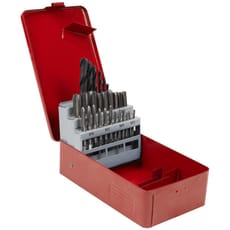
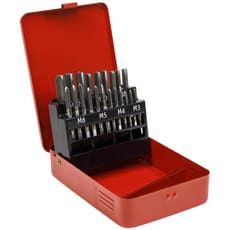
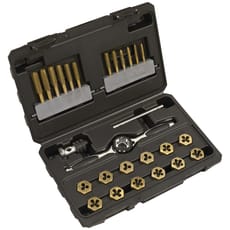
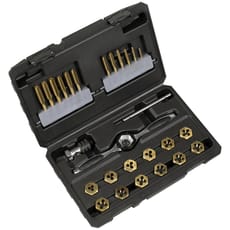
One of Sealey's key strengths lies in their practical approach to tool storage and organisation. Many of their tap and die sets come in clearly labelled metal or blow-moulded cases with dedicated compartments for each size, making it easy to identify the correct tool quickly and ensuring nothing gets misplaced during transport or storage. This attention to practical detail reflects Sealey's understanding of real-world working conditions where efficiency and organisation directly impact productivity.
The brand's extensive UK distribution network and strong customer support make Sealey taps and dies a dependable choice for professionals who cannot afford downtime. The availability of replacement pieces and additional sizes means that existing sets can be supplemented rather than replaced entirely, offering long-term flexibility and cost-effectiveness.
Who Uses Sealey Taps & Dies?
- Mechanical Engineers: Workshop-based professionals who regularly repair or create threaded components
- Automotive Technicians: Mechanics restoring damaged threads in engine blocks, gearboxes, and chassis components
- Plant Maintenance Engineers: Industrial engineers maintaining manufacturing equipment and agricultural machinery
- Plumbers and Heating Engineers: Tradespeople cutting threads on pipework and creating fixing points
- General Fitters: Multi-skilled engineers working across maintenance and fabrication disciplines
- Agricultural Engineers: Specialists repairing farm machinery and equipment in field and workshop environments
- Aviation and Marine Engineers: Technicians working to precise specifications in demanding environments
- Serious DIY Enthusiasts: Home workshop users undertaking restoration projects and precision metalwork
Key Features of Sealey Taps & Dies
Sealey taps and dies incorporate several features that distinguish them in a competitive market. The cutting edges are precision-ground to create clean, accurate threads that meet relevant standards, whilst the chamfer angles are optimised for efficient material removal and reduced cutting resistance. This results in smoother operation, less effort required during use, and reduced likelihood of tap breakage in challenging materials.
The range includes comprehensive size selections spanning both metric and imperial standards, from fine threads for precision engineering to coarse threads for general fabrication work. Taps are available in the traditional three-piece format (taper, second, and plug) allowing progressive thread cutting, or as individual pieces for specific applications. Dies feature adjustable designs where applicable, enabling precise thread diameter control.
Material selection is a particular strength, with Sealey specifying appropriate steel grades for different applications. General-purpose taps and dies use hardened carbon steel offering excellent wear resistance, whilst specialist applications may utilise alloy steel formulations. Surface treatments such as oxide coatings improve corrosion resistance and reduce friction during cutting operations.
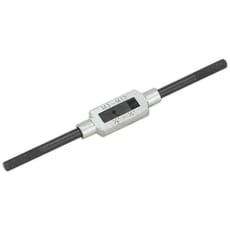
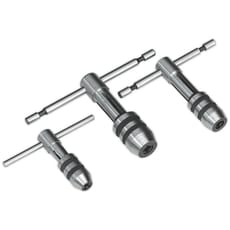
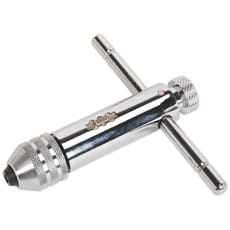
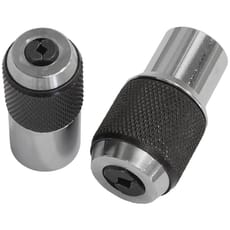
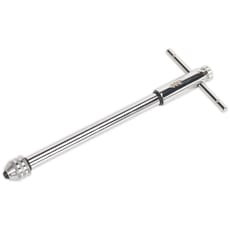
The ergonomic design of tap wrenches and die stocks within Sealey sets ensures comfortable operation even during extended use, with squared shoulders and knurled grips providing secure hold and precise control. Adjustable tap wrenches accommodate multiple tap sizes, reducing the number of tools required and improving workshop efficiency.
Popular Sealey Taps & Dies
The Sealey range at Tooled-Up includes several popular configurations suited to different user requirements. Comprehensive metric tap and die sets typically contain the most commonly used sizes from M3 to M12 or M16, covering the vast majority of general engineering applications. These sets usually include both taps and corresponding dies, along with appropriate holders and wrenches, providing complete threading capability in one package.
Imperial tap and die sets remain popular for restoration work, classic vehicle maintenance, and applications involving equipment manufactured to British or American standards. These typically span sizes from 1/4" BSF through to 1/2" or beyond, with common thread forms including BSF, BSW, UNC, and UNF.
Specialist sets such as thread repair kits, pipe tap selections, and machine screw tap assortments cater to specific trade requirements. Individual taps and dies are also available for replacing worn pieces or supplementing existing sets, with serial taper, second, and plug taps sold separately for users who require specific starting or finishing characteristics.
Combination sets offering both metric and imperial sizes provide versatility for engineers working across different standards, whilst compact sets suit mobile engineers and site-based workers who require threading capability without carrying extensive tool collections.
Safety and Compliance
Whilst taps and dies are manually-operated tools not subject to electrical safety regulations, their proper use is important for both personal safety and achieving quality results. Sealey provides guidance on correct usage including appropriate cutting speeds, lubrication requirements, and material suitability. Always wear appropriate eye protection when cutting threads, as metal swarf can be ejected during the cutting process.
Proper tool maintenance extends service life and maintains threading accuracy. Clean taps and dies after use to remove metal particles and cutting fluid residue, and store them in their cases to prevent damage to cutting edges. Inspect taps regularly for wear or damage, as continued use of worn tools produces poor-quality threads and increases the risk of breakage.
When cutting threads, ensure workpieces are securely held and that appropriate cutting lubricant is used for the material being worked. Back off taps regularly to break swarf and prevent jamming, particularly when working with ductile materials. Never force a tap if resistance increases significantly, as this often leads to breakage and difficult extraction procedures.
Frequently Asked Questions
What's the difference between taper, second, and plug taps in Sealey sets?
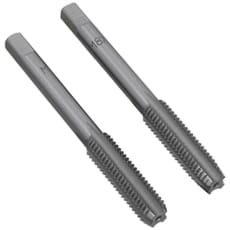
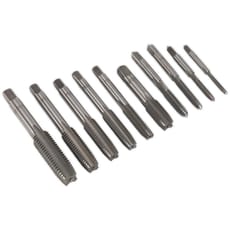
Sealey tap sets typically include three tap types for progressive thread cutting. Taper taps have an extended chamfer over 8-10 threads for easy starting in through holes. Second taps have a shorter chamfer over 3-5 threads for intermediate cutting. Plug taps have minimal chamfer over 1-2 threads for cutting threads close to blind hole bottoms. For through holes, a taper tap alone often suffices, whilst blind holes require all three used sequentially for best results.
Can Sealey taps and dies be used on stainless steel?
Standard Sealey carbon steel taps and dies can cut threads in austenitic stainless steel, though they will wear more quickly than when used on mild steel. Use appropriate cutting lubricant, reduce cutting speed, and back off frequently to break swarf. For regular stainless steel work, consider dedicated stainless steel taps with modified geometry and coatings, though standard Sealey tools handle occasional stainless applications adequately with proper technique.
How do Sealey metric and imperial thread forms differ?
Sealey metric taps and dies cut ISO metric threads with a 60-degree thread angle, designated by diameter and pitch (e.g., M10 x 1.5). Imperial threads include several standards: BSW and BSF feature 55-degree angles and are designated by diameter and threads per inch, whilst UNC and UNF use 60-degree angles. These thread forms are not interchangeable, so selecting the correct standard for your application is essential.
What size tap and die set should I choose for general engineering work?
For general workshop use, a metric set covering M3 to M12 handles approximately 80% of common applications. If working on older British equipment or classic vehicles, an imperial set covering 1/4" to 1/2" in BSF/BSW or UNC/UNF is valuable. Professional engineers often maintain both metric and imperial sets, whilst home workshop users should assess their typical projects to determine which standard predominates in their work.
How should I maintain my Sealey taps and dies?
Clean taps and dies immediately after use with a wire brush to remove swarf and cutting fluid residue. Dry thoroughly and apply a light coating of oil before returning them to their storage case. Never store taps and dies loose where cutting edges can contact other tools or surfaces. Inspect regularly for wear, chipping, or damage to cutting edges. Replace worn tools promptly, as they produce poor-quality threads and are more likely to break during use.