

Sealey Welding Gloves

 Loading...
End of content
Error - No more pages to load
Sealey Welding Gloves at Tooled-Up.com
Sealey has established itself as one of the UK's most trusted names in workshop equipment and personal protective equipment, with their welding gloves representing decades of expertise in safeguarding hands during high-temperature metalworking operations. The Sealey welding gloves range combines robust construction with practical design features that professional welders and metal fabricators rely on daily. Built to withstand the extreme conditions of arc welding, MIG welding, TIG welding, and oxy-acetylene operations, these gloves deliver the heat resistance and dexterity that demanding applications require.
Whether you're working on heavy fabrication projects, automotive repair work, or precision welding tasks, Tooled-Up.com stocks Sealey welding gloves engineered to protect against sparks, spatter, radiant heat, and molten metal. The brand's commitment to quality means each pair undergoes rigorous testing to ensure compliance with British and European safety standards, providing tradespeople with reliable hand protection that doesn't compromise on comfort or flexibility.
From heavy-duty gauntlet-style gloves for intensive industrial welding to more flexible options for intricate TIG work, the Sealey range addresses the diverse needs of the welding community. These gloves feature reinforced stitching, heat-resistant materials, and ergonomic designs that reduce hand fatigue during extended welding sessions.
Why Choose Sealey Welding Gloves?
Sealey's reputation in the UK trades sector stems from their unwavering focus on producing equipment that performs reliably in real-world workshop conditions. Their welding gloves are manufactured using premium leather and heat-resistant materials that maintain their protective properties even after repeated exposure to welding temperatures. The brand understands that welders need gloves that balance protection with tactile sensitivity, allowing operators to maintain control over welding torches, filler rods, and workpieces without sacrificing safety.
What sets Sealey welding gloves apart is their practical design philosophy. Features like reinforced palms, Kevlar stitching, and extended cuffs aren't just marketing additions—they're purposeful elements that address specific hazards welders face daily. The gloves are designed to resist wear in high-friction areas whilst maintaining flexibility in the fingers and thumb, ensuring welders can work efficiently without constantly replacing worn-out gloves. Sealey's competitive pricing makes professional-grade hand protection accessible to both seasoned fabricators and those entering the welding trade.
The brand's extensive distribution network across the UK means replacement gloves are readily available when needed, and their consistency in sizing and quality allows tradespeople to reorder with confidence. Sealey backs their products with reliable customer support and technical guidance, ensuring users select the appropriate glove specification for their specific welding processes.
Who Uses Sealey Welding Gloves?
- Professional Welders and Fabricators: Those working in structural steel, pressure vessels, and heavy industrial fabrication who require maximum heat protection
- Automotive Body Shops: Technicians performing panel repairs, exhaust work, and chassis modifications
- Agricultural Engineers: Tradespeople maintaining and repairing farm machinery and equipment
- Construction Site Welders: Professionals carrying out structural welding on building projects and infrastructure works
- Maintenance Engineers: Those performing repair welding in manufacturing facilities, factories, and industrial plants
- Mobile Welders: Self-employed tradespeople offering on-site welding and repair services
- Engineering Students and Apprentices: Those learning welding techniques in colleges and training centres
- DIY Enthusiasts: Home workshop users tackling automotive restoration, metalwork projects, and property repairs
Key Features of Sealey Welding Gloves
Sealey welding gloves incorporate several critical design features that enhance both safety and usability. The primary construction material is typically high-quality split leather or full-grain leather, selected for its natural heat resistance and durability. This leather provides excellent protection against sparks, spatter, and radiant heat whilst remaining supple enough for comfortable wear during extended periods.
Reinforced palms and finger areas use double or triple-layer leather construction in zones that experience the most wear and contact with hot materials. The Kevlar or aramid stitching used throughout Sealey welding gloves resists degradation from heat exposure, preventing seam failure that could expose skin to hazards. Extended cuffs, often measuring 150mm or longer, protect the wrists and forearms from sparks and UV radiation, with some models featuring elasticated or adjustable closures to prevent debris entry.
Ergonomic pre-curved finger designs reduce hand fatigue by matching the natural resting position of the hand, allowing welders to grip tools and materials without fighting against stiff, flat glove patterns. Internal cotton or foam lining in select models provides additional heat insulation and moisture absorption, keeping hands comfortable during intensive welding operations. The textured grip surfaces on palm and finger areas enhance control over welding torches and workpieces, even in challenging conditions.
Popular Sealey Welding Gloves
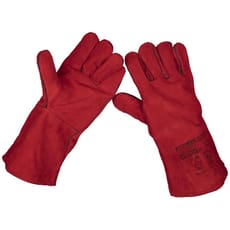
The Tooled-Up selection of Sealey welding gloves encompasses various styles tailored to different welding processes and intensity levels. Heavy-duty gauntlet welding gloves represent the workhorse option for MIG and arc welding, featuring thick split leather construction and extended cuffs that provide maximum protection during high-heat applications. These robust gloves are ideal for industrial fabrication, structural welding, and any situation where spatter and radiant heat are significant concerns.
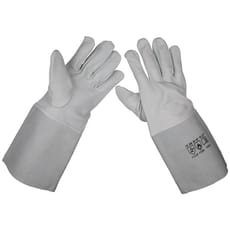
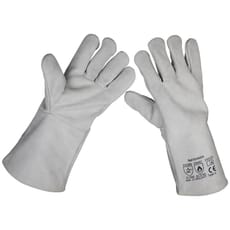
TIG welding gloves from Sealey offer a more refined design with thinner, more flexible leather that allows the precise finger movements required for tungsten inert gas welding. These gloves maintain adequate heat protection whilst prioritising dexterity, enabling welders to manipulate filler rods and control torch angles with accuracy. General-purpose welding gloves strike a balance between protection and flexibility, making them versatile choices for workshops that perform various welding processes throughout the day.
Safety and Compliance
Sealey welding gloves manufactured for the UK market comply with relevant British Standards (BS) and European Norm (EN) specifications governing protective gloves for welding and allied processes. The EN 12477 standard specifically addresses welding gloves, classifying them by type (A for reduced dexterity/higher protection, B for enhanced dexterity) and assessing performance against mechanical risks, contact heat, convective heat, radiant heat, and small molten metal splashes.
Proper selection of welding gloves depends on the specific welding process being performed. TIG welding typically requires Type B gloves for enhanced finger flexibility, whilst MIG and stick welding operations benefit from Type A gloves offering maximum thermal protection. Users should inspect gloves before each use for signs of damage, including holes, worn areas, or compromised stitching that could allow heat or sparks to reach the skin.
The Health and Safety Executive (HSE) emphasises that welding gloves should be selected based on risk assessment of the specific task, considering factors such as heat exposure levels, duration of welding, and presence of other hazards. Gloves should fit properly without being too tight or loose, as poor fit compromises both protection and dexterity. Welding gloves should never be used when wet, as moisture dramatically reduces their insulating properties and can cause steam burns.
Frequently Asked Questions
What's the difference between TIG and MIG welding gloves from Sealey?
Sealey TIG welding gloves use thinner, more flexible leather (typically 1.0-1.2mm) to allow the precise finger movements required for TIG work, whereas MIG welding gloves feature thicker, more robust leather (1.2-1.4mm or more) to protect against the higher heat and spatter levels associated with MIG processes. TIG gloves prioritise dexterity, whilst MIG gloves emphasise maximum thermal protection.
How long do Sealey welding gloves typically last?
The lifespan of Sealey welding gloves varies significantly based on usage intensity and welding process. Professional welders performing heavy fabrication work daily might replace gloves every 2-4 weeks, whilst occasional users could see several months of service. Key wear indicators include holes in the leather, worn-through areas on palms or fingertips, and failed stitching—any of which warrant immediate replacement.
Can I wash my Sealey welding gloves?
Leather welding gloves should not be machine washed or soaked, as this degrades the leather and removes natural oils that contribute to heat resistance. Light surface dirt can be brushed off when gloves are dry. If gloves become contaminated with oils or chemicals, they should be replaced rather than cleaned, as these substances can become flammable or compromise the leather's protective properties.
What size welding gloves should I choose?
Sealey welding gloves should fit snugly without being tight, allowing you to make a fist comfortably whilst preventing excess material that could catch on equipment. Measure your hand width across the knuckles (excluding the thumb) and refer to Sealey's sizing chart. When trying gloves, ensure you can grip a welding torch naturally and that fingertips reach the end of the glove fingers without bunching.
Are Sealey welding gloves suitable for oxy-acetylene work?
Yes, Sealey's general-purpose and heavy-duty welding gloves provide appropriate protection for oxy-acetylene cutting and welding operations. The leather construction effectively guards against the sparks, hot metal, and radiant heat associated with gas welding processes. Ensure gloves are free from oil or grease contamination, as these substances pose fire risks when exposed to the oxygen-enriched environment of gas welding equipment.