

Stanley Thermal Detectors
 Loading...
End of content
Error - No more pages to load
Stanley Thermal Detectors at Tooled-Up.com
Stanley has established itself as a trusted name in diagnostic and detection equipment, bringing the same legendary durability and precision to thermal detection technology that has made the brand a household name for over 175 years. Stanley Thermal Detectors represent a practical, reliable solution for professionals and DIY enthusiasts who need to identify hidden issues within walls, ceilings, and floors without invasive investigation methods.
The Stanley range of thermal detection equipment combines user-friendly design with professional-grade accuracy, making thermal imaging and temperature detection accessible to a wider audience. Whether identifying heat loss, locating moisture problems, finding electrical hotspots, or detecting hidden pipes and wiring, Stanley thermal detectors deliver dependable performance in demanding real-world conditions. Tooled-Up.com stocks Stanley's thermal detection solutions designed to meet the practical needs of tradespeople and serious DIYers who require professional results without the complexity of specialist-only equipment.
From compact infrared thermometers to more advanced thermal imaging devices, Stanley's approach focuses on delivering essential functionality in robust, ergonomic housings that can withstand the rigours of daily site work. Each device is engineered to provide clear, actionable information that helps users make informed decisions quickly and efficiently.
Why Choose Stanley Thermal Detectors?
Stanley's reputation for building tools that last translates directly into their thermal detection equipment. These devices are constructed to survive drops, dust, and the demanding environments typical of construction sites and renovation projects. The brand's commitment to practical innovation means their thermal detectors include features that professionals actually need, without unnecessary complexity that can slow down workflow.
One of Stanley's key strengths lies in their understanding of user requirements across different skill levels. Their thermal detectors offer intuitive interfaces that reduce the learning curve whilst still providing accurate, professional-grade measurements. This accessibility doesn't compromise performance—Stanley thermal detectors deliver the precision needed for diagnostic work, energy auditing, and preventative maintenance applications.
The value proposition of Stanley thermal detection equipment is particularly strong for tradespeople who need reliable diagnostic tools but don't require the specialist features of high-end thermal imaging systems. This makes Stanley an excellent choice for general contractors, maintenance professionals, and ambitious DIYers who want professional capabilities at sensible price points.
Who Uses Stanley Thermal Detectors?
- Electricians detecting overheating components, circuit breakers, and electrical connections before failures occur
- Plumbers and heating engineers identifying blockages, leaks, and inefficient heating distribution
- Building surveyors assessing thermal efficiency, moisture ingress, and insulation performance
- Property maintenance professionals conducting preventative inspections and fault-finding
- HVAC technicians diagnosing heating and cooling system performance issues
- Home inspectors providing comprehensive property assessments
- Renovation specialists investigating hidden problems before commencing major works
- Energy assessors identifying heat loss and thermal bridging in buildings
- DIY enthusiasts tackling home improvement projects with professional-grade diagnostic capabilities
Key Features of Stanley Thermal Detectors
Stanley thermal detectors incorporate several distinctive features that make them particularly suitable for practical trade applications. Ergonomic designs ensure comfortable single-handed operation during extended use, whilst robust construction protects sensitive electronics from the knocks and drops inevitable on busy job sites.
Clear display screens provide easily interpretable temperature readings and thermal images, even in challenging lighting conditions. Many Stanley thermal detection devices include adjustable emissivity settings to ensure accurate readings across different surface materials—essential when working with varied building materials from brick and plaster to metal and glass.
Temperature measurement ranges are calibrated for building diagnostics and electrical inspection work, covering the typical scenarios tradespeople encounter daily. Data storage capabilities allow users to document findings for client reports or future reference, whilst some models offer connectivity options for transferring information to smartphones or computers.
Battery management is designed around professional use patterns, with efficient power consumption extending operation time and reducing downtime. Stanley's attention to practical details includes features like integrated laser pointers for precise targeting and automatic shut-off functions to preserve battery life.
Popular Stanley Thermal Detectors
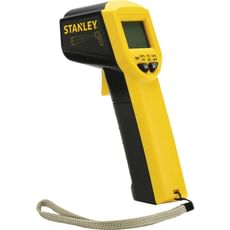
The Stanley thermal detector range at Tooled-Up encompasses several product types suited to different diagnostic requirements. Infrared thermometers provide quick, non-contact temperature measurements ideal for spot-checking electrical components, heating systems, and surface temperatures across building elements.
Thermal imaging devices offer visual heat maps that reveal temperature variations across larger areas, making them invaluable for identifying insulation gaps, moisture problems, and hidden structural issues. These tools excel at energy auditing and building diagnostics where understanding thermal patterns is essential.
Multi-function detection tools combine thermal sensing with other diagnostic capabilities, providing versatile solutions for professionals who need comprehensive scanning abilities in a single device. This integration reflects Stanley's understanding of how tradespeople work, reducing the number of separate tools needed on site.
Safety and Compliance
Stanley thermal detectors are designed to meet relevant UK and European safety standards for electronic diagnostic equipment. When using thermal detection devices, particularly around electrical installations, always follow HSE guidelines and ensure appropriate safety procedures are in place. Thermal detectors should never replace proper isolation procedures when working with 240V electrical systems—they are diagnostic tools to identify issues, not safety equipment for live working.
Users should familiarise themselves with the operating temperature ranges and environmental limitations of their specific Stanley thermal detector model. Whilst these devices are built to withstand site conditions, extreme temperatures, high humidity, or exposure to liquids beyond the stated IP rating can affect accuracy and longevity.
Frequently Asked Questions
What's the difference between an infrared thermometer and a thermal imaging camera?
Infrared thermometers measure the temperature of a single point where you aim the device, providing a specific numerical reading. Thermal imaging cameras create a visual heat map showing temperature variations across an entire area, making patterns and anomalies easier to identify. For spot-checking specific components, infrared thermometers are ideal; for surveying larger areas and identifying hidden problems, thermal imaging offers more comprehensive information.
How accurate are Stanley thermal detectors?
Stanley thermal detectors typically offer accuracy within ±1-2% of the reading or ±1-2°C, which is sufficient for most building diagnostics, electrical inspection, and HVAC applications. Accuracy depends on correct emissivity settings for different materials and proper technique. Always consult the specific model's specifications for precise accuracy figures relevant to your application.
Can thermal detectors see through walls?
Thermal detectors cannot see through walls—they measure surface temperatures. However, temperature variations on wall surfaces can indicate what's behind them: pipes carrying hot water, electrical cables under load, insulation gaps, or moisture problems all affect surface temperatures. Skilled interpretation of these thermal patterns allows professionals to infer what's occurring within building structures.
Do I need to calibrate my Stanley thermal detector?
Stanley thermal detectors are factory-calibrated and generally don't require user calibration. However, accuracy should be verified periodically using known temperature references. If your device appears to give inconsistent readings, contact Stanley's customer service. Regular cleaning of the lens or sensor window and proper storage will help maintain accuracy over time.
Are Stanley thermal detectors suitable for electrical inspection work?
Yes, Stanley thermal detectors are well-suited for electrical inspection applications including identifying overheating connections, unbalanced loads, and potential failure points in electrical systems. They're particularly valuable for preventative maintenance programmes. However, thermal detection should complement, not replace, proper electrical testing procedures and should never be used as the sole method for verifying isolation of 240V circuits.