

Stanley Bevel Edge Chisels
 Loading...
End of content
Error - No more pages to load
Stanley Bevel Edge Chisels at Tooled-Up.com
Stanley has been a trusted name in hand tools since 1843, and their bevel edge chisels exemplify the brand's commitment to precision engineering and durability. As one of the most recognisable names in professional tooling, Stanley has developed a comprehensive range of bevel edge chisels that cater to everyone from apprentice joiners to master craftsmen. These chisels combine traditional forging techniques with modern metallurgy to deliver tools that hold their edge longer and withstand the demands of daily site work.
The Stanley bevel edge chisel range available from Tooled-Up.com features the classic design elements that professionals have relied upon for generations. With hardened and tempered high-carbon steel blades, impact-resistant handles, and precisely ground bevels, these chisels are engineered for accurate paring, mortising, and general woodworking applications. Whether you're fitting architraves, cutting dovetails, or cleaning out housing joints, Stanley's bevel edge chisels deliver the control and consistency that quality joinery demands.
Stanley offers their bevel edge chisels in individual sizes and complete sets, providing flexibility for tradespeople building their toolkit or replacing worn tools. Common widths range from 6mm for intricate detail work up to 38mm for broader applications, with the most popular sizes being 12mm, 18mm, and 25mm for general carpentry and joinery tasks.
Why Choose Stanley Bevel Edge Chisels?
Stanley's reputation in the hand tool market is built on consistent quality and value for money. Their bevel edge chisels represent an excellent middle ground between budget tools that require constant sharpening and premium chisels with price tags that make site use impractical. Stanley understands the working tradesperson's needs – tools that perform reliably day after day without breaking the bank if one gets damaged on site.
The brand's approach to chisel manufacture focuses on practical durability. Stanley bevel edge chisels feature chrome vanadium steel blades that are hardened to maintain a sharp edge through repeated use whilst remaining soft enough to be easily resharpened. The bevel edges themselves are ground to allow access into tight corners and acute angles, making them versatile across various joinery applications. Stanley's handle designs have evolved over decades based on user feedback, resulting in ergonomic grips that reduce hand fatigue during extended use and provide excellent control for precision work.
Another significant advantage of choosing Stanley is widespread availability and consistency. Tradespeople know that Stanley tools can be found across the UK, making replacements easy to source, and the quality remains consistent across batches – an important consideration for professionals who rely on their tools daily.
Who Uses Stanley Bevel Edge Chisels?
- Joiners and Carpenters: The primary users, employing these chisels for everything from first fix carpentry to fine cabinet making
- Shopfitters: Professionals who need reliable chisels for cutting and fitting work in retail and commercial spaces
- Maintenance Teams: Building maintenance personnel who require versatile chisels for repair and renovation work
- Apprentices and Training Colleges: Those learning the trade appreciate Stanley's combination of quality and affordability
- DIY Enthusiasts: Home improvers who want professional-grade tools without premium pricing
- Furniture Makers: Craftspeople who need dependable chisels for joinery and detail work
- Heritage Restoration Specialists: Professionals working on listed buildings and traditional joinery projects
Key Features of Stanley Bevel Edge Chisels
Stanley bevel edge chisels incorporate several design features that enhance their functionality and longevity. The blades are manufactured from high-carbon chrome vanadium steel, heat-treated to achieve optimal hardness for edge retention whilst maintaining enough flexibility to resist chipping or cracking under mallet strikes. The bevelled edges are precision-ground to allow the chisel to access tight corners and undercut joints that square-edged chisels cannot reach.
Handle construction varies across Stanley's range, with options including impact-resistant polypropylene handles designed for heavy-duty use with mallets, and traditional wooden handles for those preferring classic aesthetics and feel. The handles feature strike caps that protect against mushrooming and splitting from repeated impacts, significantly extending tool life. Many Stanley models incorporate hanging holes for organised tool storage and easy identification on tool boards.
The blade geometry on Stanley bevel edge chisels is optimised for British joinery practices, with cutting angles that balance sharpness for clean cuts against durability for varied timber species. The tang-to-handle connection is engineered to transfer impact energy efficiently whilst minimising shock transmission to the user's hand.
Popular Stanley Bevel Edge Chisels
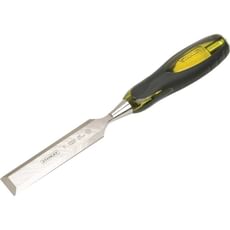
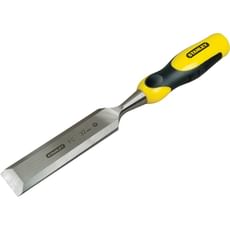
The Stanley Dynagrip bevel edge chisel range represents one of the brand's most popular offerings at Tooled-Up, featuring bi-material handles that combine durability with comfort. These chisels are particularly favoured by site carpenters who need tools that can withstand tough working conditions. The Dynagrip handle design provides excellent grip even when hands are dusty or wearing gloves, whilst the reinforced strike cap handles repeated mallet blows without damage.
Stanley's traditional wooden-handled bevel edge chisels remain popular with craftspeople who prefer the feel and balance of classic tool design. These chisels feature stained hardwood handles with brass ferrules, combining aesthetic appeal with functional excellence. They're particularly appreciated by furniture makers and fine woodworkers who value the tactile feedback that wooden handles provide during precision paring operations.
Set options are available across the Stanley range, typically comprising five or six chisels in the most commonly used widths. These sets offer excellent value compared to purchasing individual chisels and ensure consistency across the toolkit – important when moving between different chisel sizes during complex joinery work.
Safety and Compliance
When using Stanley bevel edge chisels, adherence to proper safety practices is essential. Always chisel away from your body and keep both hands behind the cutting edge. Secure workpieces properly using clamps or vices rather than attempting to hold timber whilst chiselling. Stanley recommends wearing appropriate personal protective equipment including safety glasses to protect against flying chips, and cut-resistant gloves where appropriate for the task.
Maintaining sharp edges is not only about performance – it's a safety issue. Blunt chisels require excessive force, increasing the likelihood of slips and loss of control. Regular honing and periodic regrinding will keep Stanley chisels performing safely and effectively. Store chisels with blade guards or in tool rolls to protect both the edges and users from accidental contact.
For professional use, ensure chisel usage complies with HSE guidance on hand tool operations. Never use chisels as pry bars, screwdrivers, or for applications they weren't designed for, as this can cause blade failure or handle breakage. When striking chisels with mallets, use appropriate wooden or rubber mallets rather than metal hammers, which can damage the strike cap and create dangerous mushrooming.
Frequently Asked Questions
What steel are Stanley bevel edge chisels made from?
Stanley bevel edge chisels are manufactured from high-carbon chrome vanadium steel, which is heat-treated and tempered to provide an optimal balance between edge retention and durability. This steel composition allows the chisels to maintain sharpness through extended use whilst remaining tough enough to resist chipping when working with hard timbers or encountering hidden nails.
Can Stanley bevel edge chisels be used with a mallet?
Yes, Stanley bevel edge chisels are designed to be struck with wooden or rubber mallets. Models with impact-resistant handles and reinforced strike caps are specifically engineered for regular mallet use. However, never strike chisels with metal hammers, as this can damage the handle and create dangerous mushrooming. For heavy mortising work, Stanley also offers firmer chisels with thicker blades and more robust construction.
How do I maintain and sharpen Stanley bevel edge chisels?
Regular maintenance involves honing the blade on a fine sharpening stone or diamond plate to maintain the cutting edge between uses. When the primary bevel becomes rounded or damaged, regrind at approximately 25 degrees using a bench grinder or coarse sharpening stone, then hone a secondary micro-bevel at 30 degrees. Keep blades lightly oiled when stored to prevent rust, and ensure handles remain clean and free from oil which can cause slipping during use.
What sizes of Stanley bevel edge chisels are available?
Stanley produces bevel edge chisels in a comprehensive range of widths from 6mm up to 38mm. The most commonly used sizes for general carpentry and joinery are 6mm, 12mm, 18mm, 25mm, and 32mm. These widths cover the majority of applications from fine detail work to broader housing and mortising tasks. Sets typically include five or six chisels in the most popular sizes, providing excellent coverage for professional and DIY applications.
Are Stanley bevel edge chisels suitable for hardwoods?
Yes, Stanley bevel edge chisels are well-suited to working both softwoods and hardwoods. The chrome vanadium steel blades maintain their edge well when cutting oak, ash, beech, and other dense timbers. For optimal performance in hardwoods, ensure the chisel is properly sharpened before use and work with controlled cuts rather than attempting to remove too much material in one pass, which can cause the edge to fail or the blade to deflect.