

Stanley Centre Punches
 Loading...
Stanley Centre Punches at Tooled-Up.com
Stanley has been a trusted name in hand tools for over 175 years, and their centre punches exemplify the brand's commitment to precision engineering and durability. Centre punches are essential marking tools for metalworking, engineering, and fabrication tasks, creating indentation points that guide drill bits and prevent them from wandering across metal surfaces. Stanley's reputation for producing reliable, professional-grade hand tools makes their centre punches a preferred choice for tradespeople who demand accuracy and longevity from their equipment.
The Stanley centre punch range available from Tooled-Up.com features the robust construction and ergonomic design that professionals expect from this established manufacturer. Built to withstand the repeated impact of hammer strikes, Stanley centre punches are manufactured from hardened and tempered steel to resist mushrooming and maintain their point integrity even after thousands of uses. Whether marking out drilling positions on sheet metal, fabricating structural steelwork, or carrying out precision engineering tasks, Stanley centre punches deliver the consistent performance that keeps projects on track.
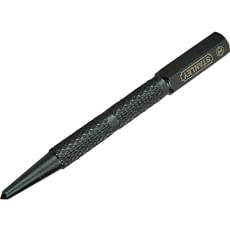
Stanley centre punches are designed with user comfort and safety in mind, featuring knurled grips that provide secure handling even in oily workshop conditions. The precisely ground points ensure clean, accurate marking without slipping, whilst the hardened striking heads are engineered to resist deformation. These design elements reflect Stanley's understanding of real-world workshop demands and their commitment to supporting tradespeople with tools that enhance both productivity and safety.
Why Choose Stanley Centre Punches?
Stanley's heritage in manufacturing professional hand tools translates directly into the quality of their centre punches. The brand's rigorous manufacturing standards ensure that every centre punch meets exacting tolerances for point geometry and hardness. This attention to detail means that Stanley centre punches create clean, precise indentations that provide reliable starting points for drilling operations, reducing the risk of drill bit wander and improving overall work quality.
Durability is a hallmark of Stanley tools, and their centre punches are no exception. The heat treatment processes applied to Stanley centre punches create a tool that balances hardness at the point and striking head with enough toughness in the body to resist shattering under impact. This engineering approach extends tool life significantly compared to cheaper alternatives, making Stanley centre punches a cost-effective investment for professional tradespeople who rely on their tools day after day.
Stanley's global presence and reputation mean that their tools are backed by extensive quality assurance and customer support. When you choose Stanley centre punches from Tooled-Up, you're selecting tools from a manufacturer with a proven track record of standing behind their products. This reliability gives professionals confidence that their tools will perform consistently across demanding applications, from heavy fabrication shops to precision engineering workshops.
Who Uses Stanley Centre Punches?
Stanley centre punches are essential tools for a wide range of trades and industries:
- Fabricators and Welders: Marking drilling and fixing points on structural steel and sheet metal
- Mechanical Engineers: Precision marking for machining operations and component assembly
- Automotive Technicians: Creating starting points for drilling out seized fasteners and marking bodywork
- Maintenance Engineers: Marking positions for repairs and modifications across industrial facilities
- Metalworkers and Blacksmiths: Creating alignment marks and drilling guides on forged and fabricated pieces
- Sheet Metal Workers: Marking out patterns and fixing points on HVAC ductwork and roofing materials
- Agricultural Engineers: Field repairs and fabrication work on farm machinery and equipment
- DIY Enthusiasts: Home workshop projects involving metalworking and restoration tasks
Key Features of Stanley Centre Punches
Stanley centre punches incorporate several design features that enhance their performance and longevity. The precisely ground point geometry is engineered to create clean indentations at the optimal angle for guiding standard drill bits. This attention to point design ensures that marks are clearly visible and accurately positioned, improving drilling accuracy and reducing material waste.
The hardened steel construction throughout Stanley centre punches provides exceptional resistance to wear and deformation. The striking head is specifically treated to resist mushrooming – the spreading of the metal that occurs with repeated hammer impacts. This feature not only extends tool life but also improves safety by preventing sharp metal edges from forming around the striking surface.
Ergonomic consideration is evident in the knurled body design that provides secure grip and control. The knurling pattern is deep enough to maintain grip in challenging workshop conditions whilst remaining comfortable during extended use. The balanced weight distribution of Stanley centre punches allows for controlled, accurate strikes that place marks exactly where needed without requiring excessive force.
Popular Stanley Centre Punches
Stanley produces centre punches in various sizes to suit different applications and material thicknesses. Standard length centre punches, typically around 100-125mm, are versatile tools suitable for general workshop use across sheet metal and structural steel applications. These provide the ideal balance between portability and striking surface area for accurate marking.
Automatic centre punches represent another important category within Stanley's range, offering spring-loaded operation that eliminates the need for a separate hammer. These tools are particularly valuable for repetitive marking tasks and situations where using a hammer is impractical or where one-handed operation is advantageous.
Heavy-duty Stanley centre punches are designed for demanding fabrication work where deeper indentations are required in thick steel sections. These robust tools feature larger diameter bodies and extended length for improved striking control when working with heavier hammers on substantial metalwork projects.
Safety and Compliance
Using Stanley centre punches safely requires adherence to basic workshop practices and awareness of potential hazards. Always wear appropriate personal protective equipment, including safety glasses or goggles to protect against metal fragments. The HSE recommends eye protection whenever striking tools are used, as fragments can be ejected at high velocity.
Regular inspection of centre punches is essential for safe operation. Check the striking head for signs of mushrooming or cracking before each use, and remove any sharp edges with a file or grinder. A damaged striking head can fragment under impact, creating a serious injury risk. Similarly, examine the point for excessive wear or damage that could affect marking accuracy or cause the tool to slip during use.
Ensure that work pieces are properly secured before marking to prevent movement that could result in inaccurate marks or tool slippage. Use appropriate hammer weight for the size of centre punch – excessive force can damage the tool and increase the risk of losing control. Store Stanley centre punches in a dry environment to prevent corrosion, and keep them in a tool roll or designated storage to protect points from damage and prevent injury when reaching into toolboxes.
Frequently Asked Questions
What's the difference between Stanley centre punches and dot punches?
Stanley centre punches feature a point angle of approximately 90 degrees, designed specifically to create indentations that guide drill bits. Dot punches have a sharper point angle (typically 60 degrees) and are used for creating layout marks and witness marks rather than drilling guides. Centre punches create a deeper, wider indentation that provides better drill bit location.
How do I maintain my Stanley centre punch?
Keep the tool clean and lightly oiled to prevent rust. Regularly inspect the striking head for mushrooming and file away any deformed edges. If the point becomes blunt or damaged, it can be reground on a bench grinder, maintaining the original point angle. Store in a dry location and avoid dropping on hard surfaces which can damage the point or cause the tool body to crack.
Can Stanley centre punches be used on hardened steel?
Whilst Stanley centre punches are manufactured from hardened and tempered steel, attempting to mark very hard materials may damage the point. For hardened steel, consider using a carbide-tipped centre punch or annealing the work area first. Stanley centre punches perform optimally on mild steel, stainless steel, aluminium, brass, and similar materials commonly encountered in fabrication and engineering work.
What size hammer should I use with a Stanley centre punch?
For standard centre punches, a ball pein hammer weighing 225-340g (8-12oz) provides sufficient striking force for most applications without risking damage to the tool. Heavier centre punches used for thick steel sections may require hammers up to 680g (24oz). The key is using controlled strikes rather than excessive force – a properly sharpened centre punch requires only moderate impact to create an effective indentation.
Are Stanley automatic centre punches as accurate as traditional centre punches?
Stanley automatic centre punches offer excellent accuracy for most applications and provide the advantage of one-handed operation. They're particularly effective for repetitive marking tasks and working in confined spaces. Traditional hammer-struck centre punches may offer slightly better control for very precise engineering work or when working with particularly thick materials, but for general fabrication and metalworking, Stanley automatic centre punches deliver professional results with enhanced convenience.