

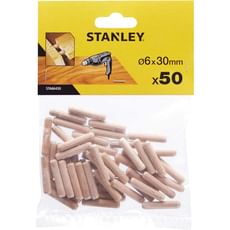
Stanley Dowel Pins
 Loading...
End of content
Error - No more pages to load
Stanley Dowel Pins at Tooled-Up.com
Stanley has been a trusted name in precision engineering and fastening solutions for over a century, and their dowel pins continue this tradition of excellence. These essential components are manufactured to exacting standards, ensuring reliable performance in woodworking, metalworking, and general assembly applications. Whether you're a professional tradesperson requiring consistent accuracy or a serious DIY enthusiast working on precision projects, Stanley dowel pins deliver the quality and reliability that the brand is renowned for.
Dowel pins serve as critical alignment and fastening components across numerous applications, from furniture assembly and cabinet making to jig construction and mechanical assemblies. Stanley's approach to manufacturing these seemingly simple components involves strict quality control measures and materials selection, resulting in dowel pins that offer superior dimensional accuracy and durability. The range available from Tooled-Up.com encompasses various sizes and specifications to suit different project requirements and materials.
Stanley's commitment to manufacturing precision components means their dowel pins maintain tight tolerances, ensuring proper fit and function in demanding applications. This attention to detail prevents common issues such as loose joints, misalignment, and premature failure that can occur with inferior quality dowel pins.
Why Choose Stanley Dowel Pins?
Stanley's reputation for quality extends across their entire product portfolio, and their dowel pins are no exception. Manufactured from high-grade materials, these pins resist bending, corrosion, and wear even under demanding conditions. The brand's rigorous quality assurance processes mean that each dowel pin meets strict dimensional specifications, which is essential when working on projects requiring precise alignment and secure assembly.
The longevity of Stanley products represents excellent value for money. Professional tradespeople recognise that investing in quality components like Stanley dowel pins reduces callbacks, ensures project success, and builds their reputation for quality workmanship. For serious DIY enthusiasts, using Stanley dowel pins means achieving professional-grade results with confidence that joints will remain secure and aligned over time.
Stanley's extensive experience in fastening solutions means their dowel pins benefit from decades of research, development, and real-world testing. The brand understands the challenges faced by woodworkers, metalworkers, and assembly professionals, designing their products to address these specific needs whilst maintaining competitive pricing.
Who Uses Stanley Dowel Pins?
- Joiners and Carpenters: For precision furniture construction, cabinet making, and bespoke joinery work requiring accurate alignment
- Shopfitters: Installing commercial fixtures and fittings where precise assembly is essential
- Mechanical Engineers: Creating jigs, fixtures, and assemblies requiring exact positioning and alignment
- Metalworkers and Fabricators: Using dowel pins for locating components and creating assembly fixtures
- Boat Builders: Marine applications where corrosion resistance and dimensional stability are crucial
- Maintenance Engineers: Repair and refurbishment work requiring reliable replacement components
- DIY Enthusiasts: Serious home improvers and hobbyists working on woodworking projects and furniture restoration
- Educational Workshops: Training facilities teaching woodworking, metalworking, and engineering skills
Key Features of Stanley Dowel Pins
Precision Manufacturing: Stanley dowel pins are manufactured to tight tolerances, ensuring consistent diameter and length measurements across each batch. This precision guarantees proper fit in pre-drilled holes and maintains alignment accuracy throughout the assembly process.
Material Quality: Constructed from high-grade steel or appropriate alloys, Stanley dowel pins offer excellent strength characteristics and resistance to deformation. The material selection ensures long-term reliability even in demanding applications where mechanical stress is a factor.
Surface Finish: The carefully controlled surface finish on Stanley dowel pins facilitates smooth insertion whilst providing sufficient grip to maintain position within the assembly. This balance prevents both overly tight fits that can split materials and loose fits that compromise alignment.
Dimensional Consistency: Each Stanley dowel pin maintains consistent dimensions along its entire length, preventing tapered fits or binding issues during installation. This consistency is particularly important when working with hardwoods or metal components where tolerance is minimal.
Corrosion Resistance: Appropriate surface treatments and material selection provide protection against moisture and environmental factors, extending service life and maintaining appearance in finished assemblies.
Popular Stanley Dowel Pins
The Stanley dowel pin range at Tooled-Up includes various sizes to accommodate different applications and material thicknesses. Standard metric sizes are available to suit common drilling equipment and industry-standard specifications used throughout UK workshops and manufacturing facilities.
Standard Length Dowel Pins: Ideal for general woodworking applications, furniture assembly, and cabinet construction where traditional joint configurations are employed. These represent the most commonly specified dimensions for everyday joinery work.
Extended Length Variants: For applications requiring deeper penetration or alignment through thicker materials, extended length dowel pins provide additional engagement whilst maintaining the precision alignment Stanley products are known for.
Multiple Diameter Options: From smaller diameter pins suitable for delicate work and thin materials through to larger diameters for heavy-duty applications and structural assemblies, the range covers diverse professional requirements.
Safety and Compliance
When working with dowel pins, proper drilling equipment and techniques are essential for achieving accurate results safely. Always use appropriate safety equipment including eye protection when drilling holes for dowel pin installation. Ensure drill bits are sharp and appropriate for the material being worked to prevent splitting, splintering, or material damage.
Stanley dowel pins should be stored in dry conditions to maintain their surface finish and dimensional integrity. When installing dowel pins, ensure holes are drilled perpendicular to the work surface and to the correct depth to accommodate the pin length being used. Misaligned holes can result in assembly difficulties and compromised joint strength.
For professional workshop environments, adherence to HSE guidelines regarding hand tools, drilling equipment, and workshop practices ensures safe working conditions. Proper lighting and secure workpiece clamping are essential when drilling precision holes for dowel pin installation.
Frequently Asked Questions
What materials are Stanley dowel pins suitable for?
Stanley dowel pins work effectively in both hardwoods and softwoods, as well as metal assemblies where appropriate hole preparation has been completed. They're ideal for furniture construction, cabinetry, joinery work, and mechanical assemblies requiring precise alignment. The key to success is ensuring holes are drilled to the correct diameter and depth for the specific dowel pin being used.
How do I determine the correct dowel pin size for my project?
Dowel pin diameter should generally be between one-third and one-half the thickness of the material being joined. Length should provide adequate penetration into both components whilst avoiding bottoming out in blind holes. For load-bearing applications, consult engineering references or joinery guidelines to ensure adequate strength for the intended use.
Can Stanley dowel pins be reused if I need to disassemble a joint?
Whilst Stanley dowel pins are manufactured to high standards, they're generally considered permanent fastening components. Removal can damage both the pin and surrounding material, particularly in wood applications where adhesive is typically used. For assemblies requiring future disassembly, alternative fastening methods may be more appropriate.
Do I need to use adhesive with Stanley dowel pins?
In woodworking applications, adhesive is typically recommended to create strong, permanent joints. The dowel pin provides alignment whilst the adhesive creates the mechanical bond. For metal assemblies or jig applications where positioning rather than bonding is required, dowel pins may be used without adhesive, relying on an interference fit for retention.
What's the difference between dowel pins and dowel rods?
Dowel pins are precision-manufactured components with controlled dimensions and typically feature chamfered ends for easy installation. Dowel rods are continuous lengths that require cutting to size and may have less stringent dimensional tolerances. Stanley dowel pins offer the convenience of pre-cut lengths with precision sizing, eliminating the preparation work required when using dowel rod material.