

Stanley Files
 Loading...
End of content
Error - No more pages to load
Stanley Files at Tooled-Up.com
Stanley has been synonymous with precision hand tools since 1843, and their range of files exemplifies the brand's unwavering commitment to quality craftsmanship. As one of the most trusted names in professional hand tools, Stanley files are engineered to deliver exceptional performance across metalworking, woodworking, and general fabrication tasks. The Stanley files collection available from Tooled-Up.com represents decades of refinement in cutting technology, ergonomic design, and durability that professional tradespeople and serious DIY enthusiasts have come to rely upon.
Whether you're a fabricator requiring precision metal shaping, a joiner needing fine adjustments to timber work, or a maintenance engineer tackling deburring and finishing tasks, Stanley's comprehensive file range offers the right tool for every application. Each Stanley file is manufactured using hardened, high-carbon steel with precisely cut teeth patterns designed to remove material efficiently whilst maintaining control and accuracy. From flat and half-round profiles to needle files for intricate work, the Stanley selection at Tooled-Up caters to the full spectrum of filing requirements across multiple trades and industries.
Stanley's reputation for consistent quality means their files maintain their cutting edge longer than many competitors, reducing replacement frequency and delivering genuine value for money. The ergonomically designed handles provide comfortable grip during extended use, reducing hand fatigue on demanding projects. This combination of cutting performance, durability, and user comfort has established Stanley files as essential toolkit components for professionals who demand tools that won't let them down on the job.
Why Choose Stanley Files?
Stanley's heritage in precision toolmaking translates directly into file quality that professionals trust. Each file undergoes rigorous quality control processes to ensure consistent tooth patterns, proper hardening, and accurate profiles. The brand's commitment to manufacturing excellence means every Stanley file delivers predictable, reliable performance that tradespeople can depend upon day after day.
The hardened steel construction of Stanley files provides exceptional wear resistance, maintaining their cutting efficiency through thousands of strokes. Unlike cheaper alternatives that quickly become clogged or lose their bite, Stanley files retain their sharpness throughout their working life, making them more economical in the long term. The precision-cut teeth are engineered to specific angles and spacings optimised for different materials, ensuring efficient material removal without excessive effort or loss of control.
Stanley's reputation spans generations of tradespeople who have relied on their tools to earn their living. This legacy of trust isn't built on marketing alone—it's earned through consistent performance in real-world applications. When you choose Stanley files, you're investing in tools backed by over 180 years of manufacturing expertise and a brand that understands the demands placed on professional hand tools in challenging working environments.
Who Uses Stanley Files?
Stanley files are the preferred choice across numerous trades and industries:
- Metal Fabricators and Welders – for deburring, shaping, and finishing metalwork to precise tolerances
- Engineers and Fitters – for adjusting components, removing casting marks, and general metal finishing
- Joiners and Carpenters – for fine adjustments to timber joints and smoothing wooden surfaces
- Automotive Technicians – for removing sharp edges, filing bodywork repairs, and component modification
- Maintenance Engineers – for general repair work, removing corrosion, and component preparation
- Model Makers and Hobbyists – for precision shaping and detailing across various materials
- Toolmakers and Machinists – for final adjustments and achieving exact dimensions
- Plumbers and Pipefitters – for deburring cut pipes and preparing metal surfaces
- Electricians – for adjusting metal enclosures and preparing cable entries
Key Features of Stanley Files
Stanley files incorporate several distinctive features that distinguish them from standard alternatives. The high-carbon steel construction is precision-hardened to achieve optimal hardness throughout the file body, ensuring durability without brittleness. This careful heat treatment process creates files that resist wear whilst maintaining the flexibility needed to prevent breakage under demanding use.
The tooth patterns on Stanley files are engineered for specific applications, with bastard, second cut, and smooth grades available to suit different material removal rates and finish requirements. Each tooth is precisely formed to create consistent cutting action across the file's entire working surface, eliminating dead spots and ensuring uniform performance from tang to tip.
Handle design receives particular attention in Stanley's file range, with ergonomically shaped grips that provide comfortable control during extended filing sessions. The secure handle attachment prevents dangerous slippage, whilst the balanced weight distribution reduces wrist strain during repetitive filing operations. Many Stanley files feature hang-hole provisions for convenient storage and organisation in workshops and on-site tool kits.
The range encompasses various profiles including flat, hand, half-round, round, square, three-square, and needle files, ensuring the right tool is available for every filing challenge. Each profile is manufactured to consistent dimensions, allowing tradespeople to select files with confidence that they'll fit the application perfectly.
Popular Stanley Files
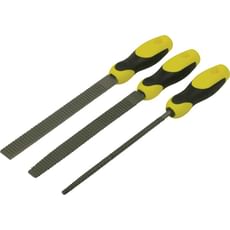
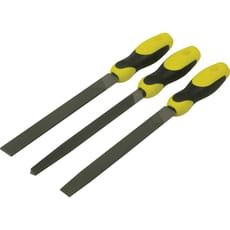
The Stanley files range at Tooled-Up includes several popular categories suited to different applications. Engineer's files represent the core of the range, offering flat, hand, and half-round profiles in various lengths and cut grades for general metalworking and fabrication tasks. These versatile files handle everything from heavy material removal to fine finishing work.
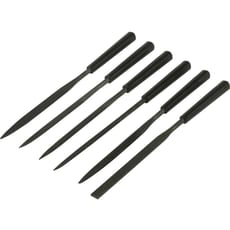
Needle files provide precision for intricate work, featuring smaller profiles ideal for jewellery making, model building, and detailed metal finishing. These compact files deliver control and access in confined spaces where standard files cannot reach. Stanley's needle file sets typically include multiple profiles, providing comprehensive coverage for detailed work.
Specialist files within the Stanley range include chainsaw sharpening files designed specifically for maintaining cutting chains, and riffler files with curved profiles for shaping and finishing complex contours. Each specialist file is engineered with tooth patterns and profiles optimised for its intended application, ensuring efficient performance in specific tasks.
Safety and Compliance
Safe file usage is essential to prevent workplace injuries. Always ensure files are fitted with secure handles before use—never use a bare tang file as this presents a serious puncture hazard. Inspect files regularly for damage, particularly checking for cracks, chips, or loose handles that could cause injury during use. Worn files with clogged or damaged teeth should be replaced as they require excessive pressure, increasing the risk of slippage and injury.
Files should only be used in the forward cutting stroke—dragging files backwards can damage teeth and cause injury if the file catches unexpectedly. Secure workpieces properly in vices or clamps before filing to prevent movement that could cause loss of control. Always file away from your body and keep free hands clear of the file's path to avoid injury should the tool slip.
Store files separately or use protective covers to prevent tooth damage from contact with other tools. Damaged files not only perform poorly but can also create safety hazards through unpredictable behaviour. Under the Health and Safety at Work Act 1974, employers must ensure hand tools are properly maintained and suitable for their intended use, which includes regular inspection and replacement of worn files.
Clean files regularly using a file card or wire brush to remove metal particles that accumulate between teeth. Clogged files require excessive force and provide poor control, increasing accident risk. When filing brittle materials, wear appropriate eye protection to guard against flying particles, in accordance with HSE guidance on personal protective equipment.
Frequently Asked Questions
What's the difference between bastard, second cut, and smooth files?
These terms refer to the coarseness of the file's teeth. Bastard cut files have coarse teeth for rapid material removal and rough shaping. Second cut files feature medium teeth for general-purpose work balancing material removal with surface finish. Smooth cut files have fine teeth for finishing work and achieving smooth surfaces. Stanley manufactures each grade to consistent standards, allowing you to select the appropriate cut for your specific task requirements.
How long should Stanley files last?
With proper use and maintenance, Stanley files provide years of reliable service. Lifespan depends on usage frequency, materials filed, and care taken. Filing abrasive materials or using excessive pressure accelerates wear. Regular cleaning to prevent tooth clogging, proper storage to avoid damage, and using files only for their intended purpose maximises their working life. When files no longer cut efficiently despite cleaning, it's time for replacement.
Can Stanley files be resharpened?
File teeth cannot be practically resharpened once worn. The precision tooth geometry and hardening process that gives Stanley files their cutting performance cannot be replicated through resharpening. When a file no longer cuts efficiently, replacement is the only viable option. However, proper maintenance significantly extends file life before replacement becomes necessary.
Which Stanley file profile should I choose for my application?
Profile selection depends on your workpiece shape and filing task. Flat files suit flat surfaces and edges. Hand files (one safe edge) work well for filing up to shoulders. Half-round files handle both flat and curved surfaces. Round files shape holes and concave curves. Square files enlarge square holes and slots. Three-square files reach acute angles. For detailed work in tight spaces, needle files in various profiles provide precision control.
Do Stanley files work on hardened steel?
Standard Stanley files are designed for materials softer than their hardened teeth, including mild steel, aluminium, brass, copper, and wood. They will not effectively cut hardened steel, which would damage the file teeth. For hardened materials, specialised grinding or machining methods are required. Always match file hardness to the material being worked to ensure effective cutting and prevent tool damage.