

Stanley Measuring Wheels
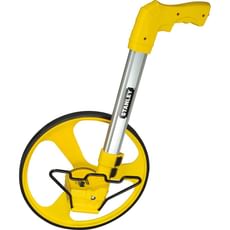
 Loading...
End of content
Error - No more pages to load
Stanley Measuring Wheels at Tooled-Up.com
Stanley has been a trusted name in precision measurement tools for over 180 years, and their measuring wheels exemplify the brand's commitment to accuracy, durability, and professional-grade performance. When it comes to measuring long distances on construction sites, landscaping projects, or surveying work, Stanley measuring wheels deliver the reliability that tradespeople and professionals demand. The comprehensive Stanley selection at Tooled-Up.com includes robust measuring wheels designed to withstand the rigours of daily site work whilst maintaining exceptional accuracy across a variety of surfaces and conditions.
Stanley measuring wheels are engineered with the professional user in mind, featuring durable construction that can handle rough terrain, debris-laden surfaces, and the demanding environments typical of construction and landscaping sites. From compact folding designs perfect for transport between jobs to heavy-duty models capable of measuring thousands of metres with consistent precision, Stanley's range addresses the diverse needs of professionals who require dependable distance measurement tools. Each measuring wheel incorporates Stanley's expertise in creating tools that balance precision with practical, real-world usability.
The Stanley measuring wheels available from Tooled-Up combine user-friendly operation with professional-grade accuracy. Many models feature easy-reset mechanisms, clear digital or analogue displays, and ergonomic handles designed to reduce fatigue during extended measuring sessions. Whether you're calculating materials for fencing, planning drainage systems, or mapping out site boundaries, Stanley's measuring wheels provide the accuracy and durability required for professional applications.
Why Choose Stanley Measuring Wheels?
Stanley's reputation for quality and innovation in hand tools extends seamlessly into their measuring wheel range. The brand's commitment to precision engineering means every measuring wheel undergoes rigorous testing to ensure it delivers consistent, accurate readings across various terrains and conditions. Stanley measuring wheels are built to last, with reinforced frames, puncture-resistant wheels, and weather-resistant components that maintain their performance even after years of professional use.
The accuracy of Stanley measuring wheels is maintained through precision-calibrated mechanisms that account for wheel circumference and surface variations. Unlike cheaper alternatives that may lose accuracy over time, Stanley's quality construction ensures measurements remain reliable job after job. The brand's focus on user experience means their measuring wheels feature thoughtful design elements such as comfortable grips, easy-read displays, and simple reset functions that streamline workflow on busy sites.
Stanley also offers excellent value for professional users. Whilst their measuring wheels represent a quality investment, they deliver superior longevity compared to budget alternatives that may require frequent replacement. This makes Stanley measuring wheels a cost-effective choice for tradespeople and contractors who depend on their tools daily. The brand's widespread availability and strong after-sales support further enhance the value proposition for professionals choosing Stanley for their measurement needs.
Who Uses Stanley Measuring Wheels?
Stanley measuring wheels are the preferred choice for a diverse range of professionals and trades, including:
- Surveyors and land agents requiring accurate distance measurements for property boundaries and site assessments
- Groundworkers and civil engineers calculating excavation areas, drainage runs, and site dimensions
- Landscapers and garden designers planning layout dimensions, calculating turf areas, and measuring pathway lengths
- Fencing contractors determining material quantities and post spacing across long distances
- Road marking and surfacing contractors measuring carriageway lengths and area calculations
- Utility workers mapping cable runs, pipe installations, and service corridors
- Site managers and quantity surveyors verifying dimensions for project planning and material estimation
- Sports ground maintenance teams marking out pitches and measuring field dimensions
- Facilities managers conducting site audits and space planning assessments
- DIY enthusiasts tackling large-scale projects requiring accurate long-distance measurements
Key Features of Stanley Measuring Wheels
Stanley measuring wheels incorporate numerous features that distinguish them from competitor offerings. The robust wheel construction typically features durable rubber or polymer materials that resist wear whilst providing excellent traction across grass, tarmac, gravel, and uneven surfaces. Many Stanley models include telescopic or folding handles that enable compact storage and easy transportation between sites, whilst maintaining stability and comfort during use.
The measurement mechanisms in Stanley measuring wheels are designed for both accuracy and ease of use. Clear, easy-read displays—whether analogue or digital—ensure measurements can be recorded quickly and accurately, even in challenging lighting conditions. Quick-reset functions allow users to zero the counter efficiently between measurements, streamlining workflow on projects requiring multiple distance calculations.
Ergonomic considerations feature prominently in Stanley's design philosophy. Comfortable grips reduce hand fatigue during extended measuring sessions, whilst balanced weight distribution ensures the wheel tracks smoothly without requiring excessive downward pressure. Many Stanley measuring wheels also include kickstands for convenient positioning when recording measurements, and some models feature protective storage bags to safeguard the tool during transport and storage.
Weather resistance is another hallmark of Stanley measuring wheels, with many models featuring protective coatings and sealed mechanisms that prevent moisture and dust ingress. This ensures reliable operation across all seasons and in the varied weather conditions typical of UK construction sites. The robust frame construction provides excellent stability whilst remaining lightweight enough for single-person operation throughout the working day.
Popular Stanley Measuring Wheels
Stanley's measuring wheel range encompasses models suited to different professional requirements and budgets. The Stanley mechanical measuring wheels remain popular for their simplicity, reliability, and independence from batteries. These traditional analogue models feature robust construction with easy-reset mechanical counters that display measurements in both metric and imperial units, making them versatile for various applications.
For professionals seeking enhanced functionality, Stanley's telescopic handle measuring wheels offer improved portability without compromising stability or accuracy. The adjustable handle allows users to set the optimal operating height for comfort during extended use, whilst the telescopic design reduces the tool's packed length for convenient vehicle storage.
Stanley folding measuring wheels represent the pinnacle of portability within the range. These compact designs fold into a remarkably small footprint, ideal for tradespeople with limited vehicle storage space or those who frequently work across multiple sites. Despite their compact design, these models maintain the accuracy and durability expected from the Stanley brand.
Heavy-duty Stanley measuring wheels cater to professionals working in particularly demanding environments. These robust models feature reinforced frames, larger diameter wheels for improved stability on rough terrain, and enhanced weather sealing to withstand the harshest site conditions. They're particularly popular with groundworkers, civil engineers, and contractors working on large-scale infrastructure projects.
Safety and Compliance
Whilst measuring wheels are relatively simple tools, proper usage ensures both accurate measurements and user safety. Stanley measuring wheels should be inspected before use to ensure the wheel rotates freely and the measurement mechanism functions correctly. Any debris lodged in the wheel should be removed, as this can affect measurement accuracy and potentially cause the wheel to jam during use.
When using measuring wheels on active construction sites or near roadways, users should remain aware of their surroundings and ensure they're visible to vehicle operators and plant machinery. High-visibility clothing compliant with EN ISO 20471 standards should be worn when working in environments with moving vehicles. The HSE recommends conducting risk assessments before undertaking measurement activities in potentially hazardous areas.
Stanley measuring wheels should be stored in a dry environment when not in use to prevent corrosion and maintain the accuracy of mechanical components. Regular cleaning removes dirt and debris that could affect wheel rotation or measurement precision. For digital models, batteries should be removed if the tool will not be used for extended periods, preventing potential damage from battery leakage.
Users should be aware that measuring wheel accuracy can be affected by surface conditions, wheel pressure, and operator technique. For critical measurements requiring certified accuracy, professional surveying equipment may be more appropriate. However, for the vast majority of trade applications, Stanley measuring wheels provide more than adequate precision when used correctly according to the manufacturer's guidelines.
Frequently Asked Questions
How accurate are Stanley measuring wheels?
Stanley measuring wheels typically deliver accuracy within 99.5% when used correctly on suitable surfaces. Accuracy depends on factors including surface type, wheel pressure, and maintaining consistent contact with the ground. For optimal results, ensure the wheel rotates freely without slipping, and maintain steady forward motion without excessive side-to-side movement. Stanley's precision manufacturing ensures their measuring wheels maintain this accuracy even after extensive professional use.
Can Stanley measuring wheels be used on all surfaces?
Stanley measuring wheels perform reliably across most common surfaces including tarmac, concrete, grass, gravel, and compacted soil. However, extremely soft ground, deep gravel, or surfaces with significant obstacles may affect accuracy. For best results on varied terrain, choose a Stanley model with a larger diameter wheel, as these maintain better contact and tracking across uneven surfaces. The robust construction of Stanley measuring wheels ensures they withstand the wear associated with rough surface use.
Do Stanley measuring wheels require calibration?
Stanley measuring wheels are calibrated during manufacture and generally maintain their accuracy throughout their working life without requiring recalibration. However, you should periodically verify accuracy by measuring a known distance, such as a marked 10-metre or 100-metre baseline. If measurements deviate significantly, check for wheel wear, debris accumulation, or damage to the measurement mechanism. Stanley's quality construction means their measuring wheels rarely lose accuracy when properly maintained.
What's the difference between mechanical and digital Stanley measuring wheels?
Mechanical Stanley measuring wheels feature analogue counters that display measurements through rotating number wheels, offering simplicity, reliability, and independence from batteries. Digital models provide electronic displays that may be easier to read in various lighting conditions and often include additional functions such as memory storage or unit conversion. Both types deliver excellent accuracy, so the choice depends on personal preference and specific application requirements. Tooled-Up stocks both varieties to suit different professional needs.
How should I maintain my Stanley measuring wheel?
Regular maintenance extends the life and accuracy of Stanley measuring wheels. After use, remove any debris from the wheel and wipe down the frame to prevent dirt accumulation. Check that the wheel rotates freely and the reset mechanism operates smoothly. Store the tool in a dry location, preferably in a protective bag if supplied. For telescopic or folding models, ensure locking mechanisms are clean and functional. Periodically verify accuracy against a known distance, and inspect the wheel for wear. With proper care, Stanley measuring wheels provide many years of reliable service.