

Stanley Pin Punches
 Loading...
End of content
Error - No more pages to load
Stanley Pin Punches at Tooled-Up.com
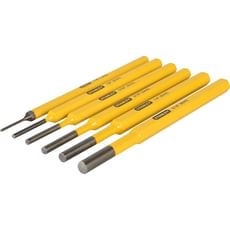
Stanley has established itself as a trusted name in precision hand tools, and their pin punches exemplify the quality and reliability that professionals have come to expect from this iconic brand. Pin punches are essential tools for driving out pins, rivets, and fasteners once they've been loosened with a starter punch, and Stanley's range delivers the precision and durability needed for both industrial applications and detailed workshop tasks. With their characteristic parallel shanks designed to follow through holes without enlarging them, Stanley pin punches are engineered to maintain accuracy even after extended use.
The Stanley pin punch collection available from Tooled-Up features hardened and tempered steel construction that resists mushrooming and maintains tip integrity throughout demanding applications. Each punch is precision-ground to ensure consistent diameter throughout its length, allowing for accurate alignment and minimal damage to surrounding materials. Stanley's attention to detail extends to the heat treatment processes used in manufacturing, which optimise the balance between hardness and toughness to prevent shattering or premature wear.
Whether you're working in automotive repair, mechanical assembly, general engineering, or precision metalwork, Tooled-Up.com stocks Stanley pin punches in various sizes to suit different pin diameters and applications. The range typically includes individual punches in common sizes from 1.5mm through to 10mm or more, as well as convenient sets that provide comprehensive coverage for workshop or site work requirements.
Why Choose Stanley Pin Punches?
Stanley's reputation spans over 175 years of tool manufacturing excellence, and this heritage is evident in every pin punch they produce. The brand's commitment to quality control ensures that each tool meets stringent standards for dimensional accuracy and material consistency. Stanley pin punches feature precisely machined tips that maintain their diameter specifications, crucial for working with tight-tolerance applications where even minor variations could cause binding or damage.
The heat treatment processes employed by Stanley create an optimal hardness level that resists deformation when struck with hammers, whilst maintaining sufficient toughness to absorb impact without fracturing. This balance is particularly important for pin punches, which must withstand repeated hammering whilst maintaining their straightness and tip integrity. Stanley's surface finishing processes also help prevent corrosion, ensuring longevity even in demanding workshop environments.
Value for money has always been central to Stanley's philosophy. Their pin punches deliver professional-grade performance at accessible price points, making them attractive to both established tradespeople who require reliable tools for daily use and DIY enthusiasts who demand quality without excessive cost. The durability of Stanley pin punches means they often outlast cheaper alternatives, providing better long-term value through extended service life.
Who Uses Stanley Pin Punches?
Stanley pin punches are chosen by a diverse range of professionals and skilled workers, including:
- Motor mechanics and automotive technicians who regularly need to remove pins from brake assemblies, suspension components, and engine parts
- General engineers and fitters working with machinery assembly and maintenance where precise pin removal is essential
- Agricultural and plant engineers maintaining heavy equipment and farm machinery
- Fabricators and metalworkers involved in structural steel work and manufacturing
- Maintenance engineers across industrial, commercial, and manufacturing facilities
- Tool and die makers requiring precision instruments for detailed work
- Locksmiths who work with various pin mechanisms and locking assemblies
- DIY enthusiasts and home workshop users tackling vehicle repairs and general maintenance projects
- Bicycle mechanics servicing bikes and removing various pin-secured components
- Gunsmiths and armorers working with firearms disassembly and maintenance
Key Features of Stanley Pin Punches
Hardened and Tempered Steel Construction: Stanley pin punches are manufactured from high-carbon steel that undergoes controlled heat treatment to achieve optimal hardness. This process creates a tool that resists mushrooming at the striking end whilst maintaining tip hardness to prevent deformation during use.
Precision Ground Tips: Each punch features a carefully ground tip that maintains consistent diameter throughout its working length. This parallel design is crucial for following pins through their holes without binding or enlarging the aperture, which could compromise reassembly.
Knurled Grip Areas: Many Stanley pin punches incorporate knurled sections that improve grip and control, particularly useful when positioning the punch accurately or when working with oil-contaminated hands in workshop environments.
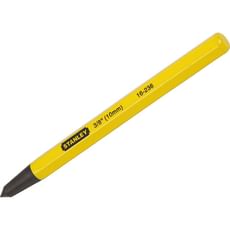
Clearly Marked Sizing: Stanley typically stamps or etches size markings on their punches, allowing quick identification in busy workshops where time is valuable. This marking remains legible throughout the tool's service life.
Corrosion-Resistant Finish: Surface treatments help protect against rust and corrosion, extending tool life even in damp or chemically active environments common in many workshop settings.
Popular Stanley Pin Punches
Stanley offers pin punches in both individual sizes and comprehensive sets. Individual punches allow tradespeople to replace specific sizes as needed or to purchase only the dimensions required for particular applications. Common individual sizes include 3mm, 4mm, 5mm, and 6mm options, which cover the majority of everyday automotive and engineering requirements.
Stanley pin punch sets provide excellent value and convenience, typically including a range of sizes from 1.5mm or 2mm up to 8mm or 10mm in a durable storage case. These sets ensure that professionals have the right size immediately to hand without needing to search through toolboxes or make additional purchases mid-job. The organised storage cases protect the punches from damage and keep them arranged by size for quick selection.
Long-reach pin punches in the Stanley range address situations where standard-length tools cannot access recessed pins, such as deep bores in machinery housings or transmission assemblies. These extended versions maintain the same quality standards whilst providing additional reach for specialist applications.
Safety and Compliance
When using Stanley pin punches, adherence to proper safety practices is essential. Always wear appropriate personal protective equipment, including safety glasses or goggles to protect against flying metal fragments, as both the punch and the pin being removed can produce sharp debris. Hand protection in the form of appropriate gloves can prevent injuries from sharp edges on workpieces.
Select a punch that closely matches the pin diameter to prevent binding and ensure efficient force transfer. Using an undersized punch can cause it to slip or bend, whilst an oversized punch may damage the surrounding material. Always support the workpiece securely to prevent movement during striking, which could cause the punch to slip and potentially cause injury.
Use an appropriate hammer for striking pin punches – typically a ball-peen or engineer's hammer with sufficient weight to drive the pin without requiring excessive force. Never use damaged punches showing signs of mushrooming at the striking end, as this can produce dangerous metal fragments. Regular inspection of Stanley pin punches and careful maintenance, including occasional light dressing of striking surfaces if mushrooming begins, will maintain safety and effectiveness.
The Health and Safety Executive (HSE) provides guidance on hand tool usage that applies to pin punches, emphasising proper technique and the importance of using tools only for their intended purpose. Stanley pin punches should never be used as pry bars, chisels, or for any purpose other than driving pins through prepared holes.
Frequently Asked Questions
What's the difference between a pin punch and a centre punch?
Stanley pin punches feature a parallel shaft that maintains consistent diameter throughout the working length, designed to follow pins through holes without enlarging them. Centre punches have tapered points for marking centre points prior to drilling. Pin punches are specifically engineered for removing pins and rivets, whilst centre punches are marking tools. Using the correct tool type ensures proper results and prevents damage to both the workpiece and the tool itself.
How do I prevent my Stanley pin punch from mushrooming?
Mushrooming occurs when the striking end of a pin punch spreads from repeated hammer blows. To minimise this, always use a hammer of appropriate weight – typically 200g to 500g for most pin punch work – and strike squarely on the punch head. Avoid glancing blows and don't use excessive force. If slight mushrooming develops, carefully dress the striking end with a file or bench grinder to remove the burr, chamfering the edge slightly to resist future mushrooming whilst wearing appropriate eye protection.
Can Stanley pin punches be used on hardened pins?
Stanley pin punches are hardened to handle most standard pins found in automotive, engineering, and general mechanical applications. However, attempting to drive extremely hard pins may damage the punch tip. If you encounter unusual resistance, verify that any roll pins or spring pins have been properly compressed with a starter punch first, and ensure you're not attempting to drive a pin through a damaged or corroded hole that requires drilling out rather than punching.
What size Stanley pin punch set should I buy?
For general automotive and light engineering work, a set covering 2mm to 8mm provides comprehensive coverage for most common applications. Professional mechanics and engineers working with diverse machinery may benefit from extended sets ranging from 1.5mm to 10mm or 12mm. Consider your typical applications – automotive work generally uses 3mm to 6mm most frequently, whilst industrial machinery maintenance may require a broader range including larger sizes.
How should I store Stanley pin punches to prevent damage?
Store pin punches in a designated holder, case, or tool roll that keeps them separated and protected from impact with other tools. Avoid loose storage in toolboxes where they can roll against hardened tools that might damage the precision-ground tips. Keep them in a dry environment to prevent corrosion, and apply a light coating of tool oil if storing for extended periods. Stanley punch sets typically include purpose-designed cases that provide ideal storage conditions whilst keeping sizes organised for quick selection.