

Stanley Pipe Benders
 Loading...
Stanley Pipe Benders at Tooled-Up.com
Stanley has built a formidable reputation in the hand tools sector, and their pipe bending solutions exemplify the brand's commitment to durability and practical design. For plumbers, heating engineers, and installation specialists working with pipework, Stanley pipe benders deliver the precision and reliability required for professional results. The brand's approach to pipe bending tools reflects decades of understanding tradesperson needs, combining robust construction with ergonomic features that reduce fatigue during repetitive bending operations.
Tooled-Up.com stocks Stanley's pipe bending solutions designed specifically for the demands of UK tradespeople. Whether working with copper, aluminium, or steel pipework, Stanley's range addresses the challenges faced on residential installations, commercial projects, and maintenance work. These tools are engineered to create consistent, kink-free bends that meet professional standards whilst withstanding the rigours of daily site use.
From compact hand-operated benders for tight access situations to lever-action models for larger diameter pipes, the Stanley selection available from Tooled-Up provides options for diverse applications. Each tool in the range demonstrates Stanley's understanding that pipe bending isn't simply about applying force—it's about controlled, accurate forming that preserves pipe integrity whilst achieving the precise angles required for quality installations.
Why Choose Stanley Pipe Benders?
Stanley's heritage in manufacturing hand tools stretches back over a century, and this experience translates directly into the quality of their pipe bending equipment. The brand has earned trust among UK tradespeople by consistently delivering tools that perform reliably across thousands of bends without degradation in accuracy or structural integrity. Stanley pipe benders feature hardened steel formers and frames that resist wear even when working with tougher materials, ensuring the tool maintains its precision throughout its working life.
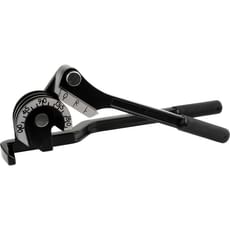
The practical design philosophy behind Stanley's pipe bending tools addresses real-world challenges. Clearly marked angle graduations enable accurate bending without guesswork, whilst reinforced pivot points eliminate the play and looseness that develops in inferior tools. Stanley understands that a pipe bender must deliver consistent results whether it's the first bend of the day or the fiftieth, and their construction standards reflect this requirement. The brand's attention to handle design and leverage mechanics also means less physical strain during extended use—a critical consideration for professionals completing multiple installations daily.
Value represents another compelling reason to choose Stanley for pipe bending applications. These tools occupy the sweet spot between budget options that fail prematurely and premium alternatives that exceed most tradespeople's requirements. Stanley delivers professional-grade performance at a price point that makes sense for both established businesses and tradespeople building their tool collections.
Who Uses Stanley Pipe Benders?
- Plumbers and heating engineers installing central heating systems, underfloor heating, and domestic plumbing
- Gas fitters working with copper and steel pipework for gas installations
- Refrigeration and air conditioning technicians bending copper tubing for refrigerant lines
- Maintenance engineers in commercial and industrial settings requiring pipe repairs and modifications
- Bathroom and kitchen fitters routing supply lines in confined spaces
- Automotive technicians forming brake and fuel lines
- DIY enthusiasts undertaking home improvement projects involving pipework
- Apprentice plumbers learning proper pipe bending techniques with reliable equipment
Key Features of Stanley Pipe Benders
Stanley pipe benders incorporate several distinctive features that enhance both usability and longevity. The hardened steel construction of formers and frames provides exceptional resistance to deformation, ensuring bends remain accurate even after intensive use. Many Stanley models feature dual-purpose designs that accommodate multiple pipe diameters within a single tool, reducing the number of separate benders required on site and improving cost-efficiency for tradespeople.
Angle marking systems on Stanley pipe benders are clearly stamped and highly visible, allowing quick reference without stopping to check separate measuring tools. The graduations typically cover the most commonly required angles—45°, 90°, and 180°—with clear increments between these points. This feature proves invaluable when creating multiple identical bends or working to technical drawings that specify precise angles.
Ergonomic handle design distinguishes Stanley's approach to pipe bending tools. Extended handles provide increased leverage, reducing the physical effort required whilst maintaining control throughout the bending process. Many models feature cushioned grips that improve comfort during extended use and provide better purchase in cold or wet conditions commonly encountered on construction sites. The tools' overall geometry is optimised to minimise wrist strain and allow natural body positioning during operation.
Stanley also incorporates practical features like integrated pipe clips and safety latches on relevant models, keeping the workpiece secure throughout the bending operation. This attention to the complete bending process—not just the mechanical action—demonstrates Stanley's understanding of professional requirements.
Popular Stanley Pipe Benders
Within the Stanley pipe bending range, several product types address specific professional requirements. Hand-operated micro benders suit precision work with smaller diameter copper and aluminium tubing, particularly in refrigeration, automotive, and instrument applications where space constraints demand compact tools. These models typically handle pipes from 6mm to 10mm diameter and prove indispensable for delicate forming operations.
Lever-action pipe benders represent Stanley's solution for medium to larger diameter pipes, employing mechanical advantage to reduce operator effort whilst maintaining control. These tools commonly accommodate copper pipes from 15mm to 22mm—the standard sizes for UK domestic plumbing and heating installations. The lever mechanism provides smooth, progressive bending that minimises the risk of kinking or flattening the pipe wall.
Multi-diameter pipe benders offer versatility for tradespeople working across various pipe sizes. By incorporating interchangeable formers or adjustable guides, these Stanley tools eliminate the need to carry multiple single-purpose benders, streamlining tool transportation and storage. This design proves particularly valuable for heating engineers and plumbers whose work involves diverse pipe specifications across different projects.
Safety and Compliance
Using Stanley pipe benders safely requires attention to both the tool's condition and proper technique. Before each use, inspect the tool for wear, particularly at pivot points and formers where stress concentrates. Worn or damaged components can result in inaccurate bends or sudden tool failure during operation. Ensure handles remain securely attached and free from damage that might compromise grip or cause injury.
When bending pipes, always wear appropriate personal protective equipment including safety glasses and work gloves. Flying debris from pipe ends and sharp edges on freshly cut pipework present injury risks. Position your body to maintain balance throughout the bending motion, and never apply excessive force—if a bend isn't progressing smoothly, reassess your technique or tool selection rather than forcing the operation.
Stanley pipe benders should be used only on materials and pipe diameters within their specified capacity. Exceeding these parameters risks damaging both the tool and workpiece whilst potentially causing operator injury. When working with copper pipes destined for gas or critical water services, ensure bends maintain wall thickness and don't create weak points that could fail in service. All completed work should comply with relevant British Standards and Building Regulations applicable to the specific installation type.
Frequently Asked Questions
What pipe materials can Stanley pipe benders handle?
Stanley pipe benders are designed primarily for copper, aluminium, and thin-walled steel tubing. Specific models accommodate different material hardnesses, with most suited to annealed (soft) copper commonly used in plumbing and heating installations. Always verify the tool's specifications match your pipe material and diameter to ensure proper bends without damaging either the pipe or tool.
How do I prevent kinking when using a Stanley pipe bender?
Kinking occurs when pipe walls collapse during bending, typically from using the wrong tool size, attempting too tight a radius, or applying force incorrectly. Use the former that matches your pipe diameter exactly, ensure the pipe is properly seated in the tool before beginning the bend, and apply smooth, steady pressure rather than jerky movements. For critical applications, consider using pipe with appropriate wall thickness for the bend radius required.
Can Stanley pipe benders create bends in pipes that are already installed?
Whilst some Stanley hand benders can work in situ on accessible pipework, most pipe bending tools perform best on free pipe lengths before installation. Space constraints, pipe support considerations, and the leverage required often make pre-bending preferable. For modifications to existing installations, carefully assess access and clearance before attempting bends, and consider whether cutting and joining might prove more practical than in-place bending.
What's the difference between a pipe bender and a pipe spring?
Stanley pipe benders are mechanical forming tools that create precise, repeatable bends at specific angles using formers and leverage. Pipe springs (bending springs) are flexible coil devices inserted into or placed over pipes to support walls during manual bending. Pipe benders offer greater accuracy and consistency, making them preferable for professional work, whilst springs suit occasional DIY applications or field adjustments where precision is less critical.
How do I maintain my Stanley pipe bender for long-term reliability?
After each use, wipe down your Stanley pipe bender to remove debris, moisture, and any pipe compound residue. Periodically apply a light machine oil to pivot points and moving components to prevent corrosion and ensure smooth operation. Store the tool in a dry location away from excessive heat or moisture. Check regularly for wear on formers and replace the tool if forming surfaces become scored or deformed, as this affects bend quality and can damage pipes.