

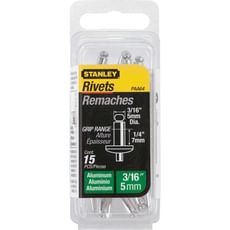
Stanley Rivets
 Loading...
End of content
Error - No more pages to load
Stanley Rivets at Tooled-Up.com
Stanley has been a trusted name in fastening solutions for over a century, and their rivet range exemplifies the brand's commitment to reliability and innovation. When tradespeople and DIY enthusiasts need dependable permanent fastening solutions, Stanley rivets deliver the strength and consistency required for professional results. The Stanley rivet collection available from Tooled-Up.com encompasses a comprehensive selection designed to meet the demanding requirements of construction, automotive, sheet metal work, and general fabrication applications.
From standard aluminium rivets for lightweight applications to heavy-duty steel variants for structural work, Stanley has engineered their rivet range to provide optimal holding power across diverse materials and working conditions. Each rivet is manufactured to exacting standards, ensuring dimensional accuracy and material integrity that professionals have come to expect from the Stanley brand. Whether you're securing HVAC ductwork, assembling metal frameworks, or carrying out automotive repairs, Stanley rivets offer the permanent fixing solution that won't compromise on quality.
Why Choose Stanley Rivets?
Stanley's reputation for producing reliable hand tools and fastening solutions extends naturally to their rivet range. Every Stanley rivet is manufactured using premium-grade materials that meet stringent quality standards, ensuring consistent performance across thousands of installations. The brand's extensive testing procedures guarantee that each rivet delivers the advertised shear and tensile strength values, giving tradespeople confidence in the structural integrity of their work.
Stanley's commitment to innovation means their rivets incorporate design features that simplify installation whilst maximising holding power. The precisely engineered mandrel break points ensure clean, consistent installation without jamming or premature failure. Stanley rivets are designed to work seamlessly with both hand-operated and pneumatic rivet tools, offering versatility for different work environments and project scales. The corrosion-resistant finishes on many Stanley rivet variants provide long-lasting performance even in challenging outdoor or marine environments.
Who Uses Stanley Rivets?
Stanley rivets are the fastening choice for a diverse range of professionals and skilled users, including:
- Sheet Metal Workers: Joining ventilation systems, cladding panels, and metal enclosures
- Automotive Technicians: Body panel repairs, trim installation, and chassis work
- Construction Professionals: Securing metal frameworks, roofing components, and architectural metalwork
- HVAC Engineers: Assembling ductwork and fixing ventilation systems
- Shopfitters: Installing metal shelving units, display fixtures, and retail equipment
- Maintenance Engineers: Repair work across industrial and commercial facilities
- Boat Builders: Marine construction requiring corrosion-resistant fastening solutions
- DIY Enthusiasts: Home improvement projects requiring permanent metal-to-metal fixing
Key Features of Stanley Rivets
Stanley rivets incorporate several distinctive features that enhance their performance and ease of use. The precisely machined mandrel shafts ensure smooth insertion and consistent pull-through during installation, reducing tool wear and operator fatigue. Stanley's material selection process prioritises both strength and workability, with aluminium alloys chosen for their optimal balance of tensile strength and ductility, whilst steel variants provide maximum holding power for structural applications.
The rivet head profiles available in the Stanley range include dome heads for standard applications, large flange heads for softer materials requiring greater load distribution, and countersunk heads where flush finishes are essential. Stanley's quality control processes ensure accurate hole-fill characteristics, minimising the risk of loose or rattling installations. Many Stanley rivet variants feature protective coatings or are manufactured from corrosion-resistant materials, extending service life in exposed or chemically aggressive environments.
Popular Stanley Rivets
The Stanley rivet range at Tooled-Up encompasses several popular fastening solutions suited to different applications. Aluminium rivets represent the most versatile option, offering excellent corrosion resistance and sufficient strength for most general fabrication tasks. These are ideal for joining aluminium sheet, steel, plastics, and composite materials in non-structural applications.
Steel rivets from Stanley provide superior shear and tensile strength for applications requiring maximum holding power, such as structural metalwork, heavy equipment assembly, and high-stress automotive repairs. Multi-grip rivets in the Stanley range accommodate varying material thicknesses without requiring multiple rivet lengths, improving efficiency and reducing inventory requirements on site. Sealed or closed-end rivets prevent moisture ingress and are particularly valued in marine, outdoor, and food processing environments where contamination must be prevented.
Safety and Compliance
When using Stanley rivets, proper installation techniques are essential for achieving optimal performance and ensuring workplace safety. Always wear appropriate personal protective equipment including safety glasses to protect against flying debris during mandrel breaking, and gloves to prevent hand injuries from sharp edges. Ensure the rivet diameter and grip length are correctly matched to the application and material thickness being joined.
Stanley rivets should be installed using properly maintained rivet tools in good working condition. Check that the tool's nosepiece matches the rivet diameter to prevent slippage or damage during installation. When working with pneumatic rivet tools, ensure air pressure is correctly adjusted according to the manufacturer's specifications. Dispose of used mandrels safely to prevent puncture hazards in the workplace. All fastening work should comply with relevant HSE guidelines and industry-specific standards applicable to your trade or project requirements.
Frequently Asked Questions
What materials can Stanley rivets join effectively?
Stanley rivets are designed to join a wide variety of materials including aluminium sheet, steel, stainless steel, plastics, composites, and even some timber applications. Aluminium rivets work well with softer materials, whilst steel rivets are preferred for joining harder metals or where maximum strength is required. Always ensure the rivet material is compatible with the base materials to prevent galvanic corrosion.
How do I determine the correct rivet length for my application?
The correct rivet length (grip range) should equal the total thickness of the materials being joined. Stanley rivets are typically marked with their grip range, which indicates the minimum and maximum material thickness they can accommodate. As a general rule, the rivet shank should protrude approximately 1.5 times the rivet diameter beyond the materials before installation to allow proper mandrel formation.
Can Stanley rivets be removed once installed?
Stanley rivets are designed as permanent fasteners and cannot be easily removed without drilling them out. This destructive removal process will damage the rivet and potentially the surrounding material. If disassembly is anticipated, consider using alternative fastening methods such as nuts and bolts. The permanent nature of rivets makes them ideal for security-critical applications where tamper resistance is desirable.
What's the difference between open and closed-end Stanley rivets?
Open-end (standard) Stanley rivets have a hollow body after installation, as the mandrel pulls through completely. Closed-end (sealed) rivets retain a portion of the mandrel inside, creating a watertight seal. Closed-end rivets are essential for applications exposed to weather, moisture, or where hygiene is critical. They also provide a neater appearance and prevent dirt accumulation inside the rivet body.
Do Stanley rivets require special tools for installation?
Stanley rivets can be installed using standard manual rivet guns (hand riveters), pneumatic rivet tools, or battery-powered rivet guns. The tool selection depends on the rivet size, material hardness, and volume of work. Manual tools are suitable for occasional use and smaller diameter rivets, whilst pneumatic or battery tools significantly reduce operator fatigue for high-volume applications or larger diameter steel rivets.