

Stanley Try Squares
 Loading...
Stanley Try Squares at Tooled-Up.com
Stanley has been a trusted name in precision measuring and marking tools since 1843, and their try squares represent the gold standard for accurate 90-degree measurements in woodworking, metalworking, and construction. The Stanley try square range available at Tooled-Up.com combines traditional craftsmanship with modern manufacturing techniques to deliver tools that professionals and serious DIY enthusiasts rely on daily. Each Stanley try square is engineered to provide consistent, reliable accuracy whether you're checking the squareness of joints, marking out cutting lines, or verifying right angles on assembled work.
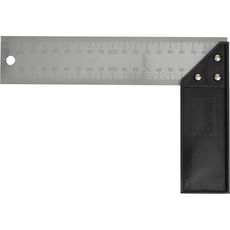
Stanley try squares are manufactured to exacting standards, featuring precision-ground edges and clearly marked graduations that remain legible even after years of workshop use. The range includes both traditional all-steel construction models and modern designs with aluminium bodies and stainless steel blades, offering options to suit different applications and budgets. From compact 150mm squares perfect for fine joinery to larger 300mm models ideal for site carpentry, Tooled-Up stocks Stanley try squares in the sizes that tradespeople and woodworkers demand most.
What distinguishes Stanley try squares from generic alternatives is their commitment to accuracy and durability. Each square undergoes rigorous quality control to ensure the blade remains perfectly perpendicular to the stock, whilst the robust construction means they can withstand the knocks and drops of daily workshop life without losing their precision. The ergonomic design of Stanley try squares makes them comfortable to use throughout long working days, with easy-to-read metric graduations that speed up marking and measuring tasks.
Why Choose Stanley Try Squares?
Stanley's reputation for producing reliable measuring tools spans over 175 years, and their try squares embody the precision engineering that has made the brand synonymous with quality. Unlike cheaper alternatives that may lose their accuracy after minimal use, Stanley try squares maintain their 90-degree precision even after years of workshop service. The blades are manufactured from hardened and tempered steel or corrosion-resistant stainless steel, ensuring they remain straight and true whilst resisting the wear that can compromise measurement accuracy.
The etched or stamped graduations on Stanley try squares are designed for longevity, resisting the fading and wear that can make cheap measuring tools illegible over time. This attention to detail extends to the stock construction, which is typically made from robust materials that won't warp or twist with temperature changes or humidity fluctuations. Professional tradespeople choose Stanley try squares because they understand that accurate measurements are fundamental to quality workmanship, and any tool that compromises this accuracy ultimately costs more in wasted materials and time.
Stanley backs their try squares with solid warranties and customer support, providing peace of mind that you're investing in tools that will serve you reliably throughout your career. The brand's global presence means replacement parts and support are readily available, whilst their commitment to continuous improvement ensures that even traditional tools like try squares benefit from modern manufacturing techniques and quality control processes.
Who Uses Stanley Try Squares?
- Carpenters and joiners who require precise right angles for furniture making, door hanging, and structural work
- Shopfitters needing reliable measuring tools for accurate installation work
- Metalworkers and fabricators checking the squareness of welded assemblies and cut edges
- Builders and site carpenters marking out timber frames, stud walls, and roof structures
- Cabinet makers demanding precision for high-quality joinery and fitted furniture
- Maintenance engineers verifying alignments and checking machinery installations
- Educational institutions equipping workshops with reliable tools for teaching construction and woodworking skills
- DIY enthusiasts who appreciate professional-quality tools for home improvement projects
- Boat builders requiring corrosion-resistant measuring tools for marine applications
Key Features of Stanley Try Squares
Precision-Ground Blades: Stanley try squares feature blades that are ground to extremely tight tolerances, ensuring consistent 90-degree accuracy across the entire length. This precision grinding process creates edges that remain true even under regular workshop use, providing the reliability that professional tradespeople demand.
Clear Graduations: Metric measurements are clearly marked along the blade, with deep etching or permanent stamping that resists wear from pencils, scribers, and general handling. The high-contrast markings ensure easy readability in varying light conditions, speeding up measurement and reducing errors.
Robust Construction: Whether manufactured from all-steel construction or featuring aluminium bodies with steel blades, Stanley try squares are built to withstand the rigours of daily professional use. The materials are selected for their stability, ensuring the tools maintain their accuracy across temperature variations and humidity changes common in UK workshops.
Ergonomic Design: The stock is designed for comfortable handling during extended use, with profiles that provide secure grip whether you're holding the square against workpieces or using it as a marking guide. The balanced design makes one-handed operation straightforward, freeing your other hand to hold materials or guide marking tools.
Corrosion Resistance: Many Stanley try squares feature stainless steel blades or protective coatings that resist rust and corrosion, essential for tools that may be exposed to moisture in construction environments or damp workshops. This protection ensures long-term accuracy by preventing the pitting and degradation that can compromise measuring surfaces.
Popular Stanley Try Squares
The Stanley Engineer's Try Square represents the traditional all-steel construction favoured by metalworkers and engineers, with precisely machined surfaces and edges that provide reference surfaces for both measuring and marking. These hardened steel squares are particularly popular in fabrication shops where durability and absolute accuracy are paramount.
For general carpentry and joinery work, the Stanley Combination Try Square offers versatility alongside precision, featuring metric graduations and a robust design that handles the demands of site work and workshop applications equally well. Available at Tooled-Up in multiple sizes, these squares provide the accuracy woodworkers need for everything from checking door frames to marking out joints.
Stanley Adjustable Try Squares bring additional functionality to the traditional design, allowing the blade to be repositioned along the stock for specialised applications. These innovative designs maintain Stanley's commitment to accuracy whilst providing the flexibility that certain marking and checking tasks demand.
The Stanley Aluminium Try Square range combines lightweight construction with professional accuracy, making them ideal for tradespeople who need to carry multiple tools between jobs or work on ladders where weight matters. Despite their lighter construction, these squares maintain the precision and durability that the Stanley brand represents.
Safety and Compliance
Whilst try squares are inherently simple hand tools with minimal safety concerns, proper usage ensures accurate results and prevents workplace injuries. Always ensure the workpiece is adequately supported before checking or marking, as unstable materials can shift unexpectedly. When using try squares alongside cutting tools, position the square carefully to avoid contact with saw blades, router bits, or other cutting edges that could damage the precision edges and compromise accuracy.
Stanley try squares should be stored in tool boxes or on dedicated racks where they won't be dropped or knocked against harder materials that could damage their precision surfaces. Regular inspection of the blade and stock for damage, warping, or wear helps maintain accuracy and ensures reliable measurements. If a try square has been dropped or subjected to impact, verify its accuracy against a known square reference before continuing to use it for critical measurements.
In professional workshops and educational settings, ensure try squares are included in regular tool audits and calibration checks. Although try squares don't require formal calibration certificates for most applications, periodic verification against precision reference squares helps maintain quality standards. Keep try squares clean and free from sawdust, metal filings, and debris that could interfere with accurate positioning against workpieces.
Frequently Asked Questions
How do I check if my Stanley try square is still accurate?
Place the stock of your Stanley try square firmly against a straight edge, such as a planed board or engineer's straight edge, and draw a line along the blade. Then flip the square over and align it with the same line – if the blade aligns perfectly with the drawn line, your square is accurate. Any gap indicates the square is out of true and should be replaced, as try squares cannot be adjusted for accuracy.
What size Stanley try square do I need for general woodworking?
For versatile workshop use, a 250mm (10-inch) Stanley try square provides an excellent balance between capacity and manoeuvrability. This size handles most furniture-making and general carpentry tasks comfortably. Many professionals also keep a smaller 150mm square for fine joinery and a larger 300mm square for checking wider panels and assemblies.
Can Stanley try squares be used for metalworking as well as woodworking?
Absolutely. Stanley engineer's try squares are specifically designed for metalworking applications, featuring hardened steel construction that resists wear from metal surfaces and provides the precision required for fabrication work. The all-steel construction also makes them suitable for use alongside magnetic bases and in workshop environments where wooden-stocked squares might be damaged.
How should I maintain my Stanley try square?
Keep your Stanley try square clean and dry, wiping it down after use to remove sawdust, moisture, or metal filings. Store it in a protective case or tool box where it won't be knocked or dropped. Occasionally apply a light coat of tool oil to steel surfaces to prevent corrosion, particularly if you work in damp environments. Never use try squares as hammers, levers, or scrapers, as this will damage their precision edges.
What's the difference between a try square and an engineer's square?
Whilst both measure 90-degree angles, engineer's squares are typically manufactured entirely from steel with precision-ground surfaces on all edges, making them suitable for metalworking and precision engineering tasks. Traditional try squares may have wooden or aluminium stocks with steel blades, designed primarily for carpentry and joinery. Stanley produces both types, allowing you to choose the construction that best suits your specific trade requirements.