

Stanley Voltage Testers
 Loading...
End of content
Error - No more pages to load
Stanley Voltage Testers at Tooled-Up.com
Stanley has built a formidable reputation in the electrical testing market, combining over a century of tool-making expertise with modern safety innovations. The Stanley voltage tester range represents the brand's commitment to delivering reliable, user-friendly electrical testing equipment that meets the demanding requirements of professional electricians and safety-conscious DIY enthusiasts alike. From simple contact voltage detectors to more sophisticated testing devices, Stanley voltage testers are engineered to provide accurate readings whilst maintaining the durability and ergonomic design that the brand is renowned for.
When selecting voltage testing equipment, tradespeople require tools they can trust with their safety. Stanley voltage testers combine intuitive operation with robust construction, ensuring that every test delivers clear, dependable results whether working on domestic 240v circuits or commercial installations. The range available at Tooled-Up.com encompasses various testing solutions designed to verify the presence or absence of voltage, helping electricians work safely and efficiently across diverse applications.
Stanley's approach to voltage detection prioritises both accuracy and practicality, with features such as visual and audible indicators, comfortable grip designs, and compliance with rigorous safety standards. These testers are built to withstand the rigours of daily professional use, from residential rewiring projects to industrial maintenance tasks, making them an essential addition to any electrician's toolkit.
Why Choose Stanley Voltage Testers?
Stanley's legacy in the professional tool market extends well beyond their famous hand tools, with their electrical testing equipment benefiting from decades of research into workplace safety and user ergonomics. Stanley voltage testers are manufactured to exacting standards, ensuring consistent performance across thousands of tests. The brand's commitment to quality control means that each tester undergoes rigorous testing before leaving the factory, providing tradespeople with the confidence they need when working with potentially dangerous electrical systems.
The reliability factor is paramount when choosing voltage testing equipment, and Stanley has invested heavily in developing detection technology that minimises false readings whilst remaining highly sensitive to live circuits. Their testers feature clear indication systems—typically combining LED lights with audible alerts—that work effectively even in challenging site conditions such as poorly lit environments or noisy workshops. The robust construction of Stanley voltage testers means they can withstand accidental drops, exposure to dust and moisture, and the general wear and tear of professional use.
Value for money is another compelling reason to choose Stanley voltage testers. Whilst maintaining professional-grade quality and safety compliance, Tooled-Up stocks Stanley testing equipment at competitive price points that make them accessible to both established tradespeople and those just starting their electrical careers. The durability of Stanley products also ensures a lower cost of ownership over time, as these testers typically outlast cheaper alternatives that may require frequent replacement.
Who Uses Stanley Voltage Testers?
Stanley voltage testers serve a diverse range of users across the electrical and construction industries:
- Qualified Electricians: Professional sparkies rely on Stanley voltage testers for first-line safety checks before commencing work on electrical installations, ensuring circuits are properly isolated
- Electrical Maintenance Engineers: Industrial and commercial maintenance personnel use these testers to verify power status on machinery, control panels, and building electrical systems
- Facilities Managers: Those responsible for building safety conduct routine checks on electrical systems using reliable voltage detection equipment
- DIY Enthusiasts: Competent home improvers undertaking electrical projects such as socket replacement or light fitting installation benefit from the safety assurance voltage testers provide
- Apprentice Electricians: Training electricians learning safe working practices rely on affordable, dependable testing equipment as part of their essential toolkit
- Building Contractors: Site managers and general builders conducting preliminary safety checks before drilling or cutting into walls
- PAT Testing Professionals: Technicians performing portable appliance testing who require voltage verification as part of their testing procedures
Key Features of Stanley Voltage Testers
Stanley voltage testers incorporate several distinctive features that enhance both safety and usability. The dual indication system—combining bright LED visual alerts with clear audible signals—ensures users receive unmistakable confirmation of voltage presence, regardless of ambient conditions. Ergonomic grip designs with non-slip rubberised surfaces provide secure handling even when wearing work gloves, reducing the risk of drops during testing procedures.
Many Stanley voltage testers feature voltage range versatility, capable of detecting common domestic 240v circuits through to higher commercial voltages, making them suitable for diverse applications. The compact, pocket-sized format of Stanley's contact testers means they're always within easy reach, encouraging electricians to perform the frequent safety checks that proper electrical work demands. Robust probe construction with protected testing points ensures longevity whilst maintaining the precision necessary for accurate voltage detection.
Safety compliance is engineered into every Stanley voltage tester, with appropriate insulation ratings, CAT ratings for specific applications, and construction that meets or exceeds relevant British and European standards. Battery compartments are typically easily accessible for quick battery changes on site, whilst low battery indicators prevent the risk of unreliable readings due to insufficient power. The straightforward operation of Stanley testers—typically requiring no complex setup or calibration—means they're ready to use immediately, saving valuable time on busy job sites.
Popular Stanley Voltage Testers
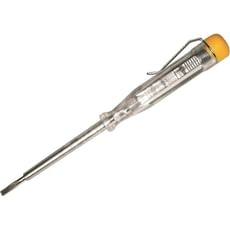
The Stanley voltage tester range at Tooled-Up encompasses several popular formats to suit different testing requirements. Contact voltage testers represent the most commonly used format, featuring a probe tip that makes direct contact with the conductor or terminal being tested. These pocket-sized devices are ideal for quick verification checks on sockets, light switches, and electrical terminals, with the simple operation making them perfect for frequent use throughout the working day.
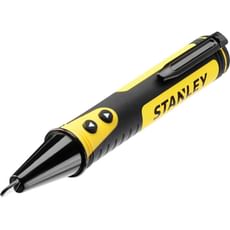
Non-contact voltage detectors offer an alternative testing method, allowing users to detect live circuits without making direct electrical contact—simply holding the detector near wiring or devices to sense electromagnetic fields. This format provides an additional safety margin and is particularly useful for preliminary checks before opening electrical enclosures or when working in confined spaces where physical contact testing may be awkward.
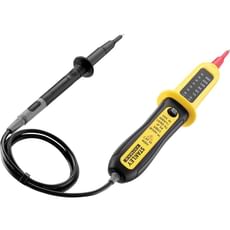
Dual-function testers combine voltage detection with continuity testing capabilities, offering electricians a versatile tool that serves multiple diagnostic purposes. These testers can verify that circuits are truly dead before work commences, then subsequently check that connections have been properly made and that earth continuity exists where required. This combination functionality reduces the number of separate tools electricians need to carry, streamlining their toolkit whilst maintaining comprehensive testing capabilities.
Safety and Compliance
Working with electrical systems demands strict adherence to safety protocols, and Stanley voltage testers are designed to support safe working practices. All Stanley voltage detection equipment complies with relevant British Standards (BS) and European Norms (EN), ensuring they meet the safety requirements mandated by UK regulations. The IEC 61243 standard, which specifically covers live working voltage detectors, guides the design and manufacture of Stanley's testing equipment.
CAT (Category) ratings indicate the electrical environment for which a voltage tester is suitable, with higher CAT numbers representing increasing protection against transient voltage spikes. Stanley voltage testers are appropriately rated for their intended applications, whether that's CAT II for domestic installations or higher ratings for industrial environments. Users should always verify that their voltage tester carries an appropriate CAT rating for their specific working environment.
Proper usage practices are essential for maintaining safety when using voltage testers. The Health and Safety Executive (HSE) recommends following the "prove-test-prove" methodology: test the voltage detector on a known live source to confirm it's functioning correctly, perform your actual test on the circuit in question, then verify the tester again on a known live source to confirm it remained functional throughout. Regular inspection of voltage testers for physical damage, particularly to probes and insulation, helps prevent equipment failure that could compromise safety. Battery condition should be checked regularly, as depleted batteries can result in false negative readings—a potentially dangerous situation when working with electrical systems.
Frequently Asked Questions
Are Stanley voltage testers suitable for professional electrical work?
Yes, Stanley voltage testers are designed to meet the requirements of professional electricians and comply with relevant safety standards for electrical testing equipment. They provide reliable voltage detection for routine safety checks, isolation verification, and fault-finding tasks. However, they should be used as part of a comprehensive testing approach rather than as the sole diagnostic tool for complex electrical work.
What voltage range do Stanley voltage testers typically detect?
Stanley voltage testers commonly detect voltages from approximately 50v to 600v AC, which covers standard UK domestic 240v circuits as well as commercial and light industrial applications. Specific voltage ranges vary by model, so it's important to verify that a particular tester is suitable for your intended voltage range before purchase.
How often should I test my Stanley voltage detector to ensure it's working correctly?
Best practice dictates testing your voltage detector before and after each use on a known live source—the "prove-test-prove" method recommended by the HSE. Additionally, conduct a thorough inspection at the start of each working day, checking for physical damage to probes, insulation, and the body of the tester. Replace batteries according to manufacturer recommendations or when the low battery indicator activates.
Can Stanley voltage testers be used on DC circuits as well as AC?
This depends on the specific model. Some Stanley voltage testers are designed exclusively for AC voltage detection (the most common requirement for electricians working on mains installations), whilst others offer both AC and DC detection capabilities. Always check the specifications of your particular model to confirm its capabilities before using it on DC circuits such as automotive systems or solar installations.
Do Stanley voltage testers require calibration?
Contact voltage testers and non-contact voltage detectors typically do not require formal calibration in the same way that precision multimeters do, as they provide a simple pass/fail indication of voltage presence rather than precise measurements. However, regular functional testing using known live and dead sources ensures they continue to operate correctly. If a tester fails to respond appropriately during functional testing, it should be withdrawn from service and replaced.