

Starrett Bandsaw Blades
 Loading...
End of content
Error - No more pages to load
Starrett Bandsaw Blades at Tooled-Up.com
For over 140 years, Starrett has been synonymous with precision, quality, and innovation in cutting tools. The company's bandsaw blades represent the culmination of decades of metallurgical expertise and manufacturing excellence, delivering uncompromising performance across a diverse range of cutting applications. From general-purpose workshop use to demanding industrial operations, Starrett bandsaw blades are engineered to deliver consistent, accurate cuts whilst maximising blade life and reducing operational costs.
Tooled-Up.com stocks an extensive selection of Starrett bandsaw blades designed to meet the exacting standards of professional tradespeople and serious DIY enthusiasts. Whether you're cutting through ferrous metals, non-ferrous materials, or challenging alloys, Starrett's comprehensive range includes blades with various tooth configurations, pitches, and metallurgical compositions to suit virtually any bandsaw application. Each blade is manufactured to the highest tolerances, ensuring straight, accurate cuts and extended service life that justifies the investment in premium quality tooling.
Starrett's commitment to innovation is evident throughout their bandsaw blade range, with advanced bi-metal construction, precision tooth geometry, and proprietary heat treatment processes that deliver superior wear resistance and cutting efficiency. The brand's reputation for quality means that professional fabricators, machine shops, and metalworkers consistently turn to Starrett when reliability and precision are non-negotiable.
Why Choose Starrett Bandsaw Blades?
Starrett bandsaw blades stand out in a crowded marketplace through their exceptional durability and cutting performance. The company's proprietary bi-metal construction combines a high-speed steel cutting edge with a flexible spring steel backing, creating blades that resist tooth strippage whilst maintaining the flexibility required to navigate bandsaw wheels without cracking or breaking. This advanced metallurgy translates directly into longer blade life and reduced downtime for blade changes.
The precision grinding and setting of Starrett blade teeth ensures consistent cutting action and superior surface finish on workpieces. Each tooth is manufactured to exacting tolerances, resulting in blades that track true and cut straight, minimising material waste and reducing the need for secondary finishing operations. Starrett's rigorous quality control processes mean that every blade leaving the factory meets the company's legendary standards for precision and reliability.
Professional users appreciate Starrett's comprehensive technical support and blade selection guidance. The brand provides detailed specifications and application recommendations, helping users match the optimal blade configuration to their specific cutting requirements. This expertise, combined with proven performance in demanding industrial environments, has established Starrett as the benchmark against which other bandsaw blade manufacturers are measured.
Who Uses Starrett Bandsaw Blades?
- Metal fabricators and steel stockholders requiring high-volume cutting of various metal sections and profiles
- Machine shops and engineering workshops demanding precision cuts and consistent dimensional accuracy
- Maintenance engineers working across industrial facilities and manufacturing plants
- Agricultural and construction equipment repair specialists cutting through heavy-section materials
- Automotive workshops and bodyshops requiring clean cuts in sheet metal and structural components
- HVAC contractors cutting pipework, ducting materials, and metal framing
- Structural steelwork fabricators preparing beams, channels, and angle iron
- Tool and die makers requiring exceptional precision for jig and fixture manufacture
- Educational institutions equipping workshops with reliable, long-lasting cutting tools
- Serious DIY enthusiasts who demand professional-grade performance from their workshop equipment
Key Features of Starrett Bandsaw Blades
Advanced Bi-Metal Construction: Starrett's proprietary bi-metal manufacturing process electron-beam welds high-speed steel teeth to a flexible alloy steel backing, creating blades that combine hardness with flexibility for extended service life.
Precision Tooth Geometry: Each tooth is ground to exact specifications, ensuring consistent chip removal, reduced cutting forces, and superior surface finish on workpieces across a wide range of materials.
Optimised Set Patterns: Starrett employs sophisticated tooth-setting techniques that provide efficient chip clearance whilst maintaining narrow kerf widths for reduced material waste and faster cutting speeds.
Heat Treatment Excellence: Proprietary heat treatment processes enhance tooth hardness and wear resistance whilst maintaining the backing strip's flexibility, preventing premature blade failure.
Comprehensive Tooth Pitch Options: The Tooled-Up Starrett range includes various teeth-per-inch (TPI) configurations, from coarse pitches for rapid cutting of thick sections to fine pitches for thin-wall tubing and precision work.
Material-Specific Solutions: Starrett offers specialised blade formulations optimised for ferrous metals, non-ferrous materials, difficult-to-machine alloys, and composite materials, ensuring optimal performance for specific applications.
Popular Starrett Bandsaw Blades
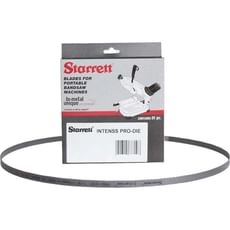
The Starrett Intenss Pro-Die range represents the company's flagship bi-metal bandsaw blades, designed for demanding production environments where maximum blade life is essential. These blades feature enhanced tooth durability and are ideal for cutting tool steels, stainless steel, and other challenging materials.
For general-purpose metalworking applications, Starrett Duratec SFB blades deliver excellent versatility and value. Their balanced tooth geometry and bi-metal construction make them suitable for cutting a wide variety of materials in job shop and fabrication environments.
When cutting thin-wall tubing, sheet metal, or bundled materials, Starrett Waviset blades provide the solution. Their unique wavy tooth set pattern reduces vibration and noise whilst delivering clean cuts without material distortion.
For specialised applications involving exotic alloys and difficult-to-machine materials, Starrett's carbide-tipped bandsaw blades offer exceptional wear resistance and extended service life in the most demanding cutting operations.
Safety and Compliance
Starrett bandsaw blades conform to relevant British and European safety standards, ensuring they meet the requirements for professional use in UK workshops and industrial facilities. When operating bandsaw equipment, always follow HSE guidelines for machine guarding, personal protective equipment, and safe working practices.
Proper blade installation is critical for safe operation. Ensure blades are correctly tensioned according to the bandsaw manufacturer's specifications, and verify that blade tracking is properly adjusted before commencing cutting operations. Always wear appropriate eye protection, and ensure hands remain clear of the cutting zone during operation.
Regular blade inspection helps prevent accidents and maintains cutting performance. Replace blades showing signs of tooth damage, cracking in the backing strip, or excessive wear. Store unused blades in a dry environment, hanging them on appropriate racks or coiling them carefully to prevent kinking or damage.
When selecting bandsaw blades, ensure the width, length, and thickness specifications match your bandsaw's requirements. Starrett provides comprehensive technical documentation to assist with proper blade selection, and the technical team at Tooled-Up can provide guidance on choosing the appropriate blade for specific applications.
Frequently Asked Questions
How do I choose the correct TPI for my Starrett bandsaw blade?
The optimal teeth-per-inch depends on your material thickness and type. As a general rule, ensure at least three teeth are engaged in the material at all times. For materials under 6mm thick, use 14-24 TPI; for 6-25mm sections, use 10-14 TPI; for materials over 25mm thick, use 6-10 TPI. Harder materials typically require finer tooth pitches, whilst softer materials cut more efficiently with coarser pitches.
What's the difference between Starrett's bi-metal and carbon steel blades?
Starrett bi-metal blades combine a high-speed steel cutting edge with a flexible alloy steel backing, offering superior heat resistance, longer blade life, and the ability to cut harder materials compared to carbon steel blades. Carbon steel blades are more economical for cutting softer materials and non-ferrous metals in less demanding applications, but bi-metal construction provides significantly better value in professional environments through extended service life.
How can I maximise the life of my Starrett bandsaw blades?
Proper blade life depends on correct blade selection, appropriate cutting speed, adequate feed pressure, and effective coolant application where applicable. Ensure your bandsaw is properly maintained with correct blade tension and tracking. Use the slowest cutting speed that maintains productivity, and apply consistent, moderate feed pressure—forcing the cut reduces blade life significantly. Keep the blade clean and apply cutting fluid when machining ferrous metals or difficult materials.
Can Starrett bandsaw blades be resharpened?
Whilst some industrial facilities have blade resharpening equipment, the complexity of modern bi-metal blade geometry and set patterns means resharpening is typically not cost-effective for most users. Starrett blades are engineered to deliver excellent value through extended initial service life, and investing in a fresh blade generally provides better performance and reliability than attempting to resharpen worn blades.
Are Starrett bandsaw blades suitable for cutting stainless steel?
Yes, Starrett manufactures specific blade configurations optimised for cutting stainless steel and other difficult-to-machine materials. These blades feature enhanced tooth geometry and metallurgy designed to handle the work-hardening characteristics of stainless steel. Select a blade with the appropriate TPI for your material thickness, use slower cutting speeds than for mild steel, and ensure adequate coolant application to prevent work hardening and extend blade life.