

Wiha Detectors & Testing Tools
 Loading...
End of content
Error - No more pages to load
Wiha Detectors & Testing Tools at Tooled-Up.com
Wiha has established itself as a premium manufacturer of precision hand tools and diagnostic equipment, and their detectors and testing tools exemplify the German engineering excellence the brand is renowned for. Tooled-Up.com stocks a comprehensive range of Wiha testing equipment designed to meet the exacting demands of professional electricians, engineers, and technicians working across domestic, commercial, and industrial environments. From voltage detectors and continuity testers to advanced diagnostic tools, Wiha's testing equipment combines accuracy, safety, and durability in every product.
What sets Wiha's detectors and testing tools apart is their commitment to user safety and measurement precision. Every testing device is manufactured to rigorous quality standards, incorporating multiple safety features and complying with the latest UK and European electrical standards. Whether you're working on 240V domestic installations or testing industrial three-phase systems, Wiha's testing tools provide the reliability and accuracy that professional tradespeople depend on to work safely and efficiently.
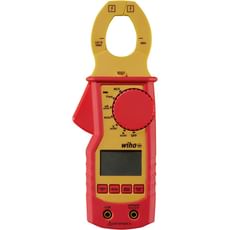
The Wiha testing tool range available from Tooled-Up includes non-contact voltage detectors, two-pole voltage testers, continuity testers, and specialist diagnostic equipment. Each tool is engineered with the end-user in mind, featuring ergonomic designs, clear LED indicators, and robust construction that withstands the rigours of daily site work and workshop use.
Why Choose Wiha Detectors & Testing Tools?
Wiha's reputation for quality extends throughout their entire testing equipment range. The brand employs strict manufacturing processes in Germany, ensuring every detector and tester meets exacting tolerances and safety specifications. Unlike cheaper alternatives, Wiha testing tools undergo extensive quality control procedures and are built to provide years of reliable service, making them a cost-effective investment for professionals who depend on their equipment daily.
Safety is paramount in Wiha's design philosophy. Their voltage detectors and testers incorporate multiple safety features including insulated probes, reinforced construction, and clear visual and audible indicators. Many Wiha testing tools are rated to CAT III or CAT IV standards, providing the necessary protection when working on high-energy electrical systems. The brand's commitment to safety compliance gives tradespeople confidence when working in potentially hazardous environments.
Precision and accuracy are hallmarks of Wiha testing equipment. Whether detecting the presence of voltage, verifying continuity, or measuring electrical parameters, Wiha tools deliver consistent, reliable results. This accuracy is essential for fault-finding, installation verification, and ensuring electrical systems are safe and compliant with UK wiring regulations and BS 7671 requirements.
Who Uses Wiha Detectors & Testing Tools?
Wiha detectors and testing tools are trusted by a wide range of professionals and skilled users, including:
- Electricians and Electrical Contractors: Professionals carrying out domestic, commercial, and industrial electrical installations and maintenance
- Maintenance Engineers: Technicians responsible for fault-finding and maintaining electrical systems in factories, facilities, and commercial premises
- Control Panel Builders: Specialists assembling and testing electrical control systems and switchgear
- Facilities Management Teams: Personnel responsible for building maintenance and electrical safety compliance
- Automotive Electricians: Technicians diagnosing and repairing vehicle electrical systems
- HVAC Engineers: Heating and ventilation specialists testing electrical components and control circuits
- Renewable Energy Installers: Solar panel and wind turbine technicians requiring reliable testing equipment
- Serious DIY Enthusiasts: Competent home improvers undertaking electrical projects within their skill level
Key Features of Wiha Detectors & Testing Tools
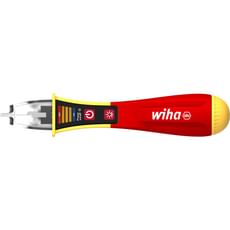
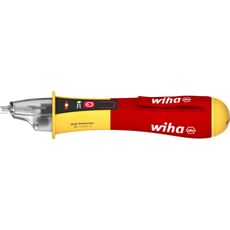
Wiha testing tools incorporate numerous features that distinguish them from competing products. Their non-contact voltage detectors utilise advanced sensing technology to detect AC voltage without physical contact, allowing safe preliminary checks before working on electrical systems. These detectors feature adjustable sensitivity settings and both visual LED and audible alerts to suit different working environments and user preferences.
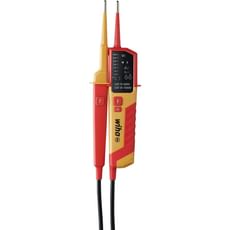
Two-pole voltage testers from Wiha are built to professional standards with robust, fully insulated test probes and clear digital or analogue displays. Many models include auto-ranging functionality, eliminating the need to pre-select voltage ranges and reducing the risk of incorrect settings. Continuity testers provide instant feedback through LED indicators and audible tones, enabling quick verification of circuit integrity and earth continuity.
Ergonomic design is evident throughout the range, with soft-grip handles, intuitive control layouts, and balanced weight distribution that reduces user fatigue during extended testing sessions. Wiha testing tools are designed for one-handed operation where appropriate, leaving the other hand free to hold cables or reference documentation. Protection ratings ensure tools can withstand dust, moisture, and the occasional drop that's inevitable in busy workshop and site environments.
Popular Wiha Detectors & Testing Tools
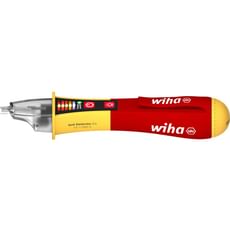
The Wiha voltage detector range includes compact pen-style non-contact detectors ideal for quick voltage presence checks on cables, sockets, and switches. These pocket-sized tools are essential for electricians and maintenance engineers, providing immediate indication of live conductors before commencing work. Their slim profile allows testing in confined spaces such as consumer units and junction boxes.
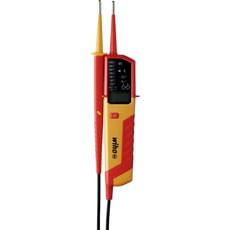
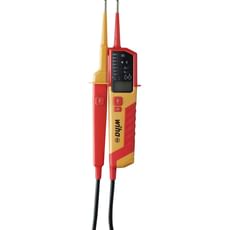
Wiha's two-pole voltage testers are available in various configurations, from simple LED indicator models through to advanced digital multimeters with comprehensive measurement capabilities. These tools verify voltage levels, test phase rotation, and check RCD functionality, making them indispensable for installation testing and periodic inspection work. Models suitable for 240V domestic work through to 690V three-phase industrial applications are available at Tooled-Up.
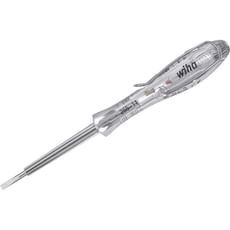
Continuity testers and circuit tracers from Wiha help electricians quickly identify and trace cables, locate faults, and verify earth continuity. These time-saving tools reduce diagnostic time significantly compared to manual testing methods, improving productivity on installation and maintenance projects.
Safety and Compliance
All Wiha detectors and testing tools sold through Tooled-Up.com are manufactured to comply with relevant UK and European safety standards, including IEC 61010 for measurement equipment. Many Wiha voltage testers carry CAT III or CAT IV ratings, indicating their suitability for use on high-energy distribution systems where transient overvoltages may occur.
Proper use of testing equipment is essential for electrical safety. Wiha testing tools should be regularly inspected for damage, particularly to insulation, probes, and cables. Users should verify that tools function correctly using a known live source before relying on them to confirm absence of voltage. When working on electrical installations, always follow HSE guidance and the current edition of BS 7671 wiring regulations.
Wiha testing equipment should be used in conjunction with appropriate PPE and safe working practices. Even with quality testing tools, proper isolation procedures, including switching off, locking off, and verification of dead circuits, must always be followed before commencing electrical work on 240V or higher voltage systems.
Frequently Asked Questions
Are Wiha voltage detectors suitable for professional electrical work?
Yes, Wiha voltage detectors and testing tools are manufactured to professional standards and are widely used by qualified electricians and engineers throughout the UK. Their compliance with relevant safety standards and robust construction makes them suitable for trade use in domestic, commercial, and industrial environments.
What is the difference between CAT III and CAT IV rated testing equipment?
CAT ratings indicate the level of transient overvoltage protection built into testing equipment. CAT III is suitable for fixed installations and distribution boards, whilst CAT IV provides additional protection for use at the origin of supply, such as service connections and overhead lines. Wiha offers testing tools in both categories depending on the intended application.
Do Wiha testing tools comply with UK electrical standards?
Yes, all Wiha detectors and testing tools comply with relevant UK and European standards including IEC 61010 for electrical test equipment. They are designed for use on UK electrical systems operating at 240V single-phase and 415V three-phase, meeting the requirements for testing work under BS 7671 wiring regulations.
How often should voltage detectors be tested or calibrated?
Wiha recommends testing voltage detectors before each use by verifying function against a known live source. Professional users should consider annual calibration checks for advanced testing equipment to maintain measurement accuracy. Always inspect tools for physical damage before use, and replace any equipment with damaged insulation or probes immediately.
Can DIY enthusiasts use Wiha testing tools for home electrical projects?
Competent DIY enthusiasts can use Wiha testing tools for appropriate electrical projects within their skill level, such as testing sockets, checking voltage presence, and verifying continuity. However, work on consumer units, new circuits, and alterations requiring Building Regulations notification should only be carried out by qualified electricians registered with a competent person scheme.