

Carts, Trolleys & Wheelbarrows
Pay in 3 interest-free payments on purchases from £30-2000 with  . Learn more.
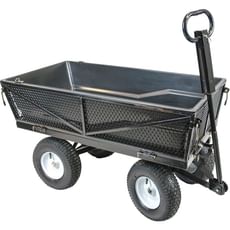
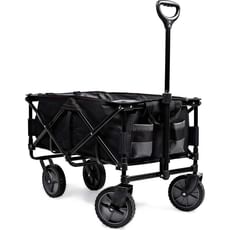
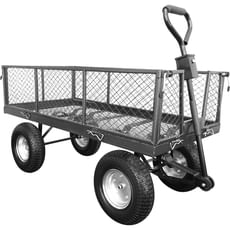
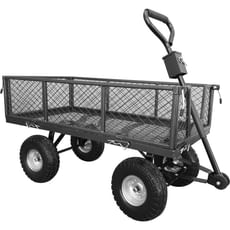

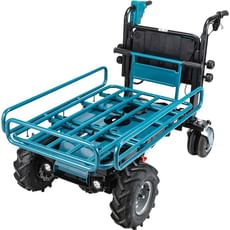
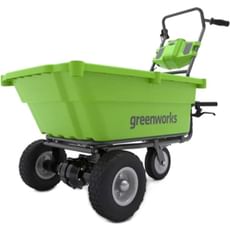
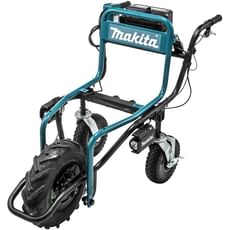
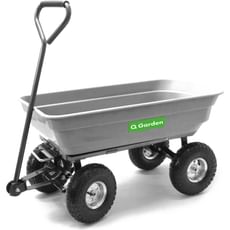
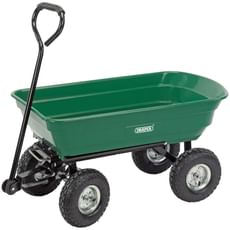
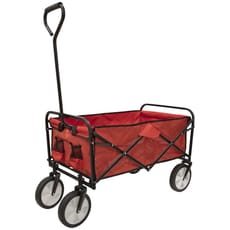
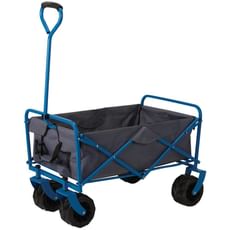
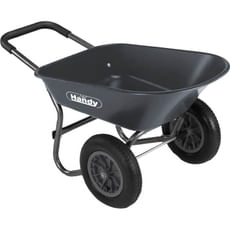
 Loading...
End of content
Error - No more pages to load
About Carts, Trolleys & Wheelbarrows
Carts, trolleys and wheelbarrows represent essential load-carrying equipment for anyone who regularly moves materials, tools, waste or supplies across gardens, construction sites, landscaping projects or commercial premises. Whether you're a professional groundskeeper maintaining expansive outdoor spaces, a builder shifting aggregate and building materials across a busy site, or a homeowner tackling weekend garden improvements, the right wheeled transporter dramatically reduces physical strain whilst improving productivity and efficiency throughout the working day.
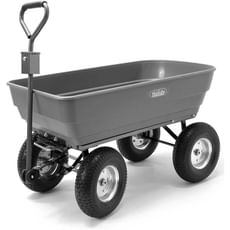
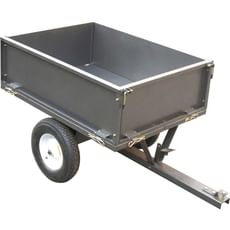
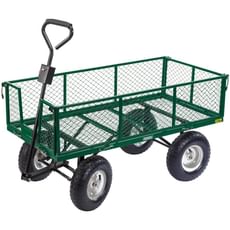
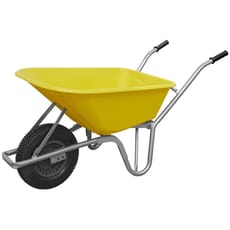
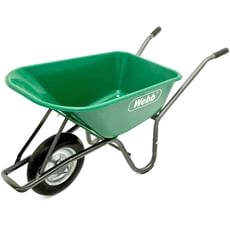
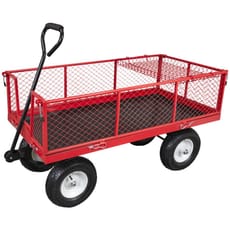
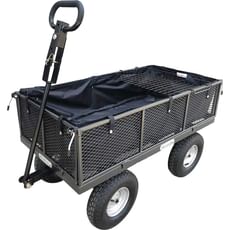
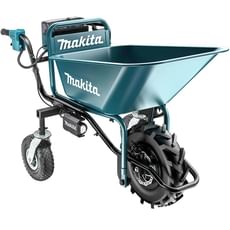
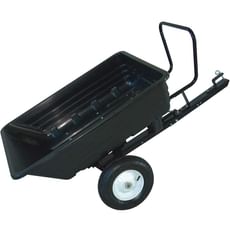
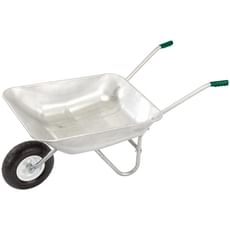
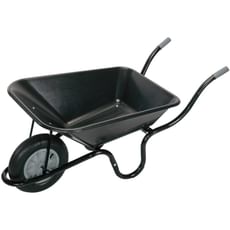
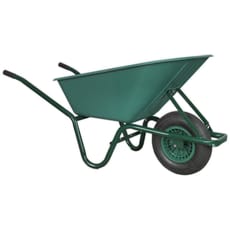
The range at Tooled-Up.com encompasses three distinct categories of wheeled load carriers, each engineered for specific applications and working environments. Garden carts deliver the highest load capacities and are typically designed for towing behind ride-on mowers, quad bikes or utility vehicles, making them ideal for large-scale landscaping operations and estate maintenance. Garden trolleys provide a versatile middle ground with robust construction and ergonomic handles for manual operation, though many models incorporate towing eyes for vehicle attachment when shifting heavier loads. Traditional wheelbarrows remain the preferred choice for smaller loads and confined spaces, offering unmatched manoeuvrability and cost-effectiveness for everyday gardening and building tasks.
Modern developments in materials and design have significantly enhanced performance across all categories. Innovations include puncture-proof tyre technology, corrosion-resistant galvanised steel construction, quick-release tipping mechanisms for effortless unloading, and ergonomically designed handles that reduce back strain during extended use. From lightweight single-wheel barrows perfect for navigating narrow pathways and residential gardens to heavy-duty four-wheeled carts capable of transporting several hundred kilograms across challenging terrain, the selection caters to every scale of operation and budget requirement.
Jargon Buster
- Load Capacity: The maximum safe weight the equipment can carry, measured in kilograms. Always verify both the rated capacity and practical volume to ensure suitability for your typical loads. Exceeding stated limits compromises safety and accelerates wear.
- Pneumatic Tyres: Air-filled tyres offering excellent shock absorption and smooth rolling over uneven ground, grass and soft surfaces. Require occasional inflation but deliver superior comfort and manoeuvrability compared to solid alternatives.
- Galvanised Steel: Steel protected with a zinc coating to prevent rust and corrosion. Essential for equipment regularly exposed to moisture, soil, fertilisers and outdoor elements. Superior longevity compared to standard painted steel finishes.
- Tipping Mechanism: A pivoting feature allowing the barrow or cart bed to tilt forward for easy material discharge without manual shovelling. Particularly valuable when unloading heavy aggregates, wet soil or builder's waste.
- Tow Hitch/Eye: A connection point enabling attachment to vehicles, quad bikes or ride-on mowers for towing rather than manual pushing. Usually compatible with standard 50mm tow balls commonly found on utility vehicles.
- Cubic Capacity: The volume of material the equipment can accommodate, measured in litres. Standard builder's wheelbarrows typically hold 85-100 litres, whilst large garden carts often exceed 300 litres capacity.
Who Uses Carts, Trolleys & Wheelbarrows?
- Landscapers and Groundskeepers: Moving topsoil, turf rolls, gravel, paving slabs and landscaping materials across residential and commercial sites
- Gardeners and Garden Maintenance Professionals: Transporting compost, plants, pruning waste, autumn leaves and hand tools between working areas
- Builders and Construction Workers: Shifting bricks, blocks, sand, cement, rubble and building materials around active construction sites
- Farmers and Agricultural Workers: Moving animal feed, hay bales, manure and equipment around farms, stables and smallholdings
- Local Authority and Council Workers: Maintaining public parks, recreation grounds, cemeteries and outdoor community spaces
- Festival and Event Organisers: Transporting equipment, waste collection and supplies across large outdoor venues and temporary installations
- Warehouse and Logistics Personnel: Moving goods, packaging materials and supplies within industrial premises, yards and loading areas
- DIY Enthusiasts and Homeowners: General garden maintenance, landscaping projects, home improvement tasks and seasonal clearance work
How to Choose the Right Carts, Trolleys & Wheelbarrows
Consider Your Typical Load Size: Match capacity to regular requirements rather than occasional maximum loads. For light gardening, a standard 85-litre wheelbarrow proves sufficient. Professional landscapers shifting bulk materials should consider carts with 200+ litre capacity and load ratings exceeding 150kg for improved productivity.
Assess Your Working Terrain: Pneumatic tyres excel on soft or uneven ground including soil, grass and gravel, providing cushioning and superior grip. For hard surfaces like concrete, tarmac or warehouse floors, solid rubber tyres eliminate puncture concerns and maintenance requirements. Four-wheeled designs offer enhanced stability on slopes and rough ground, whilst single-wheel barrows provide better manoeuvrability through narrow gateways and tight spaces.
Evaluate Construction Materials: Galvanised steel delivers excellent durability and rust resistance for demanding professional applications. Heavy-duty plastic pans weigh less and won't corrode, making them ideal for carrying wet materials, fertilisers or working in coastal environments. Consider tubular steel frames with reinforced bracing for construction site applications where equipment faces harsh treatment.
Manual or Towed Operation: Working across large areas with vehicle access makes towable carts worthwhile, dramatically reducing physical effort during repetitive journeys. For smaller gardens or sites with restricted access, manually operated trolleys or traditional wheelbarrows provide better control without requiring vehicle support.
Storage and Transportation: Some models feature folding handles or collapsible designs for compact storage in vans or sheds. Check overall dimensions to ensure equipment fits through standard gateways, narrow passages and site access points commonly encountered during typical work.
Ergonomic Features: Prioritise cushioned grips, appropriately positioned handles for comfortable operation, and well-balanced designs minimising strain during loaded transport. Quick-release tipping mechanisms save considerable effort when unloading, particularly important during extended working days with multiple trips.
Popular Accessories
- Spare Pneumatic Wheels and Inner Tubes: Replacement wheels and puncture repair kits maintain operational continuity during busy periods
- Wheelbarrow Liners: Protective plastic or rubber liners prevent pan damage when carrying sharp materials and simplify cleaning after use
- Tool Racks and Holders: Attachment systems allowing convenient transport of hand tools, rakes and implements alongside materials
- Weather Covers and Tarpaulins: Protect loads from rain during transport or cover stored equipment outdoors between projects
- Tow Hitches and Couplings: Universal fittings connecting carts to various vehicles, quad bikes and garden machinery
- Heavy-Duty Garden Waste Bags: Collapsible bags used within trolleys for simplified waste collection and disposal
- Wheelbarrow Stands: Keep barrows upright and stable during loading operations or storage in workshops and sheds
Safety Information
Always observe proper manual handling techniques when operating wheeled load carriers to prevent musculoskeletal injuries. The HSE recommends assessing loads before lifting and avoiding overfilling, which compromises stability and control, particularly on sloped ground. Never exceed manufacturer-stated load capacities, as this risks structural failure or loss of control during transport.
Maintain awareness of your surroundings when operating loaded equipment, and push rather than pull wherever possible to maintain better visibility and directional control. On construction sites, wear appropriate PPE including steel toe-capped boots and high-visibility clothing. Regularly inspect pneumatic tyres for correct inflation pressure and examine frames for wear, damage or loose fixings that could compromise safe operation.
Exercise particular caution on slopes and ramps – descend slowly with the load positioned ahead of you for better control, and never attempt to catch runaway equipment. When towing behind vehicles, ensure secure attachment via appropriate hitches, observe suitable speeds for towed loads, and verify that lighting and visibility requirements are met if operating on public roads or during low-light conditions.
Frequently Asked Questions
What's the difference between a garden cart and a garden trolley?
Garden carts are primarily designed for towing behind vehicles such as quad bikes or ride-on mowers, featuring higher load capacities often exceeding 200kg and robust construction for demanding applications. Garden trolleys are typically pushed or pulled manually using integral handles, though many incorporate towing eyes for vehicle attachment when required. Trolleys offer greater versatility for hand operation whilst carts excel at shifting large volumes across extensive sites with vehicle access.
Should I choose pneumatic or solid tyres?
Pneumatic air-filled tyres provide superior shock absorption, easier rolling over rough terrain, and better grip on soft surfaces including soil, grass and loose gravel – ideal for landscaping and groundwork applications. Solid rubber tyres eliminate puncture risks and maintenance requirements, making them better suited to construction sites with debris or operations on hard surfaces like concrete and tarmac. Consider your primary working environment and whether maintenance convenience outweighs performance benefits.
What size wheelbarrow do I need for general gardening?
A standard 85-100 litre capacity wheelbarrow handles most domestic gardening tasks including moving compost, topsoil, plants and garden waste efficiently. Larger landscaping projects or substantial gardens benefit from 120+ litre models offering fewer trips and improved productivity. Professional gardeners and landscapers often require 150-litre+ capacity or upgrading to four-wheeled trolleys for enhanced stability with heavier loads like paving slabs or wet materials.
Can I leave my wheelbarrow stored outside?
Whilst galvanised steel and weather-resistant plastic models withstand outdoor storage reasonably well, keeping equipment under cover significantly extends operational lifespan. UV exposure gradually degrades plastic components and pneumatic tyres, whilst even galvanised steel eventually corrodes, particularly at joints, welds and folded edges. If outdoor storage proves unavoidable, invest in a weatherproof cover and store equipment upright to prevent water accumulation in the pan.
How do I maintain pneumatic tyres on garden equipment?
Check tyre pressure fortnightly – properly inflated tyres (typically 30-35 PSI for garden equipment) roll more easily and resist pinch punctures effectively. Inspect for embedded thorns, sharp stones or visible damage before each working day. Keep a repair kit readily available including spare inner tubes, puncture patches and a suitable pump. During winter storage, slightly over-inflate tyres to compensate for temperature-related pressure drops and prevent flat spots developing during prolonged stationary periods.