

Chemical Resin Cartridge
Pay in 3 interest-free payments on purchases from £30-2000 with  . Learn more.
 Loading...
End of content
Error - No more pages to load
About Chemical Resin Cartridge
Chemical resin cartridges are professional-grade fixing solutions that deliver exceptional holding strength in a diverse range of base materials, including solid concrete, masonry, hollow blocks, and even cracked or deteriorated substrates. These sophisticated adhesive systems comprise two-component resins—typically epoxy, polyester, or vinylester hybrid formulations—contained within a dual-chamber cartridge. When dispensed through a static mixing nozzle, the separate components combine to trigger a chemical reaction that creates a powerful bond, anchoring threaded rods, studs, and reinforcing bars with outstanding pull-out and shear resistance that often exceeds the strength of the base material itself.
Unlike traditional mechanical fixings that depend on friction or expansion forces, chemical anchor resin cartridges work by completely filling the void around the fixing element, distributing loads more uniformly and eliminating stress concentrations that can cause cracking. This makes them indispensable for heavy-duty structural installations, safety-critical applications, and scenarios involving vibration, dynamic loading, or seismic activity. They're also the preferred solution when working with problematic substrates where conventional mechanical anchors might fail, such as hollow blocks, aerated concrete, or materials with existing cracks or damage.
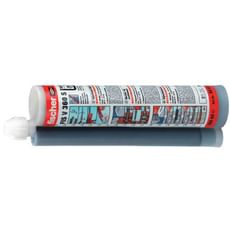
Tooled-Up.com stocks trusted brands including Rawlplug, Fischer, and Everbuild, offering various formulations tailored to different base materials, cure times, and environmental conditions. Whether you're installing structural steelwork fixings, securing heavy machinery, anchoring safety barriers, or tackling demanding remedial work in challenging substrates, chemical resin cartridges provide the professional-grade performance and reliability that modern construction and engineering projects demand.
Jargon Buster
- Two-Component Resin: A chemical anchoring system consisting of two separate compounds (resin and hardener) stored in individual chambers within the cartridge. When mixed during dispensing, they undergo an exothermic chemical reaction to cure and form a high-strength bond.
- Static Mixer Nozzle: A disposable mixing attachment that fits onto the cartridge outlet, featuring an internal helical design that thoroughly blends the two resin components as they're expelled, ensuring proper chemical reaction and maximum bond strength.
- Gel Time: The working period after dispensing during which the resin remains fluid enough to insert and accurately position the threaded rod or stud. This typically ranges from a few minutes to over an hour, depending on the product formulation and ambient temperature.
- Cure Time: The duration required for the resin to fully harden and achieve its rated load capacity. Fast-cure formulations may be ready for loading in as little as 45 minutes, whilst standard products typically require several hours or overnight curing.
- Undercut Anchor Hole: An enlarged cavity at the base of a drilled hole that provides additional mechanical interlock when filled with resin, significantly increasing pull-out resistance particularly in softer or hollow base materials.
- ETA Approval: European Technical Assessment certification that validates a chemical anchor system's performance through rigorous testing, essential for structural applications and building control approval in the UK.
Who Uses Chemical Resin Cartridge?
Chemical resin cartridges are specified and relied upon by a wide range of construction professionals and tradespeople, including:
- Structural Engineers – for safety-critical anchoring in new builds, extensions, and remedial strengthening work
- Steelwork Erectors – securing steel frames, beams, columns, and brackets to concrete substrates
- Builders and Main Contractors – heavy-duty fixing applications across general construction site work
- Maintenance Engineers – installing equipment, machinery foundations, and safety barriers in industrial facilities
- Façade Installers – anchoring cladding systems, curtain walling, and architectural features to structural frames
- Electricians and Mechanical Fitters – mounting heavy electrical panels, switchgear, cable management systems, and mechanical plant
- Shop Fitters – securing fixtures, shelving, and display units in retail and commercial environments
- Civil Engineers – infrastructure projects requiring reliable anchoring in concrete structures, bridges, and tunnels
- Demolition and Remedial Specialists – fixing into damaged, cracked, or deteriorated substrates where mechanical fixings cannot be used
- DIY Enthusiasts – tackling demanding home improvement projects requiring maximum holding strength and reliability
How to Choose the Right Chemical Resin Cartridge
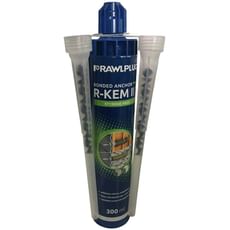
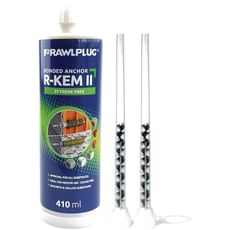
Base Material Compatibility: Different resin chemistries are optimised for specific substrates. Standard polyester resins such as the Rawl R-KEM II work effectively in solid concrete and dense masonry, whilst epoxy formulations like the Fischer FIS EM or Rawl R-KEX-II Premium offer superior performance in cracked concrete, hollow blocks, or porous materials. Always verify the manufacturer's approval for your particular base material to ensure structural integrity.
Load Requirements: Assess both static and dynamic loads your fixing must support. For structural applications, safety-critical installations, or heavy equipment, premium epoxy resins deliver maximum strength and long-term reliability. For lighter-duty applications such as shop fitting or general building work, universal anchoring resins provide excellent value whilst still delivering dependable performance that meets BS EN standards.
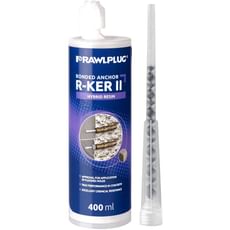
Environmental Conditions: Consider exposure to temperature extremes, moisture, chemicals, and UV light. Some formulations are specifically engineered for underwater applications or water-saturated substrates, whilst others offer enhanced resistance to chemicals, elevated temperatures, or freeze-thaw cycles. External applications in exposed locations may require UV-resistant formulations to prevent degradation. The vinylester hybrid resins available from Tooled-Up, such as the Rawlplug R-KER-II, offer excellent durability in challenging environmental conditions.
Working and Cure Times: Match the gel time to your installation requirements—longer working times allow for precise positioning of multiple fixings and adjustment, whilst fast-cure products like the Everbuild Anchorset minimise downtime on time-sensitive projects. Remember that ambient temperature significantly affects curing rates, with cold conditions extending both gel and cure times considerably. Summer site work may require faster-setting formulations to prevent premature curing during installation.
Cartridge Size and Application System: Standard 300ml and 380ml cartridges fit most professional manual and pneumatic dispensing guns. Calculate the number and size of fixings you're installing to minimise waste—larger projects may benefit from bulk purchasing, whilst smaller jobs need only a single cartridge. Some products like the Rawl R-KEM-II are available as complete kits including threaded studs and mixer nozzles for convenience.
Certifications and Compliance: For structural applications requiring building control approval, ensure the product carries relevant European Technical Assessment (ETA) certification and complies with BS EN 1992 standards. This documentation is essential for professional indemnity insurance and demonstrates compliance with UK Building Regulations.
Popular Accessories
- Manual or Pneumatic Resin Dispensing Guns – professional-grade applicators designed specifically for two-component chemical anchor cartridges
- Static Mixer Nozzles – replacement mixing attachments (often supplied with cartridges but available separately for larger projects)
- Threaded Rods and Studs – galvanised steel or stainless steel in metric diameters from M8 to M24 and various lengths
- Hammer Drill Bits – SDS-Plus or SDS-Max masonry bits for creating accurately sized anchor holes to manufacturer specifications
- Blow Pumps and Wire Brushes – essential hole cleaning equipment for removing dust and debris to ensure proper adhesion and bond strength
- Professional Hole Cleaning Sets – combined brush and pump systems that meet ETA installation standards for chemical anchors
- Setting Tools and Templates – jigs for accurate positioning and alignment of multiple fixings in critical applications
- Torque Wrenches – for tightening fixings to specified torque values as required by structural calculations
- PPE Equipment – safety glasses, chemical-resistant gloves, and respiratory protection for safe handling of reactive resins
Safety Information
Chemical resin cartridges contain reactive compounds that require careful handling and appropriate precautions. Always read the manufacturer's safety data sheet (SDS) and product instructions before commencing work. Ensure adequate ventilation when using chemical anchors, as resins release fumes during mixing and curing—this is particularly critical in confined spaces, basements, or poorly ventilated areas where mechanical extraction may be necessary to comply with COSHH regulations.
Wear appropriate personal protective equipment including safety glasses or goggles to prevent eye contact, chemical-resistant gloves to avoid skin sensitisation, and protective clothing to prevent contamination. Uncured resin can cause allergic reactions and skin sensitisation in susceptible individuals. If skin contact occurs, wash immediately with soap and water. In case of eye contact, irrigate thoroughly with clean water for at least 15 minutes and seek medical attention promptly.
Store cartridges in a cool, dry location away from direct sunlight and heat sources, observing the manufacturer's temperature guidelines (typically 5-25°C). Check expiry dates before use, as expired resin may not cure properly or achieve rated performance, potentially compromising fixing integrity. Dispose of empty cartridges and used mixer nozzles in accordance with local authority waste regulations—do not incinerate or puncture pressurised cartridges.
Ensure drilled holes are thoroughly cleaned using appropriate blow pumps and brushes before resin application, as dust, moisture, and debris can dramatically reduce bond strength and fixing capacity. When drilling overhead or in enclosed spaces, use suitable dust extraction equipment or respiratory protection to comply with HSE guidance on respirable crystalline silica (RCS) exposure. Never attempt to load a fixing before the specified cure time has fully elapsed, as premature loading will result in fixing failure and potential structural hazards.
Frequently Asked Questions
What's the difference between epoxy, polyester, and vinylester chemical resin cartridges?
Polyester resins offer economical performance with fast curing times, making them ideal for standard concrete applications in non-critical situations. Epoxy resins provide superior strength, excellent chemical resistance, and proven performance in cracked concrete and demanding environmental conditions. Vinylester hybrid resins combine advantages of both chemistries, offering outstanding performance in cracked substrates, seismic zones, and applications requiring maximum long-term durability. Your selection depends on the base material characteristics, structural load requirements, and environmental exposure conditions.
How long do I need to wait before loading a chemical anchor fixing?
Cure times vary considerably depending on the product formulation and ambient temperature. Fast-cure formulations may achieve working load capacity in 45 minutes to 2 hours at 20°C, whilst standard products typically require 6-24 hours for full curing. Cold temperatures extend cure times substantially—at 5°C, some products may need 72 hours or longer to reach rated capacity. Always consult the manufacturer's technical data sheet for specific cure times at your working temperature, and never apply loads prematurely as this will compromise fixing integrity and safety.
Can chemical resin cartridges be used in wet or underwater conditions?
Specific formulations are engineered for water-saturated substrates and even fully submerged underwater installation, but not all chemical resins are suitable for wet conditions. Standard polyester resins generally require dry holes for proper curing, whilst certain epoxy and vinylester products can be used successfully in damp or water-filled holes. Always check the product technical data sheet and ETA documentation to confirm suitability for wet applications—using an inappropriate product in wet conditions will result in fixing failure and potential structural issues.
What size hole should I drill for chemical anchoring applications?
Hole diameter and depth requirements are precisely specified by the resin manufacturer and depend on the diameter of the threaded rod or stud being installed. Typically, the hole diameter should be 2-4mm larger than the rod diameter to allow adequate resin coverage and proper load distribution. Hole depth should extend beyond the embedded length of the rod by at least one rod diameter to accommodate resin displacement during insertion. Always follow the manufacturer's installation guidelines and relevant structural design calculations for safety-critical applications.
How can I tell if a chemical resin cartridge is still usable and hasn't expired?
Check the expiry date clearly printed on the cartridge label—using expired resin can result in incomplete curing, reduced strength, and fixing failure. Before use, inspect the cartridge for physical damage, leakage, or visible separation of components through the transparent sections. If the cartridge has been stored in cold conditions, allow it to reach the minimum working temperature specified by the manufacturer (usually 5-10°C minimum). When first dispensed, the resin should mix to a uniform, consistent colour with no streaking or separation—if you observe unmixed stripes of different colours, replace the mixer nozzle and dispense additional material until proper homogeneous mixing is achieved.