

Coping Saw Blades

Pay in 3 interest-free payments on purchases from £20-£3000 with  . Learn more.
 Loading...
End of content
Error - No more pages to load
About Coping Saw Blades
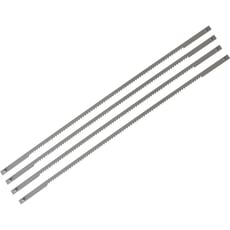
Coping saw blades are precision-engineered replacement blades designed specifically for coping saws, the indispensable hand tools used by carpenters, joiners and woodworkers for executing intricate curved cuts and detailed joinery work. These fine-toothed blades typically measure between 150mm and 170mm in length, mounting between the pins of a coping saw frame where tension holds them taut for controlled, accurate cutting through wood, plastic and soft non-ferrous metals. The narrow blade width and fine tooth configuration make them ideal for navigating tight curves, scribing architrave, cutting dovetail joints and creating decorative scrollwork that would be impossible with standard hand saws.
The selection at Tooled-Up.com includes coping saw blades from trusted manufacturers such as Bahco, Stanley, Faithfull and Draper, each offering different tooth counts and blade specifications to match various materials and cutting applications. Whether you're fitting skirting boards around awkward corners, creating complex joinery for cabinet making, or executing delicate scroll cuts for restoration work, having sharp replacement blades readily available ensures consistent cut quality and maintains productivity on site or in the workshop.
Available in multi-blade packs, these affordable consumable items represent essential stock for any professional tradesperson's toolbox or home workshop. The blades feature pin-end fittings that locate securely into standard coping saw frames, enabling quick and straightforward replacement when blades become blunt or snap during demanding cutting tasks. With TPI (teeth per inch) options typically ranging from 10 to 20, users can select the appropriate blade specification for their specific project requirements, balancing cutting speed against finish quality.
Jargon Buster
- TPI (Teeth Per Inch): The number of cutting teeth present within a one-inch length of blade. Higher TPI counts (15-20) produce finer, smoother cuts perfect for detailed joinery work, whilst lower TPI (10-14) cuts more aggressively through thicker materials but leaves a rougher finish requiring additional sanding.
- Pin-End Fitting: The small metal pins located at each end of coping saw blades that slot into corresponding holes on the coping saw frame, allowing for rapid blade changes and secure tensioning during use.
- Blade Tension: The tightness of the blade within the frame, typically adjusted via the handle mechanism. Correct tension prevents blade wandering and breakage, ensuring straight, accurate cuts even when following curved lines.
- Set: The slight outward bend applied to alternating teeth on the blade, creating a cut (kerf) marginally wider than the blade thickness itself. This prevents binding and allows the blade to move freely through the workpiece without jamming.
- Kerf: The width of material removed by the saw blade during cutting. Coping saw blades produce a narrow kerf, minimising material waste and permitting tight, intricate curves essential for fine joinery work.
- Blade Orientation: Coping saw blades can be fitted with teeth facing towards or away from the handle, determining whether you cut on the pull stroke (teeth towards handle) or push stroke (teeth away from handle), depending on personal preference and working position.
Who Uses Coping Saw Blades?
- Carpenters and joiners for cutting intricate joints, scribing architrave and creating decorative woodwork features
- Cabinet makers requiring precise curved cuts for furniture construction and detailed cabinetry joinery
- Shop fitters needing to scribe and fit mouldings around irregular surfaces and existing fixtures
- Luthiers and musical instrument makers working on guitars, violins and other wooden instruments requiring delicate cuts
- Restoration specialists repairing and replicating period joinery, architectural features and heritage woodwork
- Model makers and hobbyists creating detailed wooden models, miniatures and craft projects
- Set designers and prop makers in theatre and film production requiring custom-cut wooden components
- Picture framers cutting mitres and complex joints for bespoke framing work
- DIY enthusiasts tackling home improvement projects involving skirting boards, dado rails, coving and decorative trim
How to Choose the Right Coping Saw Blades
Material Compatibility: Select blades appropriate for your workpiece material. Standard wood-cutting blades suit both softwoods and hardwoods effectively, whilst specialist blades are manufactured for plastics and non-ferrous metals. Always check the manufacturer's specifications to confirm compatibility with your project materials before commencing work.
Teeth Per Inch (TPI): Match the TPI count to your specific cutting requirements. For intricate scrollwork, fine joinery and detailed cabinetry, choose blades with 15-20 TPI for smooth, precise cuts with minimal finishing required. For faster rough cutting through thicker stock where finish quality is less critical, opt for 10-14 TPI blades, though these will require more sanding afterwards.
Blade Quality and Brand: Invest in reputable brands like Bahco, Stanley, Faithfull and Draper available from Tooled-Up for consistent quality and durability. Premium blades maintain their sharpness significantly longer, produce cleaner cuts with less effort and are considerably less prone to snapping under tension, ultimately proving more economical than budget alternatives despite higher initial cost.
Pack Quantity: Coping saw blades are consumable items that dull with regular use and occasionally snap during demanding cutting operations. Purchase multi-blade packs to ensure you always have sharp replacements available, minimising costly downtime on site or disruption to workshop projects. Professional tradespeople typically keep several packs in stock at all times.
Frame Compatibility: Whilst most coping saw blades employ standard pin-end fittings compatible with the majority of frames, always verify that replacement blades match your specific coping saw model to ensure proper tensioning and secure fitting. Blade length variations can affect frame compatibility.
Popular Accessories
- Coping Saws and Frames: The essential tool for holding and tensioning blades, available from manufacturers including Bahco, Stanley, Faithfull and Draper
- Junior Hacksaws: Complementary cutting tools for metal and plastic pipes where coping saws aren't suitable
- Files and Rasps: For refining and smoothing cut edges after sawing, particularly valuable for joinery and cabinet work
- Bench Hooks and Vices: Secure workholding solutions providing stability when executing intricate cuts requiring precision
- Marking and Measuring Tools: Pencils, marking knives, gauges and templates for accurate layout before cutting
- Mitre Boxes: For guiding accurate angle cuts when working with mouldings and trim
- Sandpaper and Abrasives: For finishing cut edges to a professional standard before assembly or painting
- Tool Storage Solutions: Stanley FatMax boxes and organisers for keeping blades protected and organised
Frequently Asked Questions
How often should I replace coping saw blades?
Replace blades when you notice increased cutting resistance, rough cut quality, blade wandering during cuts, or visible tooth damage. Professional tradespeople working daily may change blades several times per week depending on workload, whilst occasional DIY users might replace them every few projects. Always keep spare blades available, as they can snap unexpectedly during demanding cuts or when encountering hidden nails or knots.
Which direction should the teeth face on a coping saw blade?
Most users fit blades with teeth pointing towards the handle, cutting on the pull stroke for greater control and reduced blade deflection. However, some prefer teeth facing away to cut on the push stroke, particularly when working on a bench hook or in confined spaces. Experiment with both orientations to find which suits your cutting technique and provides the best visibility of your cut line.
Can coping saw blades cut metal as well as wood?
Standard coping saw blades are designed primarily for wood and will dull rapidly if used on metal. Whilst they can cut soft plastics reasonably well, cutting metal requires specialist blades with appropriate tooth configuration, hardness and set. For metalwork, consider dedicated junior hacksaw blades or metal-cutting coping saw blades where available from specialist suppliers.
Why do my coping saw blades keep breaking?
Blade breakage typically results from excessive frame tension, forcing the cut rather than allowing the blade to work at its own pace, twisting during curved cuts, or persisting with dull blades that bind in the kerf. Ensure proper blade tension (tight but not over-tensioned), maintain steady cutting pressure without forcing, support the workpiece adequately, and replace blades regularly to minimise breakage.
Are higher TPI blades always better for woodworking?
Not necessarily. Higher TPI produces smoother cuts but removes material more slowly, which can be inefficient for rough cutting or working through thicker stock. Match the TPI to your specific task: use higher TPI (15-20) for fine joinery, detailed scrollwork and finish cuts, and lower TPI (10-14) for faster rough cutting where surface finish is less critical and will be sanded anyway.