

Detectors & Receivers
Pay in 3 interest-free payments on purchases from £30-2000 with  . Learn more.
 Loading...
End of content
Error - No more pages to load
About Detectors & Receivers
Laser detectors and receivers are indispensable accessories for construction professionals and groundworkers who need to extend the working range of laser levels beyond normal visual capabilities. These electronic detection devices pick up pulsed laser beams at distances where direct visibility becomes impossible—particularly in bright outdoor conditions or across long construction sites—typically extending effective range from 30-50 metres up to 200 metres or more. By converting invisible laser signals into clear visual and audible indicators, these receivers enable single-operator levelling tasks that would otherwise require multiple personnel.
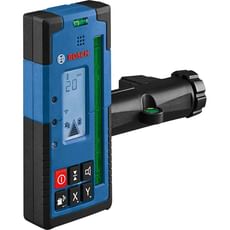
Modern laser receivers feature digital LCD displays that provide directional guidance, showing whether you need to move up or down to locate the beam's centre line with millimetre precision. Professional models at Tooled-Up.com are compatible with both red and green laser wavelengths, though matching your receiver to your specific laser type remains essential. Most units include mounting brackets or clamps for attachment to levelling rods and staffs, enabling accurate height measurements for groundworks, drainage installation, foundation setting, and civil engineering applications where precision over extended distances is non-negotiable.
The range available from Tooled-Up includes receivers from leading professional brands such as Bosch Professional, DeWalt, Makita, and Stabila, offering various detection ranges, accuracy specifications, and build quality levels to suit different trades and working environments. Whether you're establishing site levels for building foundations, installing drainage gradients for landscaping projects, or conducting survey work across large civil engineering sites, selecting the right laser detector significantly improves productivity whilst ensuring accuracy that meets professional standards.
Jargon Buster
- Detection Range: The maximum distance at which a receiver can accurately detect and locate a laser beam, typically specified in metres. Professional models offer ranges from 50m up to 200m or more, though actual working range depends on laser power, beam colour, and ambient light conditions.
- Detection Accuracy: The precision with which the receiver can pinpoint the laser beam's centre line, usually expressed as a tolerance in millimetres (e.g., ±1mm or ±0.5mm). Higher accuracy specifications are essential for foundation work, machine installation, and surveying applications.
- Red vs Green Laser Compatibility: Laser receivers are wavelength-specific. Red laser detectors work with 635-650nm wavelengths, whilst green laser detectors operate with 515-535nm wavelengths. Some universal models detect both beam colours, but compatibility must always be verified before purchase.
- Pulse Mode: A feature on rotating and line lasers that rapidly pulses the beam to make it detectable by electronic receivers. Continuous beam lasers cannot be detected outdoors by receivers, so your laser level must have pulse mode capability for receiver compatibility.
- Detection Window: The physical area on the receiver's housing where laser beams can be detected, sometimes offering 360-degree coverage or specific angular ranges. Larger detection windows provide greater flexibility in positioning and operation.
- IP Rating: Ingress Protection rating indicating the receiver's resistance to dust and moisture. Professional site receivers typically offer IP54, IP65, or IP67 protection, essential for reliable operation in British weather conditions and dusty construction environments.
Who Uses Detectors & Receivers?
Laser detectors and receivers serve essential functions across numerous construction trades and professional applications:
- Groundworkers and Drainage Contractors: Critical for setting out levels across long distances, installing drainage systems with accurate falls, and establishing site gradients for civil engineering projects
- Builders and Construction Contractors: Essential for foundation work, setting datum points, maintaining level across large building sites, and establishing reference points for multi-storey construction
- Landscapers and Groundcare Professionals: Used for grading lawns, installing irrigation systems, creating accurate slopes for surface water drainage, and establishing levels for retaining walls and terracing
- Civil Engineers and Surveyors: Professional-grade receivers enable precise levelling over extended distances for infrastructure projects, highway construction, and land surveying applications
- Plumbers and Drainage Specialists: Valuable for maintaining accurate falls in drainage pipework, sewer installations, and underground service runs across long distances
- Highways and Road Contractors: Essential for establishing levels and gradients on road construction, resurfacing projects, and kerb line installation
- Site Managers and Foremen: Facilitating single-operator levelling tasks improves site efficiency, reduces labour costs, and enables quick verification of levels across large construction sites
How to Choose the Right Detectors & Receivers
Laser Compatibility: The most critical consideration is ensuring your receiver matches your existing laser level. Verify whether your laser emits red or green beams (different wavelengths require different receivers) and confirm it operates in pulse mode—receivers cannot detect continuous beams in outdoor conditions. Check manufacturer compatibility recommendations, though many professional receivers work across different brands' equipment.
Detection Range Requirements: Match the receiver's specified range to your typical working distances. For domestic groundwork or small building sites, 50-100m receivers provide adequate coverage. Large construction sites, civil engineering projects, or agricultural applications demand 150-200m+ capabilities. Remember that bright sunlight significantly reduces effective working range, so consider maximum distances with a safety margin.
Accuracy Specifications: Standard professional receivers offer ±1-2mm accuracy, suitable for most construction and groundwork applications. Precision work such as machine installation, surveying, or high-specification building projects may require ±0.5mm or better. Ensure your laser level's inherent accuracy supports high-precision receivers—a receiver cannot improve upon the laser's fundamental accuracy limitations.
Mounting Hardware: Verify included mounting options for your working methods. Most professional receivers include universal brackets or clamps for attachment to levelling rods, staffs, or grade poles. Some applications benefit from magnetic mounts for attachment to steel posts or tripod adaptors for independent positioning. Check whether mounting hardware is included or requires separate purchase.
Display and Alert Features: Digital LCD displays with clear directional arrows simplify positioning, whilst multi-tone audio alerts enable operation without constantly viewing the screen—particularly valuable when working alone. Consider your typical working conditions: louder audio alerts help on noisy construction sites, whilst backlit or illuminated displays aid visibility in low light or overcast conditions common in UK weather.
Build Quality and Environmental Protection: Professional receivers require robust construction with adequate IP ratings against dust and moisture. Look for IP54 minimum protection, though IP65 or IP67 ratings offer superior defence against British weather conditions and dusty site environments. Rubberised housings and impact-resistant construction protect sensitive electronics from drops and knocks inevitable in site work.
Popular Accessories
- Levelling Rods and Staffs: Telescopic measuring poles to which receivers attach, essential for accurate height measurements and one-person operation. Available in various lengths from 2m to 5m with metric graduations and locking mechanisms for extended reach.
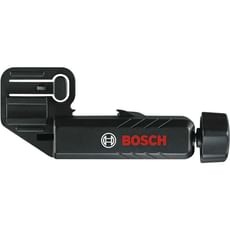
- Mounting Brackets and Clamps: Universal or brand-specific brackets secure receivers to rods, posts, or other surfaces. The Tooled-Up range includes options from Bosch Professional and other manufacturers, ensuring stable positioning during detection work.
- Rotary Laser Levels: The laser source itself—rotating beam lasers specifically designed for outdoor use with pulse mode for receiver compatibility. Essential companion equipment available from Bosch, DeWalt, Makita, and other professional brands.
- Laser Level Tripods: Stable mounting platforms for laser levels, often with fine height adjustment mechanisms and levelling feet for establishing precise reference points on uneven ground.
- Laser Safety Glasses: Protective eyewear for working around laser equipment, particularly important with higher-powered Class 2 or Class 3 lasers used in professional construction environments.
- Protective Cases: Padded storage cases protect sensitive detection equipment during transport and on-site storage, preventing damage that could affect calibration and accuracy.
- Batteries and Chargers: Spare rechargeable batteries or alkaline battery packs ensure continuous operation during long site days, particularly important for remote locations without 240v power access.
Safety Information
Whilst laser receivers themselves pose minimal direct safety risks, they're used alongside laser equipment that requires careful handling and awareness. Never look directly into laser beams, particularly from rotating or line lasers. Class 2 lasers (most construction lasers) can cause eye damage with prolonged exposure. Always wear appropriate laser safety glasses when working in environments with multiple laser sources or when others are operating laser equipment nearby, following HSE guidelines for laser safety in construction environments.
Be aware of your surroundings when using receivers on construction sites. Working with levelling equipment often requires concentration on the detection device whilst moving across potentially hazardous terrain with uneven ground, excavations, or obstacles. Ensure proper PPE including high-visibility clothing, safety footwear with ankle support, and hard hats as required by site regulations and HSE guidelines. Maintain awareness of site traffic, particularly when working near vehicle movements or plant operations.
Protect electronic receivers from excessive moisture, extreme temperatures, and impact damage. Whilst many models offer IP65 or IP67 protection ratings against dust and water ingress, they remain sensitive precision instruments. Store in protective cases when not in use and avoid dropping or subjecting to heavy impacts that could affect calibration and accuracy. Transport receivers separately from heavy tools to prevent damage during transit to site.
Frequently Asked Questions
Can I use any laser receiver with my laser level?
Not necessarily. Your laser level must operate in pulse mode (not all do) for outdoor receiver use—continuous beam lasers cannot be detected by receivers in bright conditions. Additionally, receivers are typically designed for specific beam colours, so you must match red receivers with red lasers (635-650nm) and green receivers with green lasers (515-535nm). Some universal models detect both wavelengths. Many manufacturers offer cross-compatible receivers, but always verify specifications before purchasing to ensure compatibility.
What's the actual working range I can expect from my receiver?
Whilst receivers may specify maximum ranges up to 200m, practical working range depends on several factors: laser power output, ambient light conditions, beam colour, and atmospheric conditions. Green lasers generally perform better with receivers in bright conditions than red lasers. On sunny British days, expect approximately 50-70% of the maximum stated range. Overcast conditions, dawn, dusk, or indoor use significantly improves performance and can approach maximum specifications.
Do I need a receiver for indoor laser level work?
Generally no. Laser beams remain easily visible indoors without electronic detection assistance. Receivers become essential outdoors where sunlight washes out the visible laser line, or when working at distances beyond where you can clearly see the beam projection (typically beyond 20-30 metres depending on conditions). They're invaluable for groundworks, foundations, drainage, and civil engineering but unnecessary for most interior fit-out, drylining, or suspended ceiling work.
How do I know when the receiver is detecting the laser accurately?
Modern receivers feature LCD displays with directional arrows and centre indicators that provide clear guidance. When positioned above the beam, the display shows a downward arrow with intermittent beeps; below the beam shows an upward arrow. When centred precisely on the beam, the display indicates level position and emits a continuous tone (rather than intermittent beeps), confirming accurate positioning for marking your reference point.
Can laser receivers be calibrated if they lose accuracy?
Professional laser receivers are precision instruments that can lose calibration through drops, impacts, or general wear. Whilst some high-end models offer field calibration procedures, most require return to manufacturer service centres or specialist calibration services for accuracy verification and adjustment. Regular accuracy checks against known level points help identify calibration drift before it affects work quality. Always transport receivers in protective cases to maintain accuracy and extend service life between calibrations.